Mistake 1: Measuring the window instead of the curtain hardware
The window is a useful starting point, but curtains usually hang from a pole or track that extends beyond it. If you use the glass or window-frame width as your curtain width, the fabric may barely cover the opening and leave too little room to stack at the sides when open. Decide where the pole or track will sit first. If it is already installed, measure its usable length rather than guessing from the window below.
For a pole, check the distance between its end brackets or finials according to the curtain supplier’s measuring guide. For a track, measure the track along the route the curtains will travel, including any bends. If you have not installed the hardware, mark its planned position with removable tape and check that the proposed extension has room on both sides. A nearby wall, cabinet or corner may limit how far the curtains can move.
Mistake 2: Treating curtain width as the same as coverage
Curtains need more fabric than the width they cover to form folds when closed. A pair whose combined flat width only matches the pole may stretch across the window without much drape. The amount of extra width, often called fullness, depends on the heading and the look you want. A softly gathered curtain and a more structured pleated curtain may call for different allowances, so check the guidance for the specific product or heading before choosing a size.
Read the product dimensions carefully. Some ready-made curtains list the width of one panel; others describe a pair. Check whether the stated width is the flat fabric width or the width a made-to-measure heading is intended to cover. Write down the usable pole or track width, the number of panels and the supplier’s recommended fullness separately. This small step makes it easier to spot a calculation based on the wrong number.
Mistake 3: Starting the drop from the wrong point
Curtain drop is not always measured from the top of the pole. Its starting point depends on how the heading attaches. Eyelet curtains hang from a pole threaded through the fabric, while hooks on a track or rings may place the fabric at a different height. Before measuring, choose the heading style and follow its specific starting-point instructions. If the hardware is not installed yet, confirm its height before ordering a fixed-length curtain.
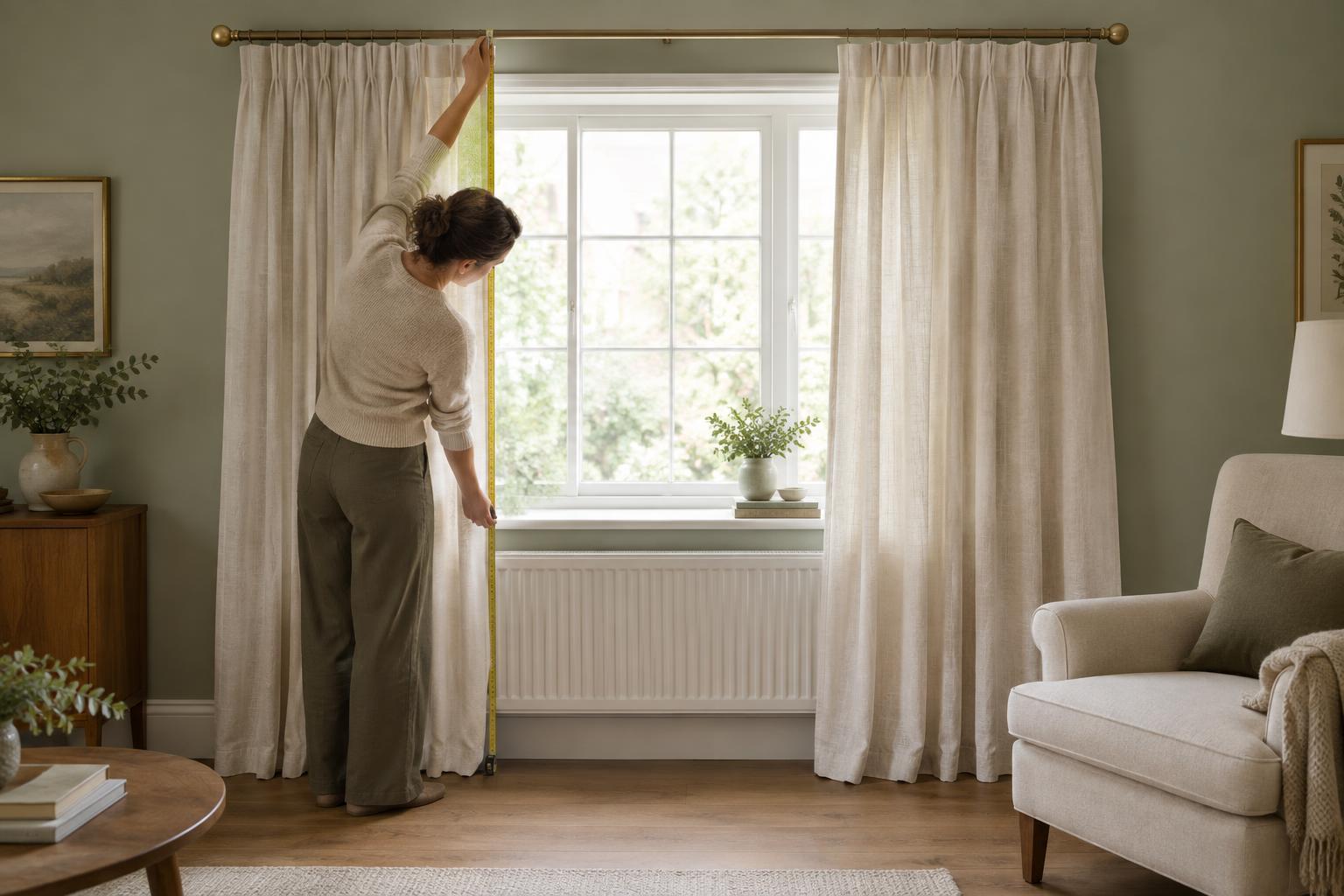
Choose the intended finish point too. Curtains can stop around the sill, extend below it or reach the floor; each choice changes the measurement and how the room feels. For a floor-length finish, measure from the correct starting point to the floor at several places across the opening, then consider whether you want the fabric to clear the floor or rest on it. Floors and ceilings are not always perfectly level, so a single measurement at one edge can be misleading.
Mistake 4: Forgetting what sits around and beneath the window
A tape measure records distance, but it does not tell you whether the curtains can hang freely. Check for projecting window handles, deep sills, radiators, vents and furniture before settling on a pole position or drop. If fabric will fall in front of a heat source, consult the relevant product and appliance guidance and leave appropriate clearance. A long curtain that looks appealing in a photograph may be impractical where a desk or sofa sits directly below the window.
Also consider how the curtains will open. A door or inward-opening window may need clear access, and a wide stack of fabric can cover more glass than expected. Temporarily hold a length of fabric or mark the planned curtain edges with tape to picture the result. This is especially helpful when the opening is close to a corner or when two windows share a short stretch of wall.
Mistake 5: Relying on one hurried measurement
Record width and drop in the same unit, label each window and note whether every figure refers to the window, pole, track or finished curtain. Measure twice with a rigid or well-supported tape; for a wide opening, ask someone to hold the other end so the tape does not sag. Check each window separately, even in the same room, rather than assuming that matching windows have identical dimensions.
Before buying, compare your notes with the supplier’s sizing and care information. Ready-made lengths may not land exactly where you pictured, and alterations or fabric care can affect the final result. If you are ordering made-to-measure curtains, confirm the heading, panel arrangement and measurement points before submitting dimensions. Taking a few minutes for this final check is much easier than trying to correct curtains that are too short or narrow.