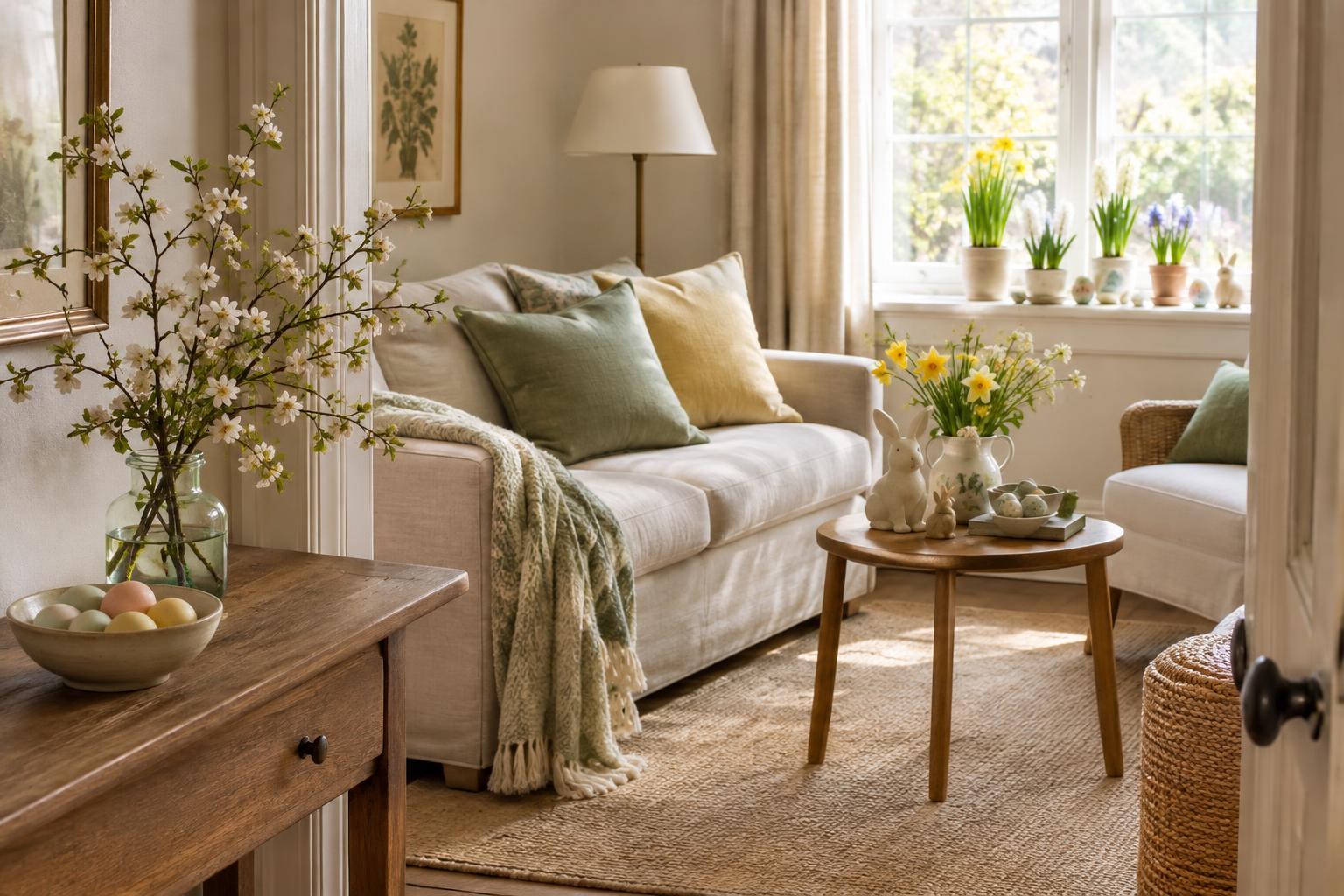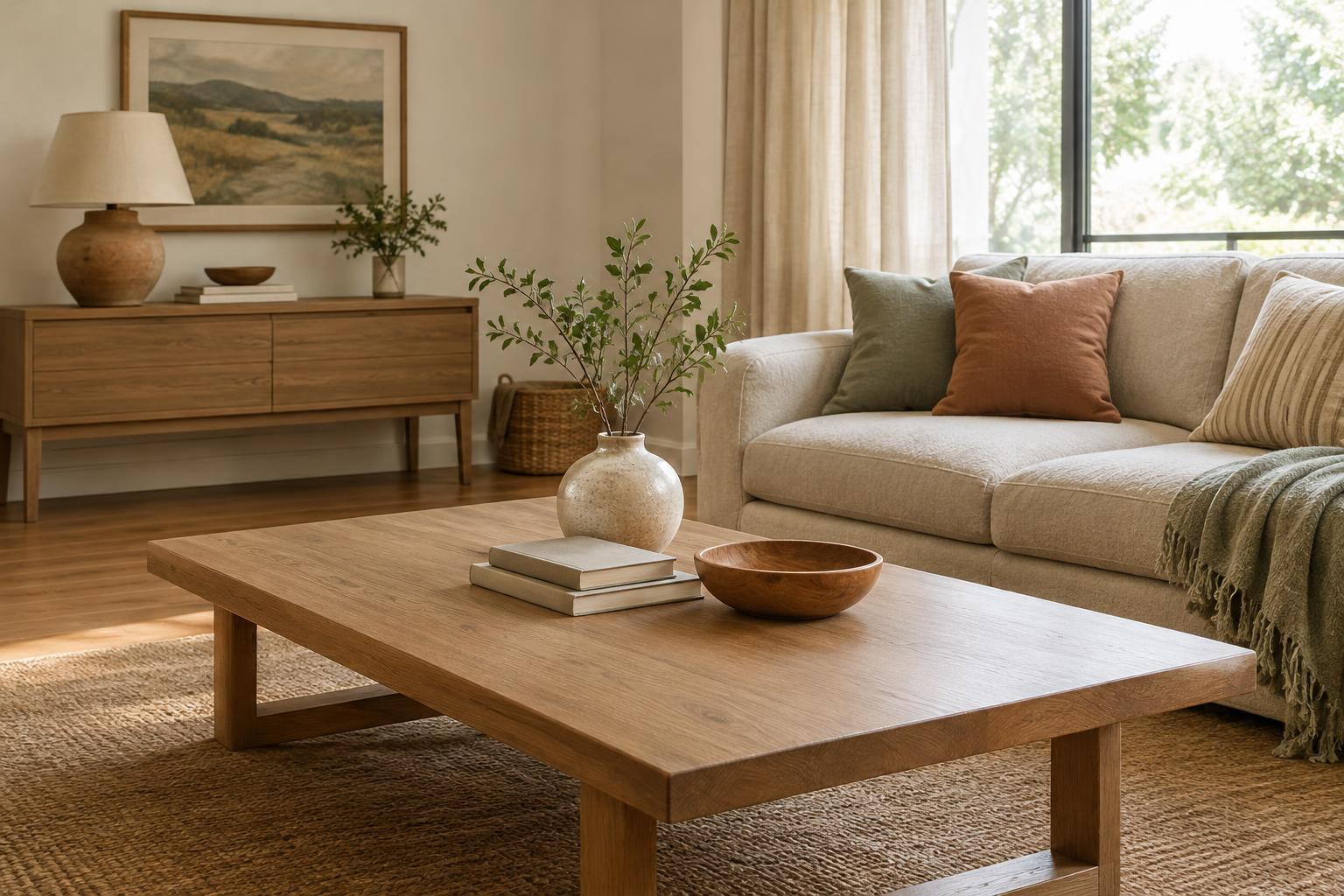
Mistake 1: Filling every available surface
A spare corner of a shelf or table can feel like an invitation to add something. Over time, however, a collection of individually appealing objects may leave nowhere for the eye to rest. The problem is not necessarily the number of possessions; it is that every item is competing for attention. This is especially noticeable on surfaces used every day, such as coffee tables, bedside tables and kitchen counters.
Start by clearing one surface completely. Put back what the surface needs for its usual purpose, then choose a small number of decorative pieces. Leave open space around them so their shapes are easy to see. If it is difficult to remove favourites, rotate them between rooms or store some for another season. A clear patch of tabletop is not an unfinished spot: it helps the pieces you keep feel intentional.
Mistake 2: Choosing accessories at the wrong scale
Small objects can disappear on a large sideboard, while an oversized vase may overwhelm a narrow mantel. Accessories also need to relate to the furniture beneath them and the space around them. Before buying something, consider where it will sit and what else will share that area. A piece that looks substantial in a shop may look quite different at home.
To correct a display of tiny items, gather a few on a tray or place them beside one larger object. This gives them a shared boundary and a clearer presence. If a large accessory feels too dominant, move it to a more generous surface or let it stand alone rather than crowding it with additions. Step back and look at the arrangement from across the room; the overall proportions are often easier to judge from there.
Mistake 3: Spreading objects evenly instead of creating groups
A vase at one end of a shelf, a candle in the middle and a framed photograph at the other can look more like storage than styling. Even spacing gives every object the same emphasis, which makes it harder to find a focal point. Grouping a few items together can create a more settled arrangement while preserving useful empty space elsewhere.
Try placing objects of different heights close enough to read as one group. A framed picture can form a backdrop for a shorter bowl, for example, while a small object can sit slightly in front. Vary the shapes as well as the heights so the grouping does not feel repetitive. You do not need to arrange everything symmetrically: the aim is balance, not a mirror image. If one side feels heavy, adjust the spacing or remove a piece before adding more.
Mistake 4: Treating every accessory as a separate purchase
When objects are chosen one at a time, it is easy to end up with finishes, colours and styles that have no apparent connection. An exact match is not required; a room can comfortably include pieces collected over time. But a few repeated details help those pieces feel as though they belong together.
Look at what is already in the room before introducing another colour or material. You might repeat a warm wood tone from the furniture, pick up a colour from a cushion, or use similar ceramic finishes in different shapes. Keep some contrast so the arrangement has depth: smooth glass beside textured pottery, for instance, can be more engaging than a row of identical pieces. If an accessory feels out of place, try moving it near something that shares one of its colours or materials.
Mistake 5: Forgetting how the room is used
An arrangement may look good from the doorway but cause frustration during an ordinary day. A tall object can interrupt conversation across a dining table, fragile pieces may sit too close to a busy edge, and a crowded bedside table can leave no room for a book or glass of water. Decoration works best when it supports the room rather than getting in its way.
Test each display in use. Can you reach what you need without moving several objects? Is there enough space to set something down? Could a sleeve or bag knock a piece over? Shift accessories away from active areas and give frequently used surfaces simpler arrangements. A single well-placed object can add character without demanding constant rearranging. The most successful fix is often not a new purchase, but a better position for something you already own.