Why the heading matters
A curtain heading is the finished top edge that attaches the fabric to a pole or track. It may seem like a small detail, but it determines how the fabric hangs, how easily the curtain moves and how much of the pole remains visible. Two curtains made from the same material can look quite different simply because their headings form different folds.
Before choosing a style, decide how the curtains will be used. Panels opened every morning and closed every evening need to move comfortably across their fitting. Curtains that mainly frame a window can prioritise appearance. Also consider the space beside the window: when open, the fabric gathers there, and a fuller heading generally needs more room. These practical questions can narrow the choice before colour or pattern enters the picture.
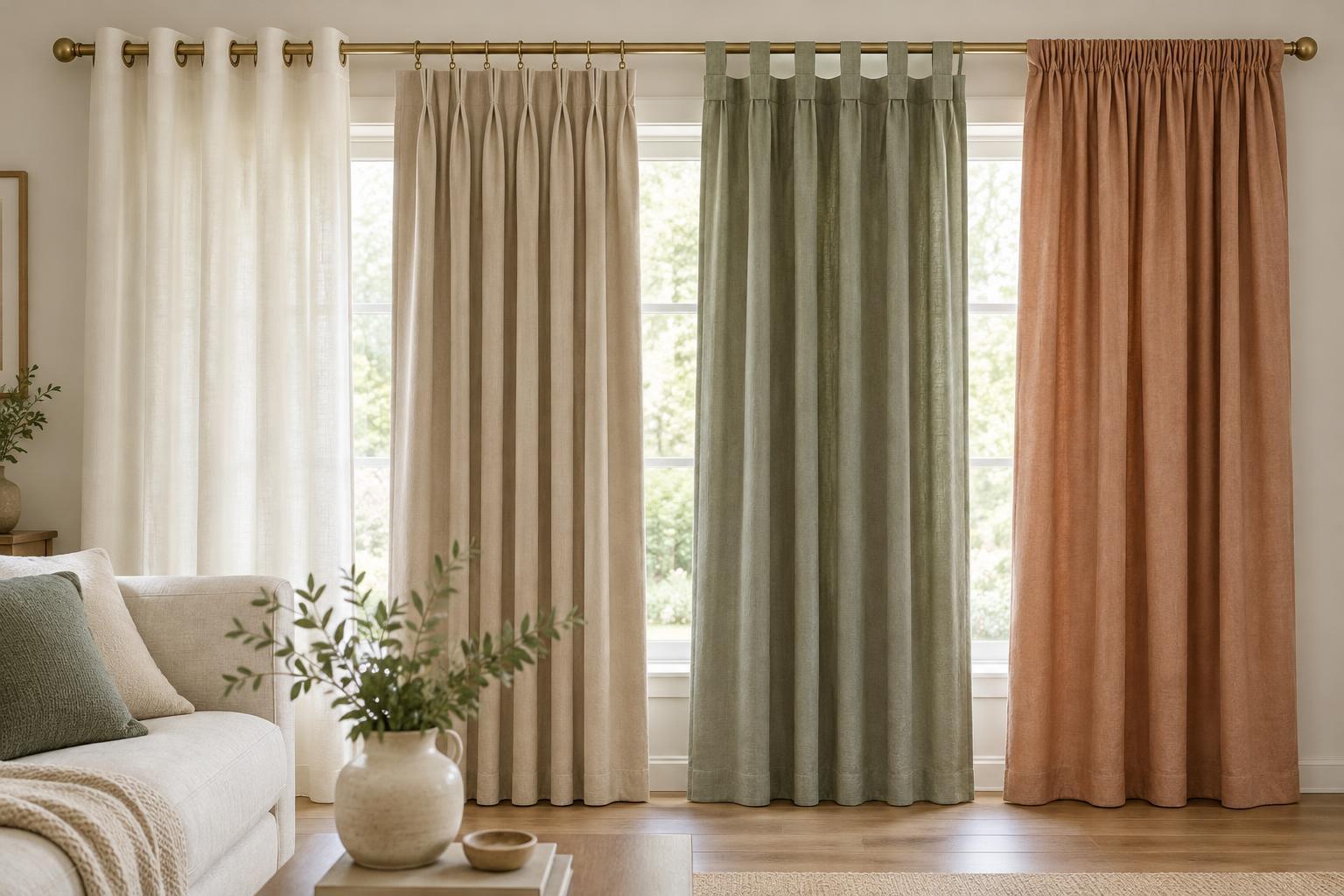
Eyelets: regular folds and easy movement
Eyelet curtains have rings set into the fabric along the top edge. The pole passes through the rings, creating broad, repeating folds. Because the pole is visible between the folds, its finish becomes part of the design. A simple metal pole can reinforce a contemporary look, while a warmer finish can soften the effect.
Eyelets are a useful option for curtains that are moved often. They tend to slide readily along a suitable pole, although their movement can be interrupted by brackets or other obstacles. Check that the eyelet openings fit the pole and that the pole is installed with enough space above the window for the heading. Eyelets are designed for poles rather than standard curtain tracks.
The folds remain fairly consistent whether the curtains are open or closed, giving the window a tidy rhythm. If you want to conceal the fitting or prefer small, closely gathered folds, another heading may be a better match.
Pleats: a tailored finish with flexible fittings
Pleated headings gather fabric into defined folds at the top of the curtain. Pinch pleats are sewn into place, while pencil pleats are formed by pulling cords in a heading tape. Pinch pleats give a structured, repeatable shape; pencil pleats have a softer, more adjustable gathered appearance. The two styles are often grouped together, but it is worth checking which one a ready-made curtain actually uses.
Pleated curtains usually hang from hooks on a track or from rings on a pole. This makes them helpful when you want the curtain to travel along a track, or when you would rather keep the pole less prominent. Hooks may also offer limited adjustment to the hanging height, depending on the heading tape and fitting.
Pleats use fabric to create their shape, so a panel must have enough width to cover the window attractively after it is gathered. Follow the maker’s guidance on the finished width rather than relying on the flat panel measurement alone. For pencil pleats, gather the tape evenly before hanging and secure the cords without cutting away the excess; you may need to adjust the gathers later.
Tabs and rod pockets: relaxed, pole-based options
Tab-top curtains hang from fabric loops sewn along the upper edge. The loops expose sections of the pole and give the curtain a relaxed, informal character. They can suit a room where visible texture and simple construction feel at home. Because the fabric tabs grip the pole more than eyelets do, they may be less convenient for curtains you open and close frequently.
A rod-pocket curtain has a fabric channel through which the pole is threaded. This hides much of the pole and produces soft gathers across the top. The look can be understated, especially with light or medium-weight fabric. Like tabs, a rod pocket may resist sliding, so it often works best for a panel that stays mostly in position.
For either style, check the pole diameter against the size of the loops or pocket. A fit that is too tight makes installation and movement awkward. Also look at where the fabric sits in relation to the pole: tabs and pockets may position the top edge differently from eyelets or curtains hung on hooks.
How to choose and measure with confidence
Match the heading to both the room and the routine. Choose eyelets for visible, even folds on a pole that is easy to reach. Consider pleats for a more tailored finish or for use with a track. Tabs bring a casual note to a decorative panel, while rod pockets offer soft gathers when frequent sliding is not important. None is inherently right for every room; the best choice is the one that works with your fitting and how you use the window.
Measure from the point where the curtain will hang, not from an assumed position at the top of the pole. Eyelets, tabs, pockets and hooks place fabric at different heights. Decide where you want the hem to finish, then check the product’s measuring instructions against your pole or track. For width, allow enough fabric to form the intended folds when the curtains are closed, and enough wall space for them to gather when open.
Finally, consider the fabric alongside the heading. A crisp material emphasises defined folds, while a softer one may fall more loosely. If you are combining new curtains with existing cushions or throws, repeat a colour or texture rather than trying to match every detail. The heading can then do its practical job while contributing quietly to a comfortable, coordinated room.