Start with the space people need
Before adding anything to a sofa or armchair, look at how it is used. A seat that accommodates two people comfortably should still do so after you decorate it. If guests have to move a pile of cushions before sitting down, the arrangement may look inviting but will not feel especially welcoming. Treat clear seating space as part of the design, not as an empty area that needs filling.
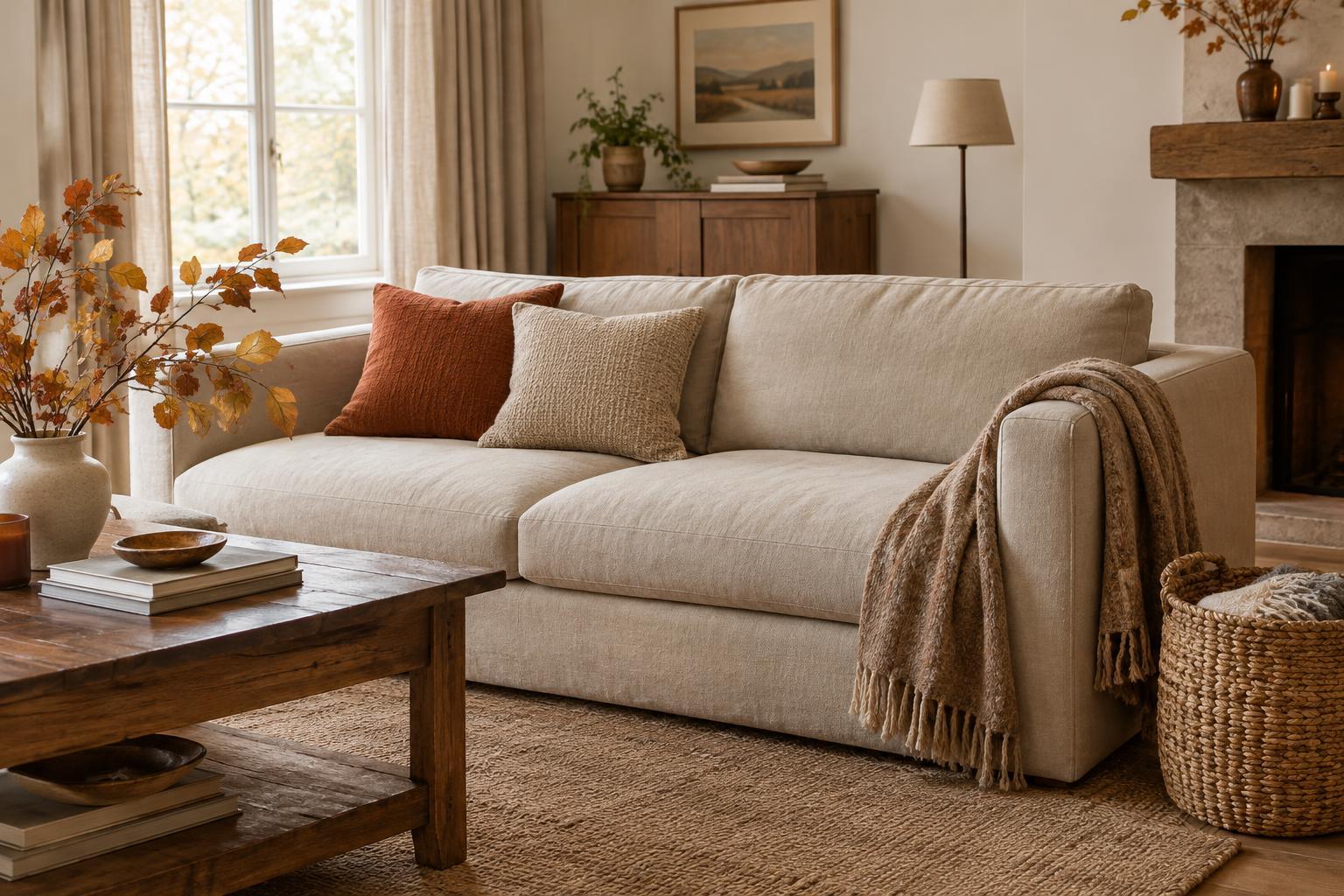
Begin by removing the textiles you already have and returning only the pieces that earn their place. On a sofa, that might mean a cushion at each end and one throw within easy reach. An armchair may need just a single small cushion, or no cushion at all if its back is supportive. There is no fixed number to aim for: the right amount depends on the size and depth of the seat.
Build warmth with texture rather than quantity
Autumn warmth does not require a new layer on every surface. A few tactile materials can create a sense of comfort more effectively than many similar cushions. Try pairing a smooth sofa fabric with a softly woven throw, or placing a textured cushion beside one in a simpler material. The contrast makes each piece noticeable without making the seating feel busy.
Think about how a textile feels in use as well as how it looks. A bulky knit may be pleasant to drape over your legs but awkward to sit against; a flatter woven cushion can be more practical for back support. If a fabric sheds, slips easily or needs more care than you want to give it, consider using it elsewhere. Comfortable materials are more likely to stay where you intended them.
Choose a small, connected colour palette
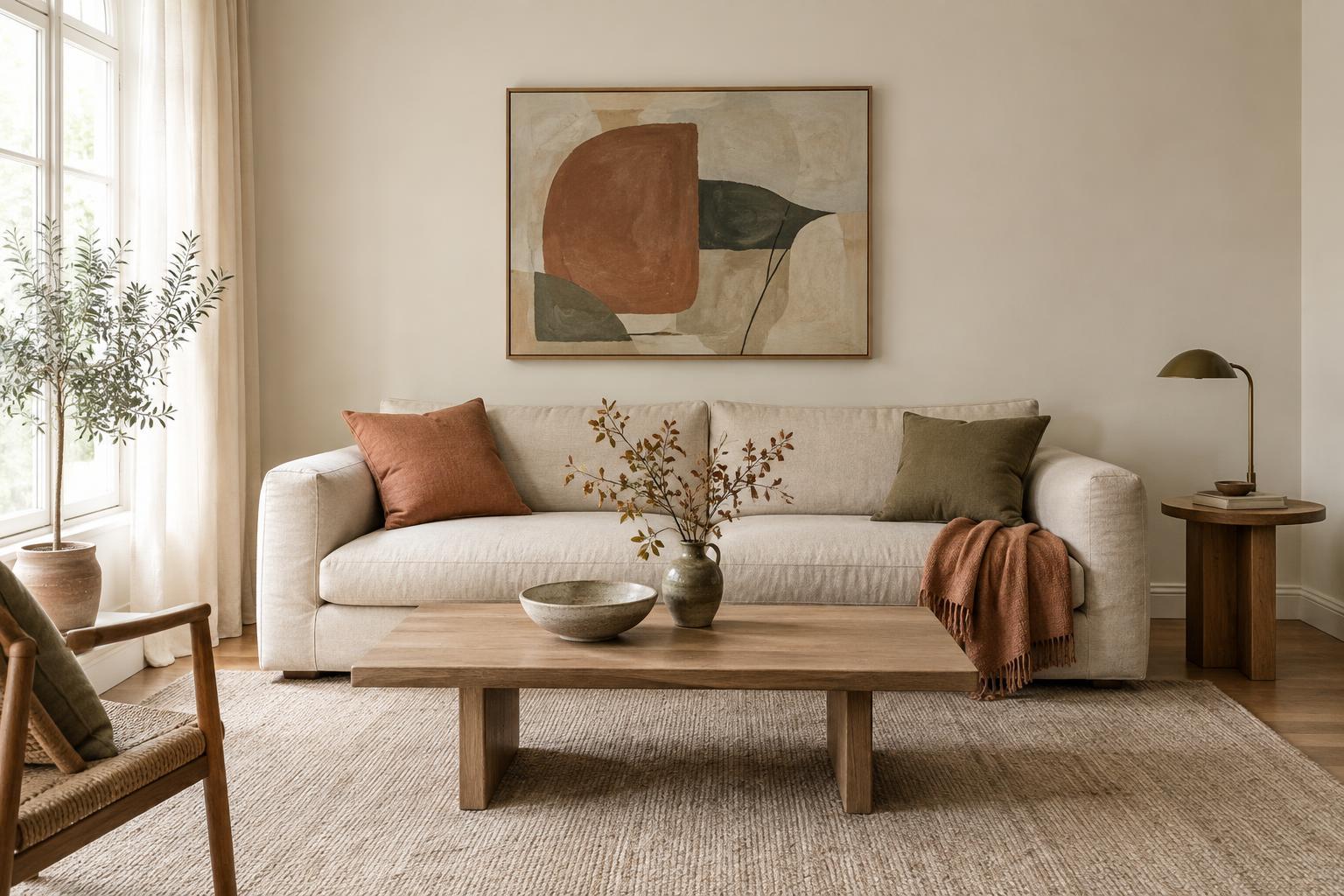
Warm seasonal colour can be subtle. Instead of replacing every cushion cover with orange or rust, choose one or two accents that work with the room’s existing colours. Warm brown, muted ochre, olive, plum and soft cream can all suggest autumn, but their effect depends on what is already in the space. A cream sofa might welcome deeper accents, while a dark sofa may benefit from one lighter throw.
Repeat a colour sparingly so it feels intentional. For example, a warm-toned cushion could connect to a small decorative object or the colours in a rug. Keep larger pieces relatively quiet if the room already has patterned curtains or a busy floor covering. If you enjoy pattern, use one patterned cushion as a focal point and let neighbouring textiles pick up one of its colours.
Give throws a place to go
A throw adds warmth most successfully when it is easy to reach and easy to put away. Fold one over a sofa arm or drape it across a corner of the seat, leaving the main sitting area clear. A nearby basket can hold a second blanket for colder evenings without requiring both to be displayed on the sofa. This also makes it simpler to reset the room after use.
Pay attention to scale. A throw that barely covers your lap may look tidy but offer little comfort; an oversized one can trail onto the floor or swallow a small chair. Check its dimensions against the way you expect to use it. If you already own a suitable blanket, try changing where it sits before buying another. A different fold or placement can make a familiar piece feel fresh.
Finish by testing the arrangement
Once the textiles are in place, sit down as you normally would. Can you lean back comfortably? Is there room for someone beside you? Can you reach the throw without disturbing the whole arrangement? These simple checks reveal more than a view from the doorway. If a cushion repeatedly ends up on the floor, it may be better suited to a bed or another chair.
Step back and notice where the room feels visually heavy. You can often improve the balance by removing one piece rather than adding another. Keep the textiles you use and enjoy, then store any extras for later in the season. Autumn decorating need not be a complete changeover: a restrained set of comfortable layers can make the room feel warmer while leaving its seating ready for everyday life.