Start with the paths you use every day
Before choosing a tree, walk through the room as you normally would. Notice the route from the doorway to the sofa, the way you reach a window or cupboard, and where people move around a dining table. A corner that looks empty in a photograph may still be part of an important path. Pay attention to door swings, drawers and furniture that needs to pull out, too.
Mark a possible tree position on the floor with removable tape or a few sheets of paper. Then walk past it while carrying something, such as a laundry basket. If you have to turn sideways, brush against furniture or take an awkward detour, the position is too tight. Leave enough space for people to move naturally, remembering that a decorated tree may be wider than it first appears.
Choose by footprint, not height alone
Height is only one part of a tree’s size. Measure the floor area available for its widest branches, as well as the space needed for the stand, a tree skirt and any gifts you plan to put underneath. Also check the ceiling height and allow room for the topper. If you are buying a real tree, its shape may be uneven; if you are using an artificial one, check its stated width when fully opened rather than judging it by the storage box.
In a narrow room, a slim tree can provide the familiar shape without taking over the floor. A smaller tree raised on a sturdy table or low cabinet can work where floor space is scarce, provided the surface is stable and the tree cannot easily be knocked over. Do not assume that pushing a large tree tightly into a corner will solve the problem: compressed branches can look crowded and may still project into the walkway at shoulder height.
Find a position that works from several angles
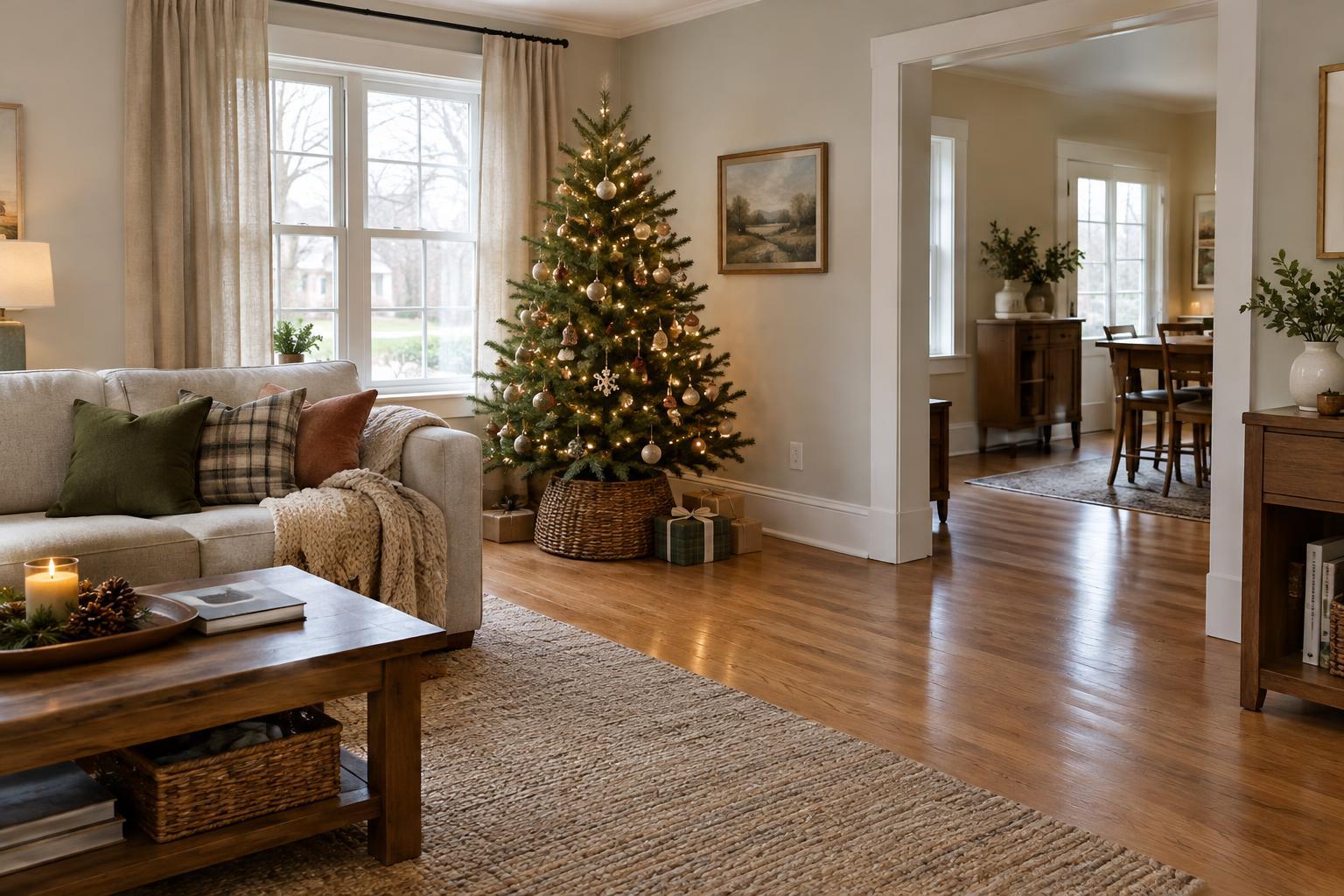
A tree does not have to stand in the centre of a room to feel prominent. Try a corner beside the seating area, an open stretch of wall or a spot visible from an adjoining room. Step back and look at it from the places where you spend time. A well-positioned smaller tree often feels more welcoming than a larger one that interrupts conversation or makes a room difficult to cross.
Keep the tree clear of doors and places where people regularly reach for switches, storage or curtains. Avoid putting it directly beside a heat source, and follow the guidance that comes with your tree and lights. Choose a position where the stand sits level and cords can reach an outlet without crossing a walking route. If a cord would have to trail across the floor, look for another location rather than relying on a rug to hide it.
Test the decorated shape before committing
Once the tree is in place, open or arrange its branches before adding ornaments. Walk the routes you checked earlier and look for branches that catch on sleeves or bags. Turn the tree so its fullest side faces into the room while any narrower side faces the wall, if its shape allows. This small adjustment can improve the view and recover useful space.
Decorations change the practical footprint as well. Long ribbons, low-hanging ornaments and a wide tree skirt can spread into the path even when the branches do not. Keep fragile decorations away from places where they may be brushed, especially in busy family rooms. If children or pets use the space, consider a secure stand and place tempting or breakable items higher up.
Make the surrounding space part of the display
If the right tree for your room is modest in size, give it presence through its setting rather than extra width. A restrained colour palette, a simple skirt and a few nearby decorative details can make the display feel intentional. You might move a small side table or basket for the season, but avoid shifting essential furniture into a walkway simply to make room for the tree.
Live with the placement for a day before finishing every detail. Open doors, sit in your usual chairs and move through the room at its busiest times. A good position lets you see and enjoy the tree while still using the room comfortably. If it fails that test, moving it early is easier than spending the season stepping around it.