Start with the way you use and dry towels
Before choosing a colour or feeling a stack of towels, think about what happens after each shower. Does each person have a hook or rail with room to spread a towel out? Is the bathroom often damp? Do you wash towels frequently, or do you need them to stay in rotation for several days? A towel that feels luxurious when new may be inconvenient if it stays damp on a crowded hook.
Thicker towels tend to feel plush and substantial, but they can take longer to dry, especially when folded over a narrow rail. Lighter towels are often easier to wash, store and dry, though they may not deliver the enveloping feel you want. Neither is automatically better. If drying space is limited, consider trying one moderately thick towel before buying a full set. Use and wash it as you normally would to see whether its feel and drying time suit your home.
Compare feel and construction, not just softness
Most familiar bath towels have small loops of yarn that give the surface its absorbent, cushioned feel. Look closely at whether the loops seem reasonably even and whether the edges and hanging loop, if present, feel securely finished. A decorative border can look smart, but check that it does not feel stiff against your skin or make the towel awkward to fold.
Softness in a shop is only one clue. A very plush towel may feel different after washing, while a less fluffy one may become a reliable everyday choice. If you prefer a smooth, light fabric to a deep pile, a flat-woven towel may be worth considering. It will feel different from a classic looped towel, so choose according to the texture you enjoy rather than assuming one style is an upgrade.
Before buying a matching stack, read the care label. Check whether the recommended wash and drying methods fit your usual laundry routine. Keeping towels clean and letting them dry fully between uses will matter more to everyday comfort than choosing a particular decorative finish. For more ideas about looking after household fabrics, browse Cleaning and Care · Weave and Care.
Choose sizes that fit both people and space
A large towel can feel comfortable after a shower, but it also needs enough rail space to hang open and enough cupboard space when folded. If two large towels end up layered on one hook, smaller towels with separate places to dry may be the more practical choice. Check the dimensions on the product label rather than relying on names such as bath towel or bath sheet, which may be used differently across ranges.
It helps to plan by task. Hand towels should be convenient to reach without brushing the basin or floor. Bath towels need to cover the person using them comfortably. Small face cloths can be useful if you prefer a separate cloth for washing, but buying more pieces than you use creates extra laundry and clutter. Measure the width of your rail and the depth of your shelf before deciding how many towels to keep in regular rotation.
If you share a bathroom, subtle differences can make towels easier to identify. Two coordinating shades, a small pattern change or distinct hanging loops can separate sets without making the room look busy. Make sure any identifying detail is easy to recognise once the towels are folded or hanging.
Build a simple set that works with the room
Towels cover a noticeable area when they hang in a bathroom, so their colour can help the room feel more settled. You can match them closely to the walls for a quiet look, repeat a colour from a shower curtain or tile detail, or use a restrained contrast. If several people use the room, a small palette of compatible colours often looks more cohesive than an assortment of unrelated sets.
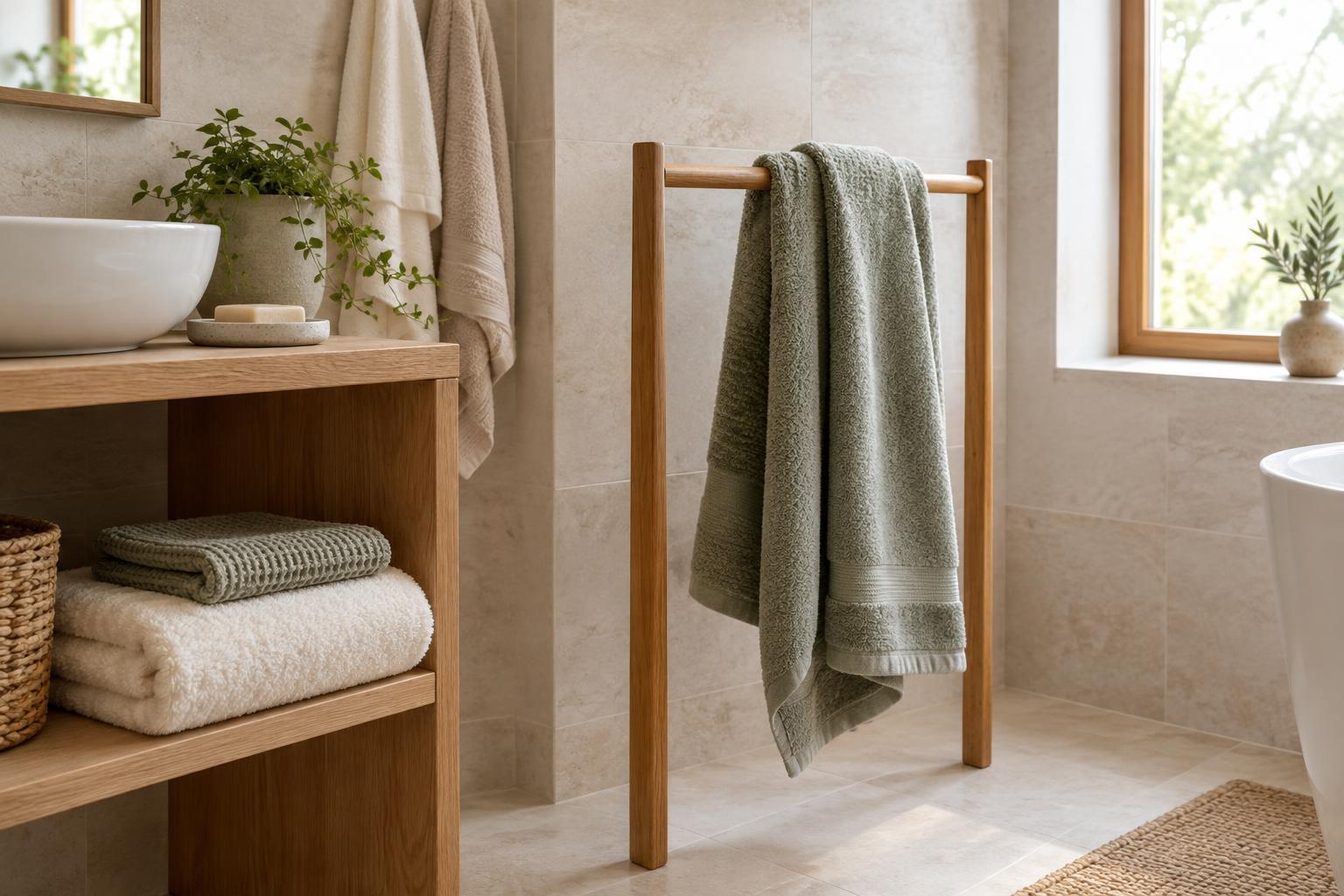
Consider what is visible when towels are not in use. Open shelves benefit from folds that fit the shelf and colours that work together; closed cupboards give you more freedom to mix styles. Leave enough room around stored towels to take one out without disturbing the whole stack. To browse other ways fabrics can contribute to a coordinated home, explore Home Textiles · Weave and Care.
A practical starting point is to buy one or two towels in the size and weight you think you want, then live with them through several washes. Notice how they feel, where they hang and whether they dry comfortably before adding more. A good towel set is not necessarily the biggest or softest one: it is the one that fits the people, laundry habits and space you actually have.