Start with the furniture, not the hardware
A small change in hardware can alter how a cabinet, dresser or bedside table feels in a room. Before choosing a finish or shape, look closely at the furniture you already have. Note its colour, proportions and details, such as curved edges, visible wood grain or decorative trim. The most satisfying choice usually responds to those features rather than competing with them.
Decide what you want the change to do. A simple knob can quieten a busy drawer front, while a more distinctive pull can add character to a plain one. If several pieces sit together, their hardware need not match exactly. Repeating one detail, such as a rounded shape or a warm metal tone, can give them a sense of connection.
Measure before you browse
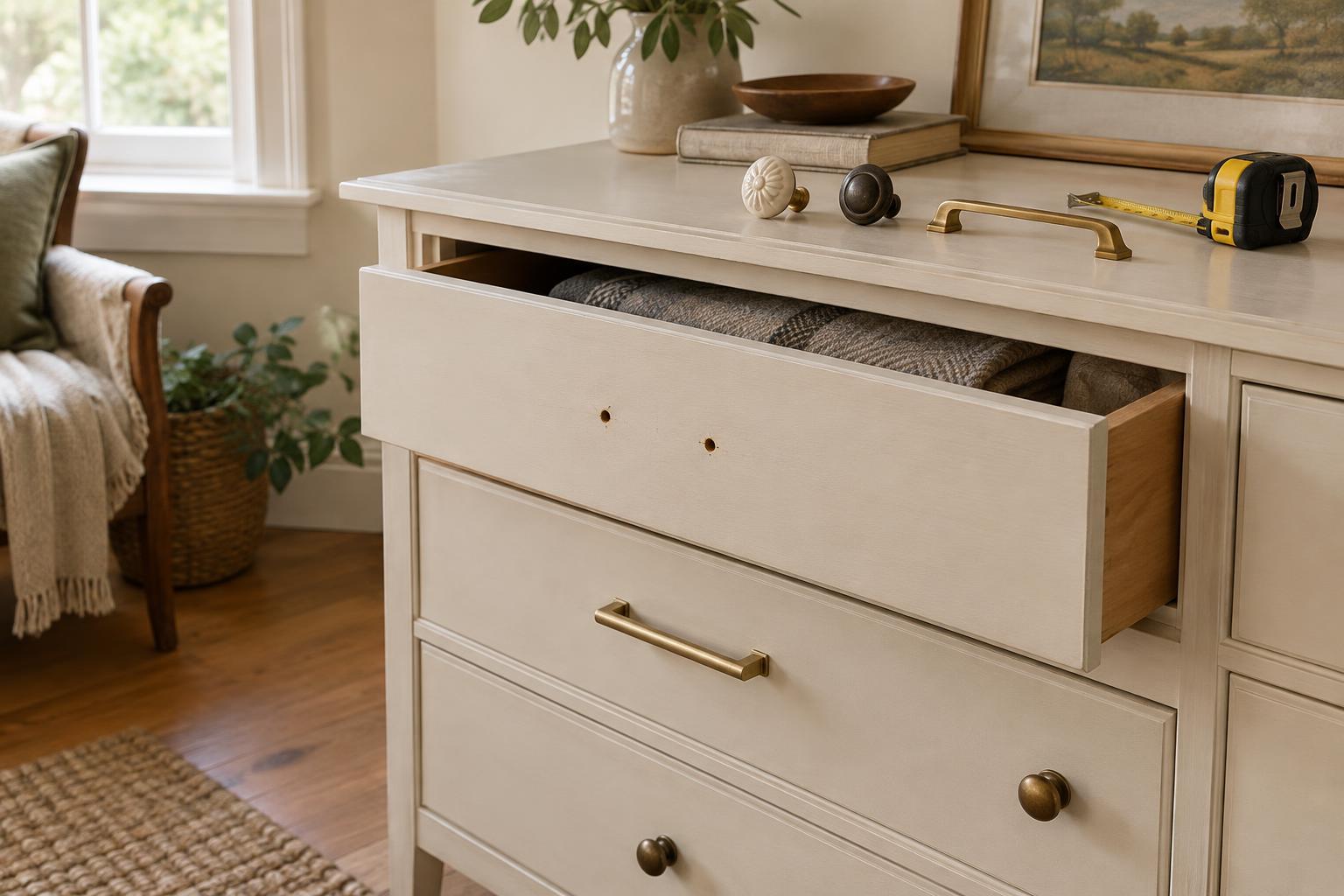
Check how the current hardware is attached. A knob usually uses one hole; a pull commonly uses two. For a two-hole pull, measure from the centre of one hole to the centre of the other. Record that centre-to-centre distance rather than the pull’s overall length. Also note the drawer-front or door thickness, since the supplied screws may not be the right length for your furniture.
If you want to reuse the existing holes, keep those measurements with you while shopping. Switching from a pull to a single knob, or choosing a pull with different spacing, may leave exposed holes. A backplate can sometimes cover marks or old holes, but check its dimensions against the actual drawer front before relying on it. It is worth removing one existing fitting to see whether the finish beneath it differs from the surrounding surface.
Choose a shape you will enjoy using
Hardware is decorative, but it is also something you touch every day. Think about how you open the furniture. A shallow knob may be fine on a lightly used cabinet yet frustrating on a heavy drawer. A pull should leave enough room for a comfortable grip without projecting so far that it catches on clothing in a narrow walkway.
Scale matters as much as style. A tiny fitting can look lost on a wide drawer, while an oversized one may overwhelm a small door. Hold a candidate against the furniture, or cut a paper shape to its listed dimensions and tape it in place. Stand back and look at the whole piece, then try the grip at the height where you will actually use it. For a row of drawers, consider whether one consistent size or a deliberate change in size gives the calmer result.
Coordinate finishes without making everything match
Use the room as a guide, not a strict rulebook. Warm-toned hardware can sit comfortably alongside timber and soft textiles; cooler or dark finishes can bring definition to pale painted furniture. Glass, ceramic and wood knobs introduce texture as well as colour. If the furniture already has a strong pattern or ornate shape, simpler hardware may give the eye a place to rest.
Compare samples in the room where the piece lives. A finish that looks bright under shop lighting may appear subtler at home, and a colour viewed on a screen may not match your expectations. Check it beside nearby handles, lamps or picture frames, but do not worry about making every metal identical. A small number of repeated tones or shapes often feels more intentional than either perfect matching or a different finish on every surface.
Test the change before committing
If possible, buy or borrow one fitting first and attach it to the furniture. Open and close the drawer or door several times. Check whether the hardware sits flat, clears adjacent doors and feels comfortable. This trial can also reveal whether a backplate covers old marks and whether the screw length works.
When you are ready to change the full set, place the removed hardware and screws in a labelled bag. Protect the furniture surface while working, and tighten fittings until secure without forcing them against a delicate finish. If new holes are needed, mark their positions carefully and consider whether you are comfortable making a permanent change. The right knobs or pulls should make the furniture easier to live with while giving it a detail that feels at home in the room.