Start with the table, not the accessories
Before choosing objects, look at the console table’s length, depth and height. A long, narrow table needs a different arrangement from a compact one, even if both stand in the same hallway. Note any drawers you need to open and whether the table sits beside a door, walkway or seating area. These details set useful limits on what can go where.
Stand back and notice how much of the table you see at once. A console against a wall is often viewed from the front and at an angle; one behind a sofa may be seen from both sides. The aim is not to fill every centimetre. Leaving visible surface around objects makes their shapes easier to appreciate and gives the table room to serve a practical purpose. If it holds keys or mail, reserve that space before adding decoration.
Choose one object to establish scale
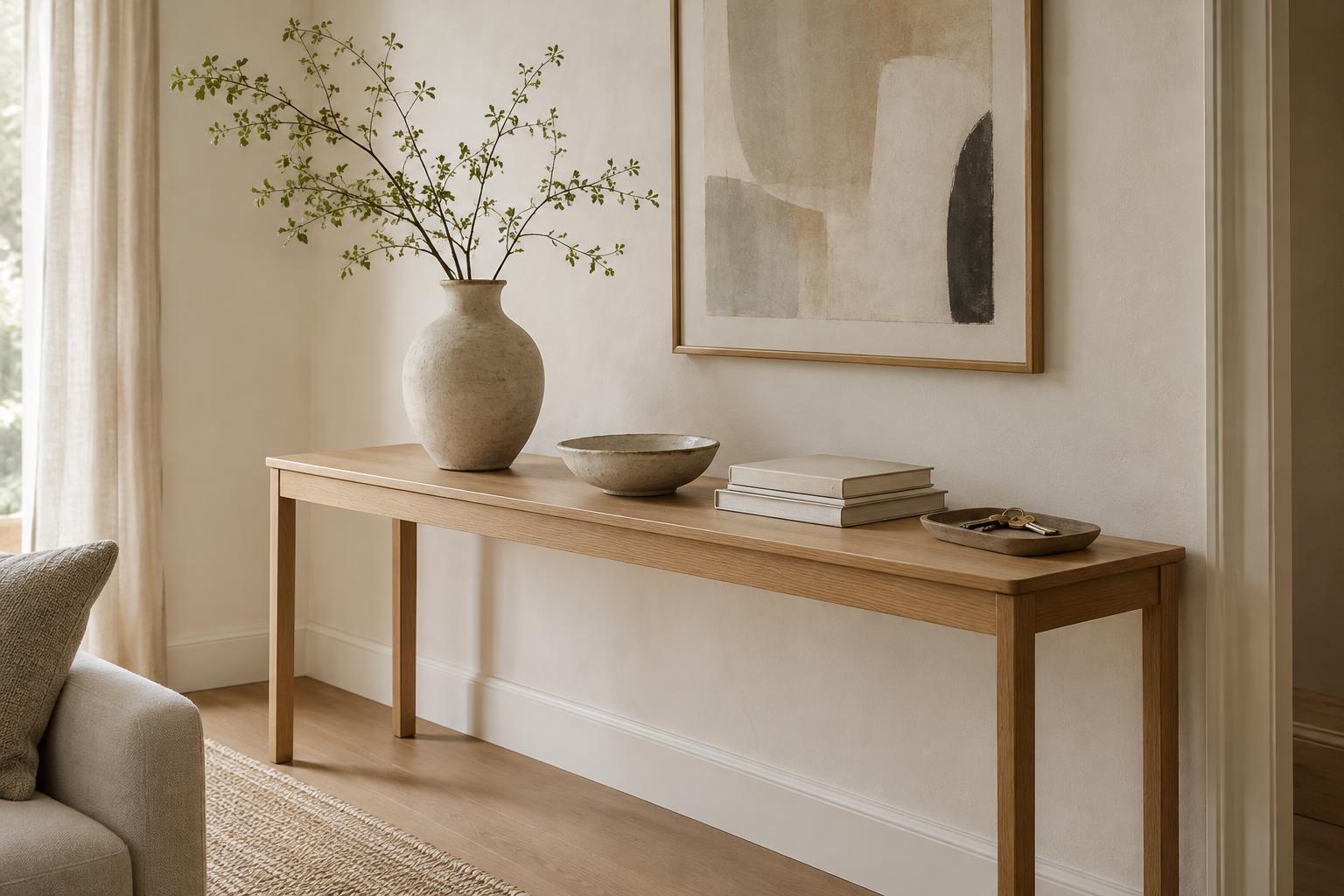
A strong starting point is a single object with enough presence to relate to the table: a lamp, a substantial vase, a sculptural bowl or a framed piece leaning against the wall. On a long console, a cluster of tiny objects can look scattered because nothing gives the eye a place to settle. One larger piece provides an anchor, while smaller items add detail around it.
Check the object’s width as well as its height. A broad lamp shade might dominate a shallow tabletop even when the base fits comfortably. A tall vase can look balanced at one end of a long console, but it may feel cramped beneath a low shelf or interfere with a wall mirror. Judge scale from the usual viewing spot, then check it again while walking past. If the arrangement seems to disappear, try a larger anchor; if the table seems hidden, remove or replace something.
Vary heights without building a wall
Objects of different heights give a console arrangement a clear outline. Pair a taller item with a lower bowl, box or small stack of books, and let some empty space separate the group from anything at the opposite end. You do not need a neat staircase of sizes. A gentle contrast between tall, medium and low pieces is usually enough to keep the surface interesting.
Consider what sits above the table, too. A mirror, artwork or wall light already contributes height, so the objects below it need not compete. If a lamp or vase crosses the lower edge of a mirror, check whether the overlap looks intentional rather than crowded. In an entryway, avoid placing a tall item where it blocks a useful reflection. Behind a sofa, keep objects clear of where people lean back or reach across.
Respect the console’s shallow depth
Depth is easy to overlook when selecting decorative objects. A large round tray or wide ceramic piece may fit across the table but project too far forward. Choose items with stable bases that sit fully on the surface, and leave clearance at the front so sleeves, bags or passers-by are less likely to catch them. Where children or pets move through the space, favour sturdy pieces and positions away from exposed edges.
Try arranging objects in a loose front-to-back relationship rather than pushing everything into a straight line against the wall. A framed photograph might sit slightly behind a small dish, provided both have secure footing and the dish remains easy to use. On a particularly narrow console, keep the arrangement simpler: a lamp and a shallow tray may feel more considered than several overlapping pieces.
Edit the arrangement for daily life
Group objects by purpose as well as appearance. A tray can give keys a defined landing place; a box can conceal small essentials; a lamp can add useful light. Decorative pieces should support these functions, not force you to move them whenever you need the table. Mixing finishes or materials can add variety, but repeating one colour, shape or texture helps separate objects feel connected.
Once everything is in place, remove one item and look again. If the table feels calmer and still has a clear focal point, leave that item out. If it feels bare, put it back or try something with a different shape. The best arrangement is proportionate to the console and comfortable to use: it has enough visual weight to belong there, enough open surface to breathe and no object that gets in the way of everyday movement.