Start with the space you want to keep clear
In a small home, seasonal decorating works best as a change of emphasis rather than an extra layer of objects. Before taking anything out, notice which surfaces serve a daily purpose. An entry table may need space for keys, while a coffee table needs room for drinks and books. Treat that usable space as a boundary, not an invitation to fill every gap.
Choose two or three spots that can carry the seasonal look: perhaps the sofa, a shelf and the dining table. You do not need a themed item in every room. A few repeated colours or textures will make the update feel intentional, even when much of the home stays the same. If a display makes it harder to open a cupboard, sit comfortably or clean a surface, edit it back.
Swap everyday textiles instead of adding layers
Cushion covers, throws and table linens can change the mood of a room without taking up much display space. Keep the cushion inserts you already use and swap only the covers. Replace a heavy throw with a lighter one when the room calls for it, rather than leaving both on the sofa. At the table, one runner or a set of placemats can bring in seasonal colour while leaving the surface useful.
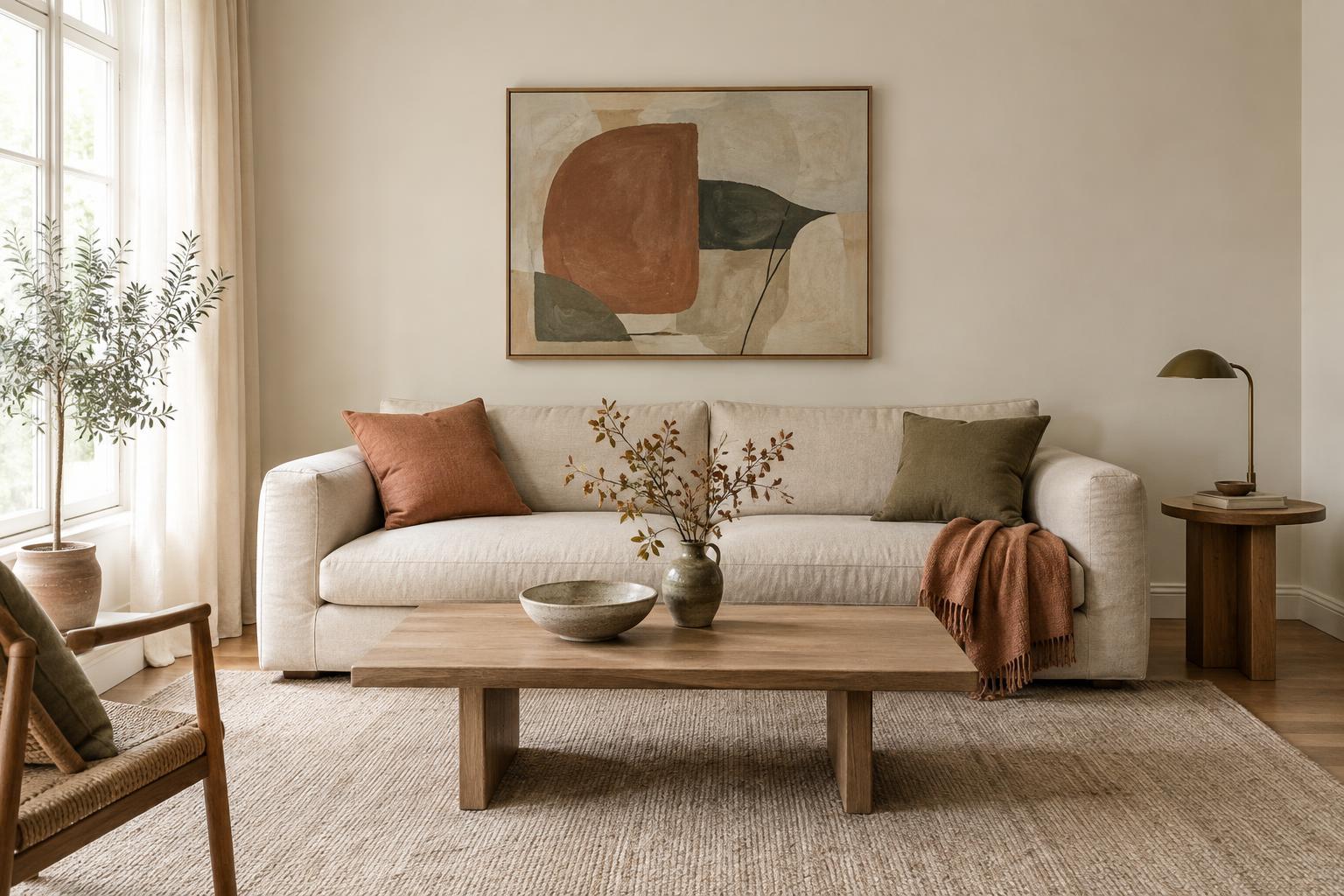
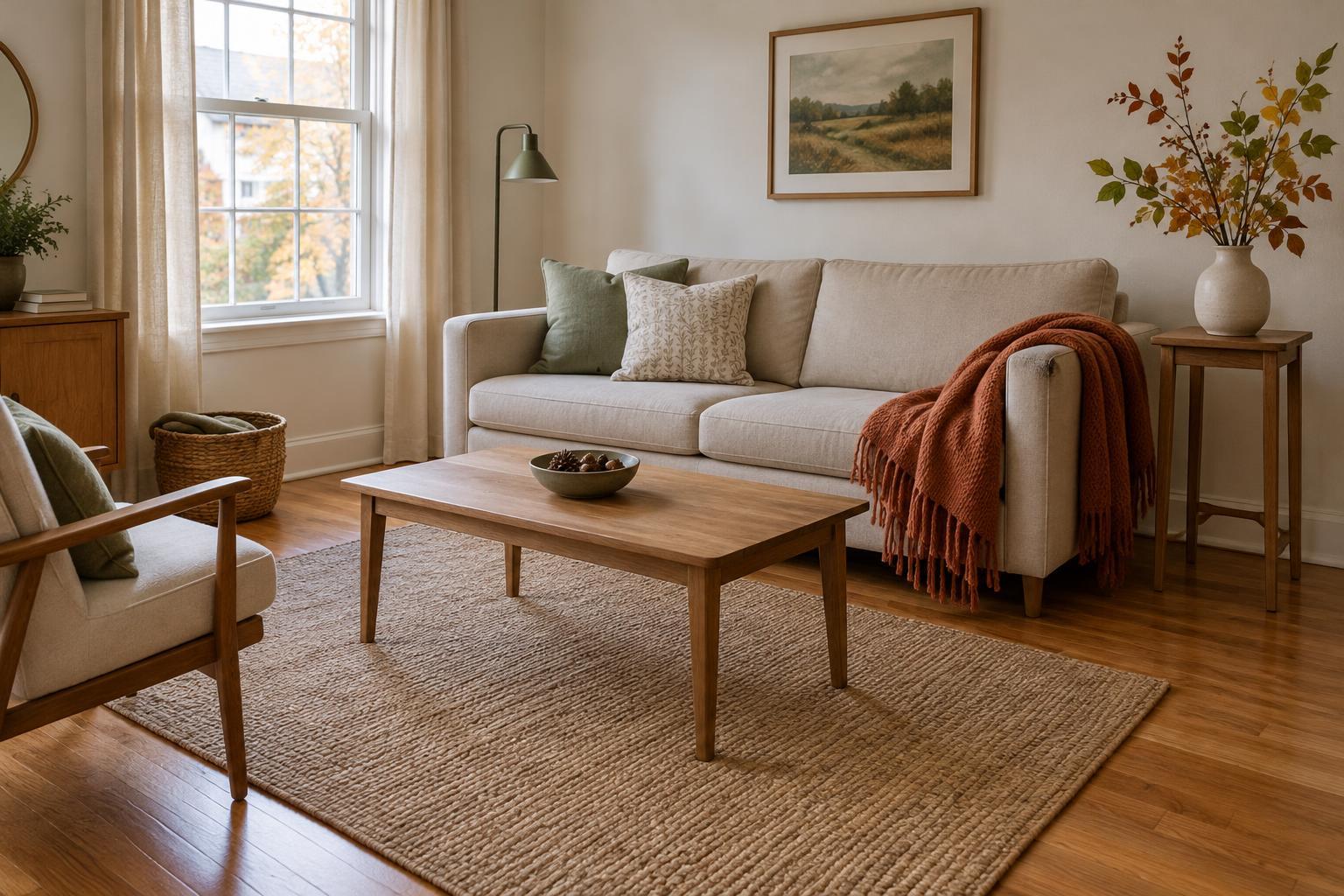
Let the room’s existing colours guide your choices. If your sofa and curtains are neutral, a warm rust cover may suit an autumn refresh; a soft green or pale blue may feel lighter at another time of year. These are options, not rules. Pick one or two accent colours that work with your permanent furniture so that each swap looks connected to the room. Texture can do as much work as colour: a nubby weave, smooth cotton or subtle pattern offers variety without a collection of novelty pieces.
Give each display a clear purpose
A small arrangement often has more impact than decorations scattered across every surface. On a shelf, try grouping a vase with one or two objects you already own, leaving open space beside them. On a dining table, use a compact arrangement that can move easily when you need to eat or work. A tray can help define the display and make clearing the surface a one-step task.
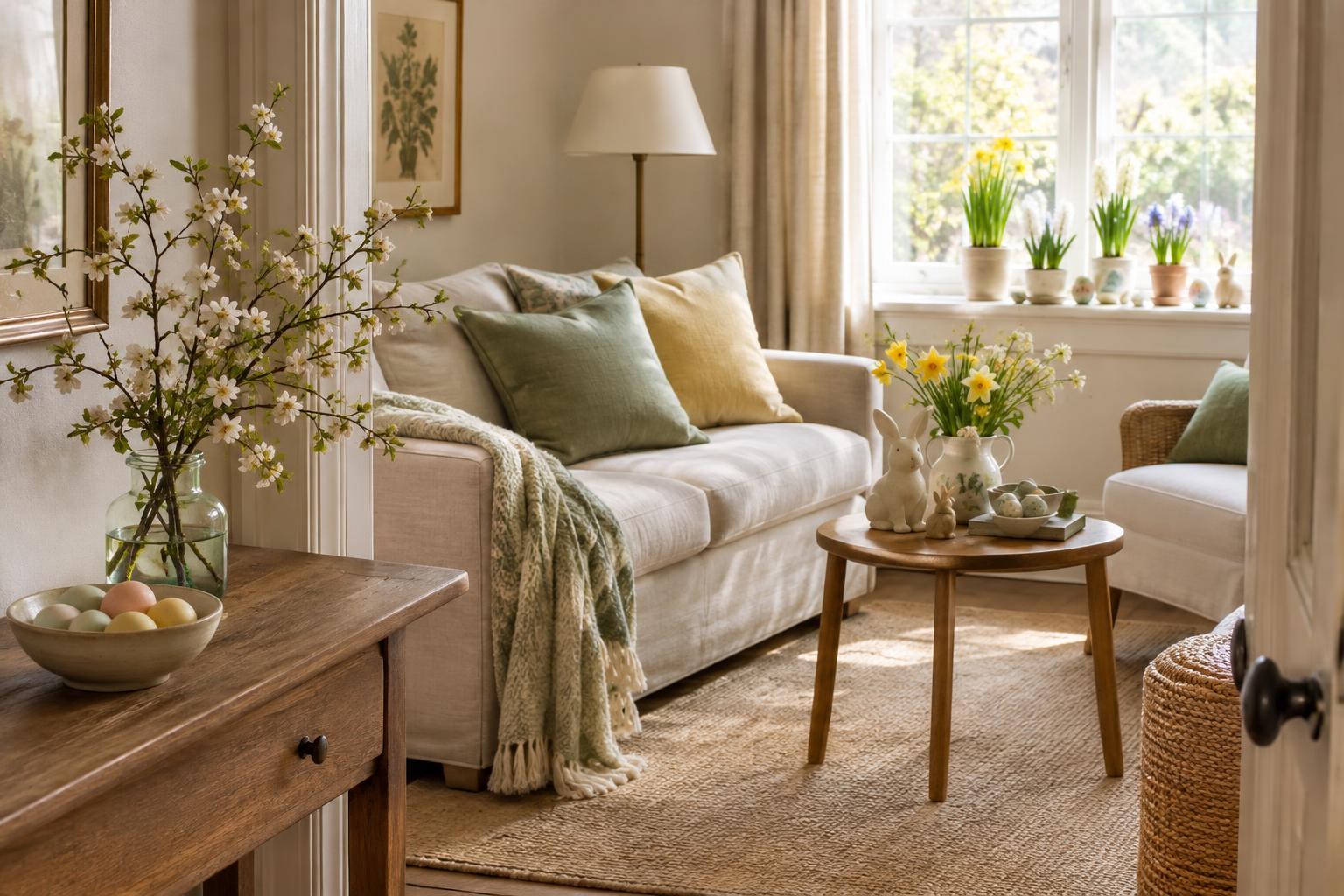
Seasonal details need not be literal. Branches in a vase, a favourite bowl filled with appropriate natural materials, or a change of artwork can suggest a time of year without requiring themed signs and ornaments. If you use natural finds, check that they are clean, dry and suitable for the spot. The aim is a room that feels lived in and easy to use, not a display that needs constant rearranging.
Reuse a small set of flexible pieces
Before buying something new, look at what could be styled differently. A plain ceramic vase might hold spring branches, summer greenery or a few dried stems. A neutral tray can anchor different arrangements throughout the year. Books, baskets and everyday tableware can also support a seasonal palette without becoming seasonal purchases themselves.
When you do consider a new item, ask where it will go now and where it will live afterward. Pieces that fold, nest or replace an existing item are easier to accommodate than bulky decorations with only one use. It is also worth checking whether an item looks good with the room when the rest of the seasonal display is packed away. If it does, you may enjoy it for longer and feel less pressure to keep changing everything.
Make putting decorations away part of the plan
Storage is part of decorating in a small home. Give seasonal items a defined container or shelf, and choose what to keep based on the space available. Fold covers and linens together, protect fragile objects and label the container so the next changeover is straightforward. If the collection no longer fits, review it before finding another place to hide it.
At each change of season, put away the previous accents before bringing out the next ones. Then add pieces gradually and stop when the room feels refreshed. This simple sequence makes it easier to see whether a new colour, texture or arrangement is doing enough on its own. A small home can reflect the seasons while still leaving room for the routines that make it comfortable.