Choose where the collection belongs
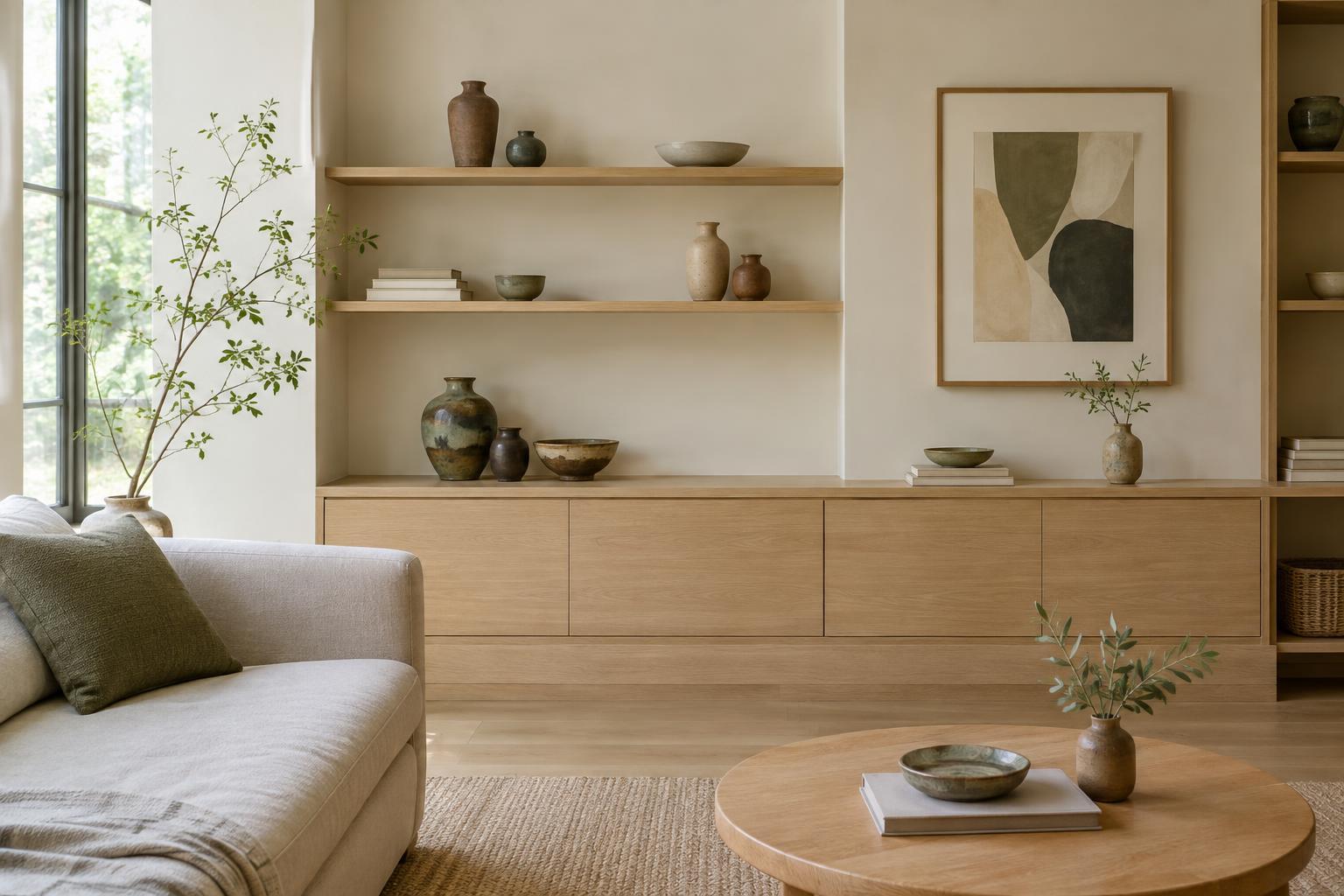
A collection feels most intentional when it has a defined home. Rather than placing pieces on every available surface, choose one or two display areas that suit the objects and the room. A shelf can hold books and small ceramics, while a sideboard gives larger pieces room to stand. When the collection has a clear boundary, other surfaces can remain useful and visually calm.
Start by looking at the room from the doorway and from the seats you use most often. Where would the collection be enjoyable to see without competing with a television, artwork or busy pattern? Consider practical limits too. Fragile pieces may need a spot away from a narrow walkway, and objects you handle often should be easy to reach. A good location lets you appreciate the collection without having to work around it.
Edit for a stronger display
Displaying a collection does not mean showing every piece at once. Select objects that represent what you enjoy about it: a favourite shape, a pleasing colour range or a few pieces with different sizes. Setting aside duplicates or pieces that do not fit the display gives the ones you choose more presence. The rest can be stored safely and brought out another time.
Before arranging anything, clear the chosen surface and put back only the objects you want to feature. This helps you judge the display as a whole instead of squeezing new pieces between existing decor. If you are unsure what to remove, take a step back and notice whether each object is easy to distinguish. Pieces that disappear into a crowded group may be better appreciated in a smaller arrangement.
Group pieces and vary their height
Small objects tend to look scattered when spaced evenly across a long shelf. Try bringing related pieces together so the eye reads them as one arrangement. A shared material, colour or subject can create a connection, but the pieces need not match exactly. For example, a few different vessels can sit together because they have similar earthy finishes. A tray can also give loose items, such as keepsakes or small decorative objects, a clear boundary.
Within each group, vary height and shape to avoid a flat line. Place a taller piece toward the back or to one side, then arrange lower pieces nearby without hiding them. Books can provide a simple base for a small object, provided the stack feels stable. On open shelving, vary the positions of groups from shelf to shelf rather than repeating the same layout all the way across. The aim is a relaxed rhythm, not perfect symmetry.
Leave room for the eye to rest
Empty space is part of the display. A gap between groups helps each one feel deliberate and makes the collection easier to take in. You do not have to fill the full width of a mantel or every section of a bookcase. If a surface also serves a daily purpose, leave enough clear area to set down a cup, open a drawer or use a lamp comfortably.
Pay attention to the background as well. Objects are usually easier to see against a relatively quiet wall or the open back of a shelf than in front of several competing patterns. If the room already has colourful textiles or prominent artwork, a restrained display may feel more balanced. You can repeat one colour from the room in the collection, but there is no need to coordinate every piece. A little contrast can make treasured objects stand out.
Make the display easy to maintain
The best arrangement is one you can live with. Leave enough room to lift objects for cleaning, and avoid precarious stacks or pieces balanced near an edge. If a collection attracts dust, a cabinet with glass doors may offer a more manageable way to enjoy it. For open displays, grouping small items on a tray makes it simpler to move them when cleaning the surface beneath.
Review the arrangement occasionally as your collection grows or the room changes. Instead of adding each new find to the display, try swapping it with something already there. Rotating pieces can make familiar objects feel fresh while keeping the overall display comfortably sized. When each item has space, the collection becomes a feature of the room rather than a source of visual noise.