Start with a place for the throw
A throw looks most intentional when it has a clear place on the seat. Before arranging it, decide whether it is mainly there to be used or to add colour and texture. A throw you reach for every evening should be easy to lift and put back. One that is mostly decorative can sit in a more precise fold.
Keep the main sitting area open. On a sofa, a corner, arm or section of the backrest usually offers a better home for a throw than the middle cushion. On an armchair, leave enough of the seat uncovered that someone can sit down without first moving a bundle of fabric. This small amount of clear space makes the whole arrangement look calmer.
Use a folded drape for a tidy finish
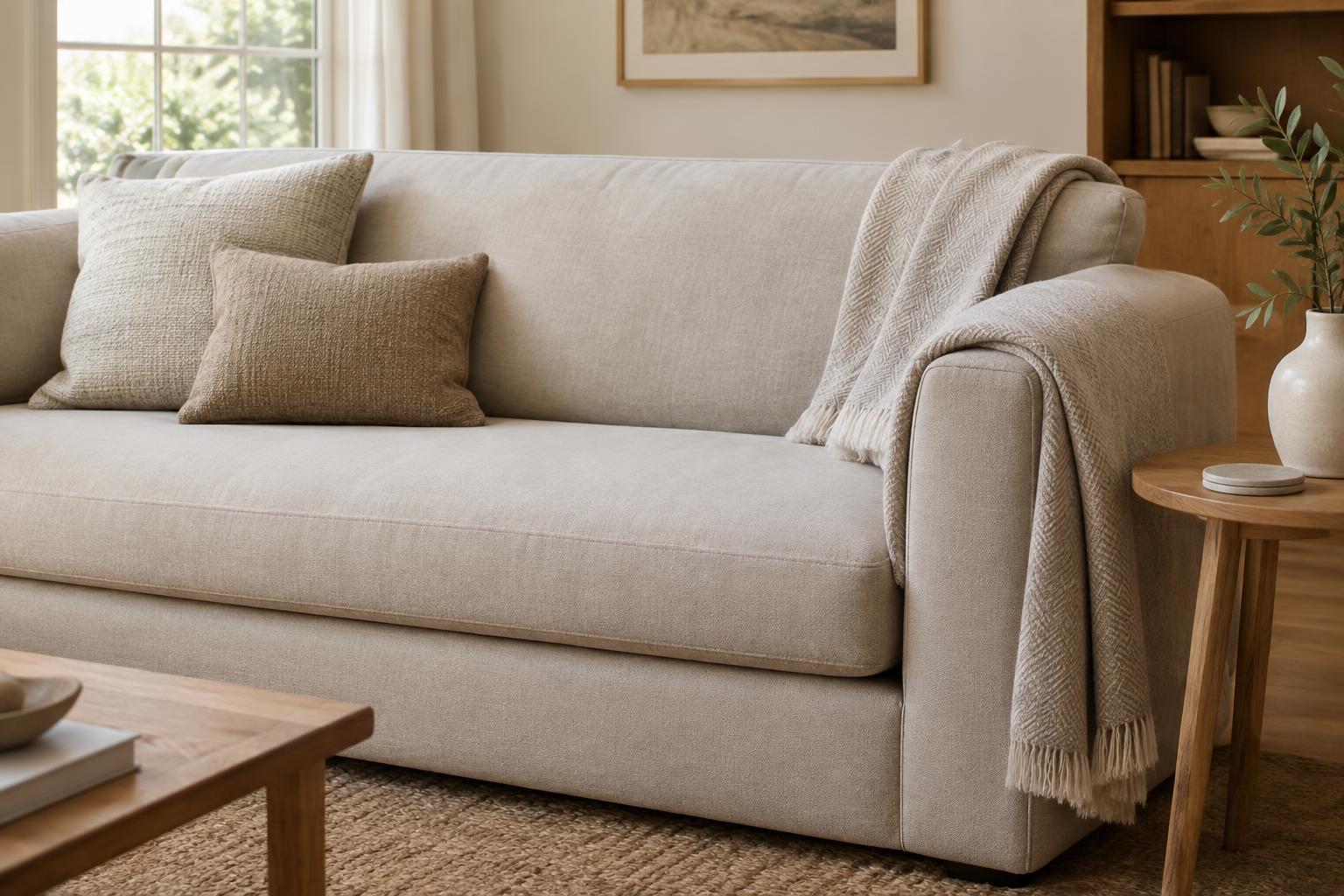
For a straightforward look, fold the throw lengthwise into thirds, then lay it over one end of the sofa back. Let a short section hang behind the sofa and a longer section fall over the front. Adjust the front edge so it ends above the seat cushion or rests lightly on it, rather than pooling across the seat. A broad, soft fold looks relaxed; a narrower one looks more tailored.
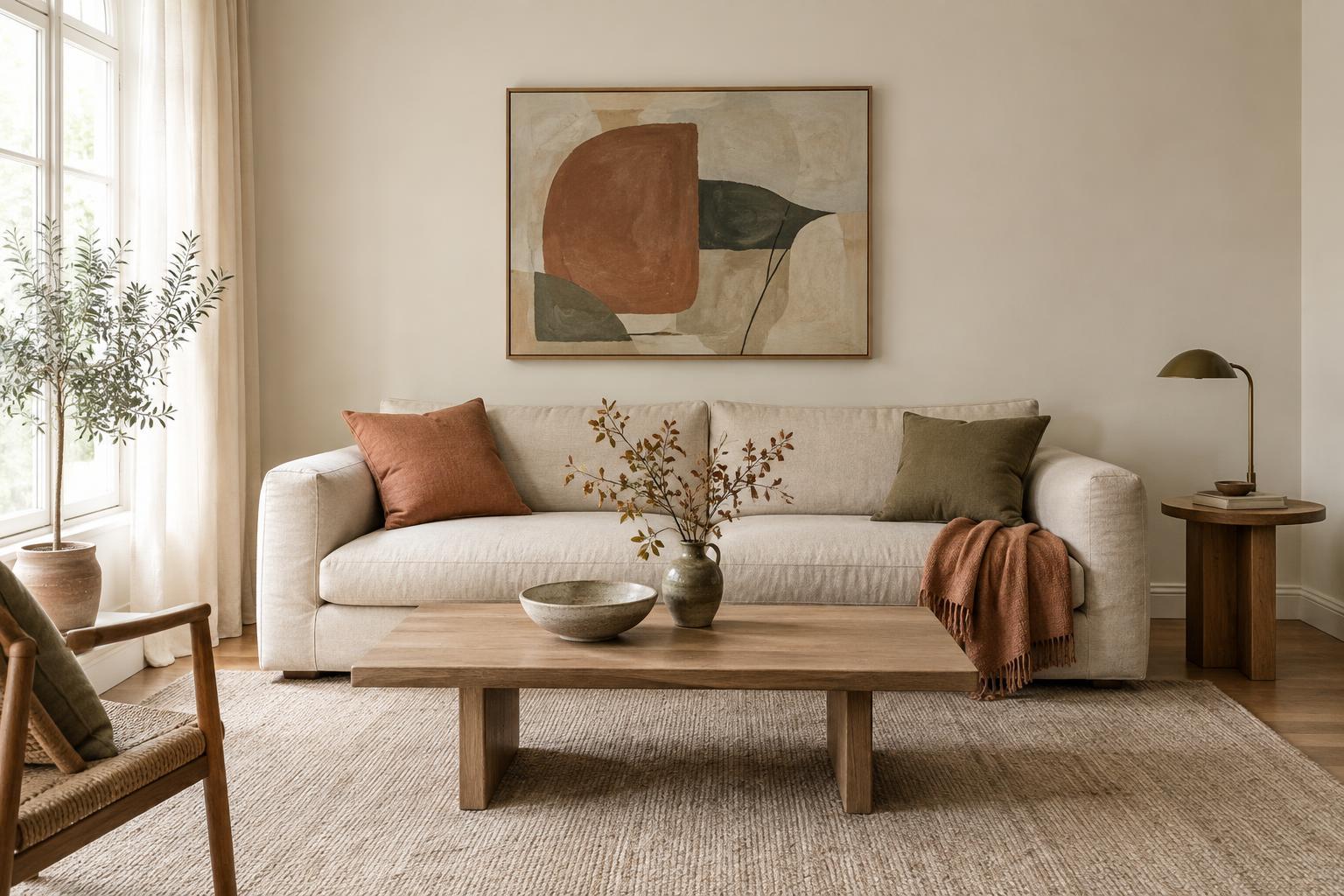
The same method works over a sofa arm, especially when the backrest is already occupied by cushions. Fold the throw to roughly the width of the arm and let the ends hang on either side. If the fabric slides, place more of its length on the inside of the arm or choose a spot with a little friction, such as textured upholstery. Avoid tucking it so tightly that it becomes awkward to pull free.
Make a loose drape look deliberate
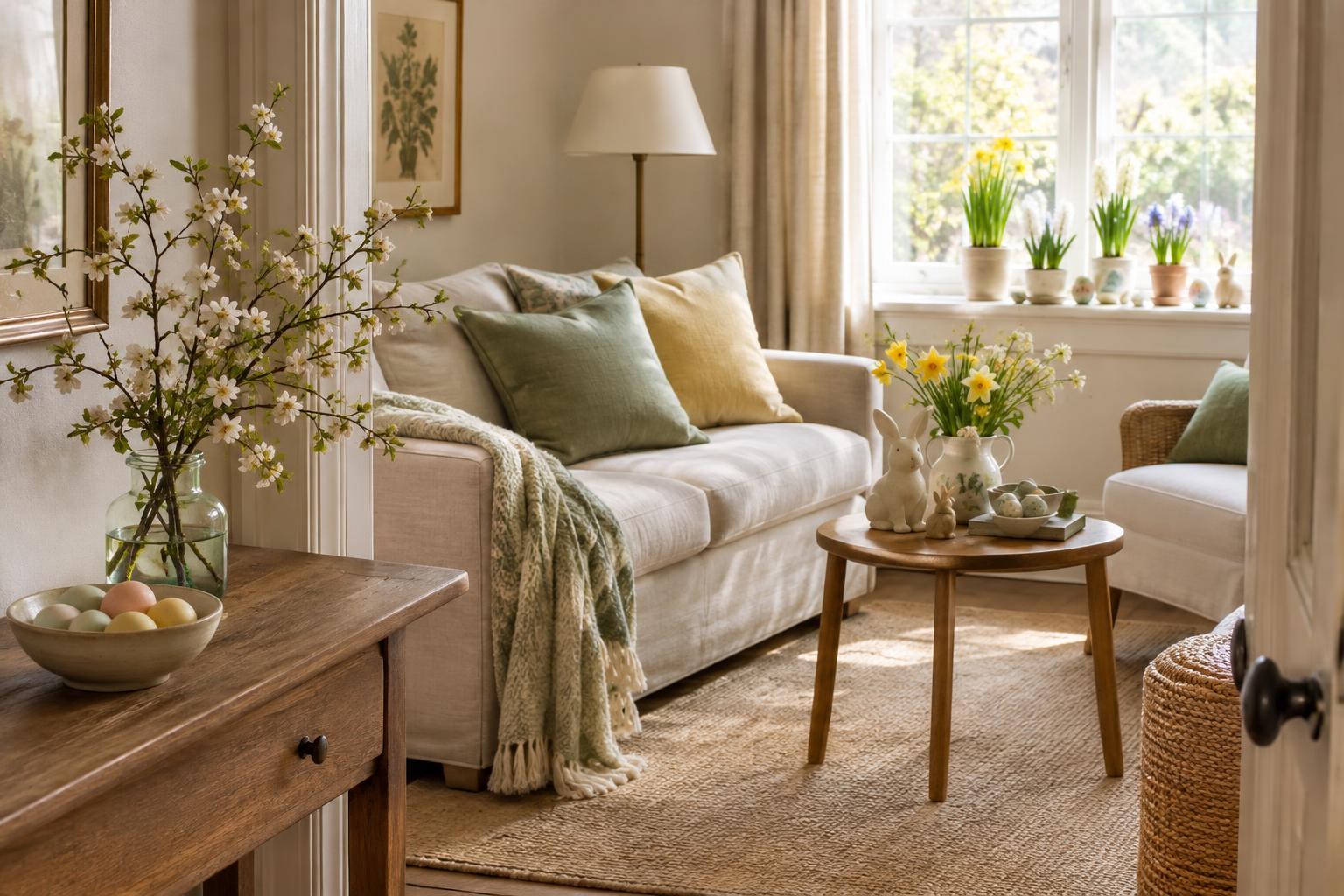
A casual drape does not have to mean tossing the throw at random. Fold it loosely in half, place one end near a back corner, and draw the rest diagonally toward the front of the seat. Then gather any excess fabric into one or two broad folds. The aim is an easy line from back to front, not a series of small, uneven wrinkles.
This approach suits a deep sofa or a generous armchair, where there is room for the fabric without covering every cushion. If the throw has a fringe, let it appear at one visible edge rather than scattering fringed ends in several directions. Step back and check the outline: if the throw hides the shape of the chair or spills onto the floor, fold it once more before draping it again.
Match the arrangement to the fabric
Fabric weight affects how neatly a throw sits. A lightweight cotton or linen throw may need a firmer fold to keep its shape, while a thick knitted throw often looks better with fewer folds so it does not become bulky. A smooth, slippery fabric may shift on a leather or tightly woven seat; placing it over the backrest rather than the arm can help it stay put.
Scale matters too. A small throw can look stranded across a wide sofa, but it may be just right for a single chair. An oversized throw can be folded lengthwise before it is draped, leaving enough fabric to use comfortably without covering the entire seat. If a pattern is a key part of the room, arrange the throw so a recognisable portion remains visible instead of folding the design out of sight.
Keep cushions and daily use in mind
A throw rarely needs to compete with every cushion. If the seating already has several patterned or textured cushions, give the throw a simple fold and a defined position at one end. If the cushions are plain, a looser drape can provide contrast. Leave a little visible upholstery between the throw and nearby cushions so the layers read as separate pieces rather than one crowded pile.
The best arrangement is one you can restore in seconds. When you put the throw back after using it, find its usual corner, make one or two large folds, and smooth only the most obvious creases. If it keeps ending up on the floor or needs constant rearranging, try a different position or store it in a basket beside the seating. A comfortable room should look welcoming even when people actually use it.