Start with what you actually reach for
The most useful bedside table is arranged around your routine, not a photograph. Before adding anything decorative, list what you reach for from bed: perhaps a lamp, glasses, a book, a phone, a glass of water or hand cream. Put those items on the table and notice how much surface they need. This gives you a realistic space allowance rather than leaving essentials to squeeze between ornaments.
Keep the most frequently used items within easy reach, ideally without having to lift or move anything else. If you use water at night, leave a stable spot for a glass away from books and electrical items. If you charge a device, check that the cable can reach without crossing the whole tabletop. A bedside surface should work comfortably in low light and when you are half asleep.
Divide the surface into useful zones
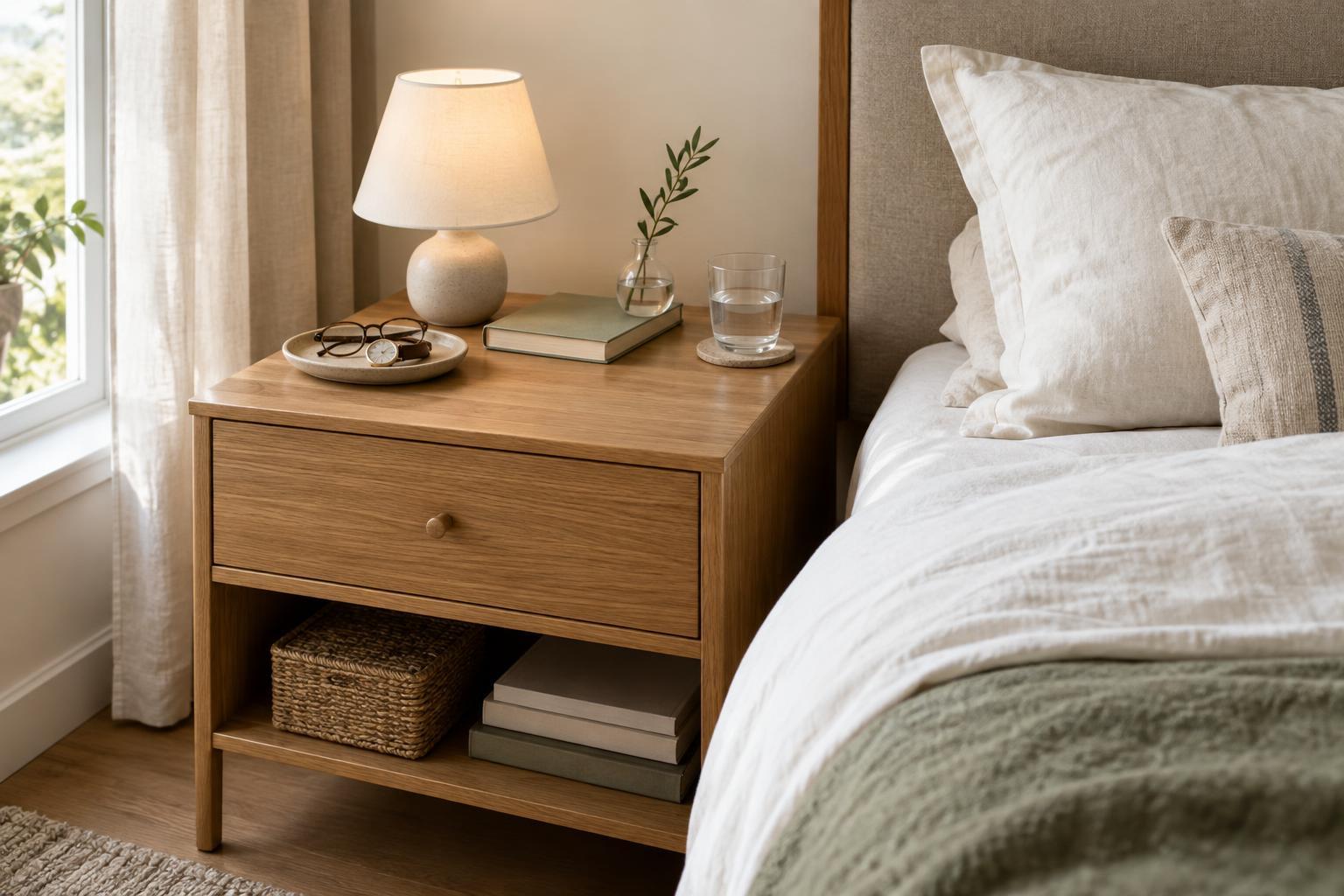
Think of the tabletop as having a fixed zone and a flexible zone. The fixed zone holds things that usually stay put, such as a lamp. The flexible zone remains open for a glass, a book you are currently reading or items you set down before sleep. Even on a compact table, protecting a little empty space makes the arrangement feel calmer and easier to use.
A small tray can define a third zone for loose objects such as lip balm, earplugs or jewellery. Choose one that is easy to wipe clean and does not take up the entire surface. A shallow dish works if you only need to catch a ring or watch. These containers are helpful when they prevent scatter; if they become places to pile up unrelated items, edit their contents instead of adding another organiser.
If the table has a drawer or shelf, reserve it for things you need nearby but not in view. Keep the top drawer simple enough that you can find what you want without searching. With an open shelf, one basket or a short stack of books often looks more settled than a row of small, separate objects.
Choose decorative details with a purpose
One or two decorative choices are usually enough to give a bedside table character. A framed photograph, a small ceramic piece or a bud vase can add warmth without competing with the essentials. Look for something that relates to the room’s colours or materials: a wood frame might echo the bed frame, while a glazed dish could pick up a colour from the bedding.
Vary height gently rather than building a tall display. A lamp already provides height on many bedside tables, so a low dish or small photograph may be all the balance it needs. If there is no lamp, a modest vase or upright frame can give the arrangement shape. Avoid placing fragile items where your hand might knock them while reaching for glasses or a switch.
Books can be decorative, but they should still be easy to use. Keep your current read accessible instead of burying it beneath a vase. If you like a small stack, choose books you are happy to keep at the bedside and limit the stack to a height that does not crowd the surface.
Let lighting do some of the styling
A bedside lamp can be both a practical tool and the main visual feature. Consider the space its base takes up, the direction of its light and whether you can reach the switch comfortably. A narrow base may suit a small table, while a wall-mounted light can free the surface altogether if that option fits your room. The aim is light you can use for your usual activities, not simply a pleasing silhouette.
Pay attention to what happens behind the table, too. A visible tangle of charging leads can make a tidy arrangement feel busy. Route cords along the back where possible, leaving enough slack to use devices safely and without pulling on the lamp. A nearby outlet and a sensible place for charging matter more to daily comfort than an extra decorative object.
Edit the arrangement as your routine changes
Stand back to check how the table looks, then sit or lie in bed to test how it works. Can you put down a glass without rearranging anything? Can you find your glasses easily? Does the lamp light the place where you read? If the answers are no, remove or move an object before buying a storage solution.
Bedside styling does not have to stay fixed. A small vase can give way to a humidifier you use regularly, and a book stack may disappear when you need more room for water. Keeping the useful zones clear lets you change a detail with the seasons or your mood without rebuilding the whole arrangement. The result should feel personal, but also effortless to live with.