Start with what the shelves need to hold
Before arranging anything, decide which items genuinely belong on the shelves. Books you use often deserve easy-to-reach positions; fragile objects can sit higher or farther from busy walkways. Remove pieces that have no clear purpose or personal appeal, then sort what remains into books, larger objects and small accents. This gives you a more useful starting point than trying to style around everything at once.
Think about the shelves as a whole rather than filling each one separately. A display can feel crowded even when individual shelves are tidy if every level is packed from end to end. Keep a little unoccupied space in your plan, and avoid stacking objects so deeply that you cannot easily take down a book or dust behind them.
Give books a simple structure
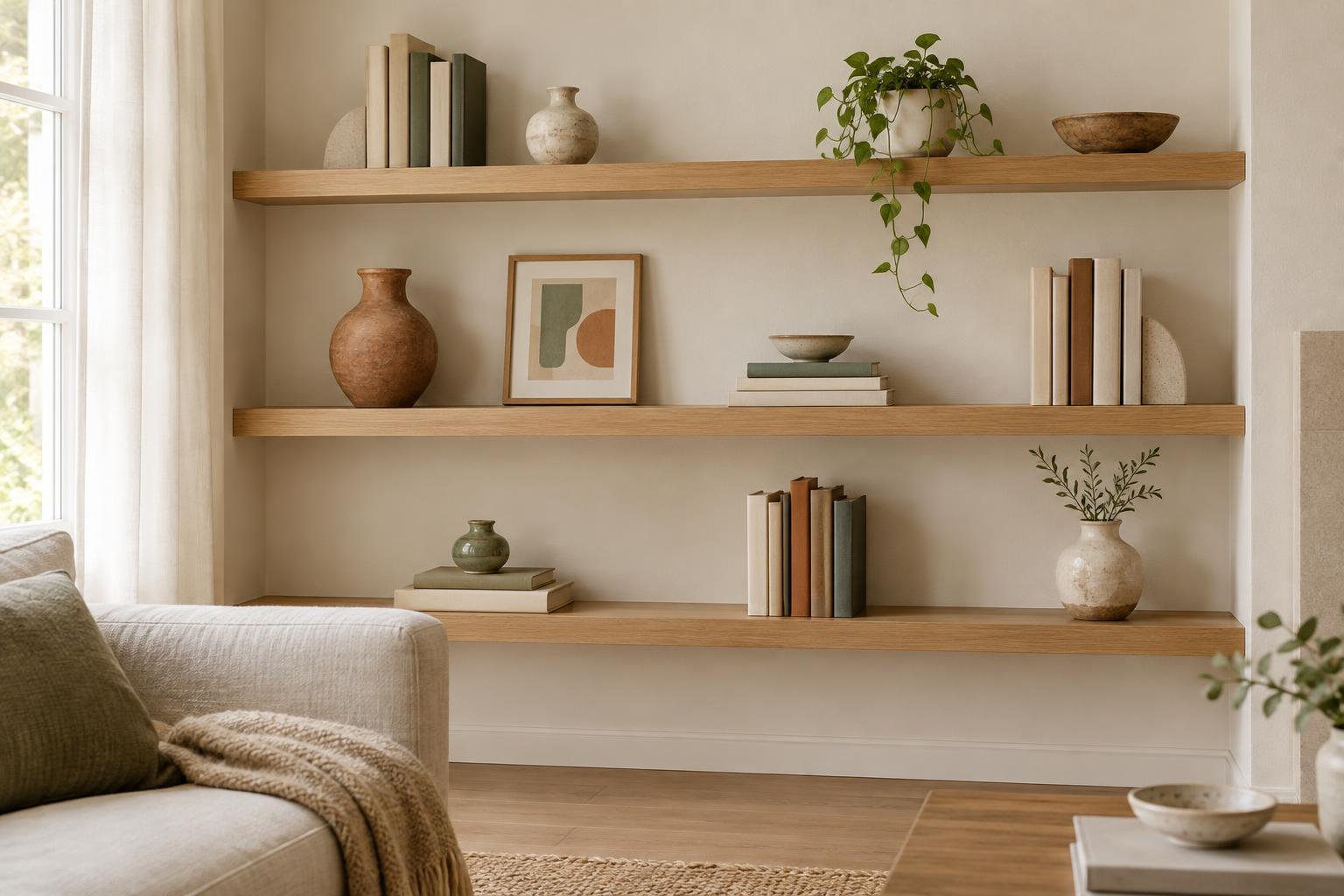
Books make a good foundation because they bring natural variation in height and colour. Arrange most of them upright in short runs, with bookends or a sturdy object for support where needed. You can lay a few larger books flat to break up a long row of vertical spines. A horizontal stack also provides a low base for one small decorative piece, provided the books remain easy to access.
You do not need to sort every book by colour to make the shelves feel coordinated. Grouping books by subject or use is often more practical. For a calmer look, keep nearby volumes roughly similar in height, or repeat a few colours across different shelves. Let some covers and spines vary: a display of books should still look like a collection you enjoy using.
Choose objects that add contrast
Decorative objects work best when they offer something the books do not. A rounded vase can soften a row of straight spines; a framed picture can add a flat shape behind a smaller object; a basket can contain little items that would otherwise look scattered. Choose a limited mix of forms and materials rather than adding one of every ornament you own.
Vary the height within a group so its outline is easy to read. For example, place a tall vessel beside a short stack of books and leave some space around both. If an object has an interesting shape, let it stand alone instead of surrounding it with smaller pieces. Check that heavier items sit on shelves suitable for their weight and that anything displayed near an edge is stable.
Use empty space as part of the arrangement
A gap is not a shelf waiting to be finished. Empty space lets the eye pause and makes the pieces beside it easier to notice. Try leaving a clear area next to a book group or between two objects, then step back to see how the gaps relate across the whole unit. They do not need to be identical or lined up.
Balance does not mean making both sides match. A dense row of books on one shelf might be offset by a single larger object on another. Alternate fuller areas with lighter ones, especially on a tall unit where repeated rows of tightly packed books can feel heavy. If the display looks busy from across the room, remove a few small items before rearranging everything else.
Edit for everyday life
Once the arrangement feels balanced, test whether it works in practice. Can you reach the books you use? Is there enough room to lift an object without knocking into another? Can you wipe the shelf surface without dismantling several tiny groupings? Practical answers matter more than a display that looks composed only when nobody touches it.
Shelves also change as books and keepsakes come and go. Leave a little flexibility rather than treating the arrangement as permanent. When you bring in something new, consider swapping it for an existing piece instead of automatically filling a gap. A quick edit now and then will help the shelves remain a comfortable part of the room rather than a growing collection of things to navigate.