Choose lights for the place you plan to use them
A string of lights can soften a shelf, brighten a window or give a reading corner a gentle glow. Before deciding where it looks best, check its packaging and instructions. Use lights marked for outdoor use if they will be exposed to rain or damp conditions; an indoor-only set belongs inside, even if it fits neatly around a porch. Follow the maker’s guidance on where the lights and power supply can be placed.
Look over temporary lights before putting them up, especially if they have been stored since last winter. Check for damaged insulation, loose connections, cracked plugs and broken bulb covers. Do not use a set that looks damaged or behaves unusually, such as flickering in a way it did not before. If replacement bulbs or parts are permitted, use the type specified for that set rather than improvising.
Make room for light without crowding fabrics
Winter styling often brings lights together with curtains, cushions, throws and paper decorations. Give those materials space. Avoid draping fabric over bulbs or power supplies, and do not tuck lights into upholstery or bedding. LED lights are often a practical choice for decorative displays because they generally produce less heat than traditional incandescent bulbs, but they should still be used according to their instructions.
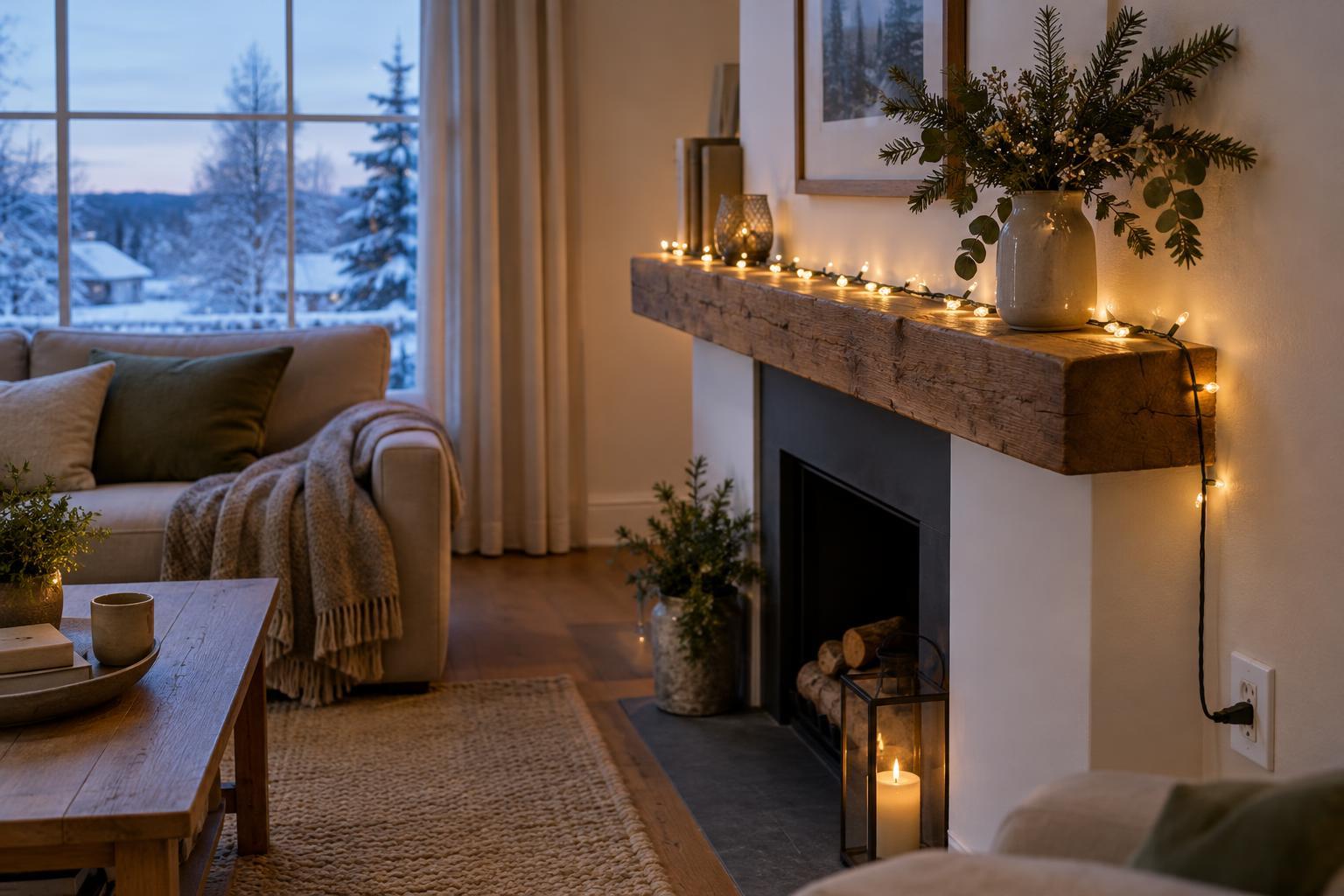
Think about the display in daylight as well as after dark. A clear glass vase holding a suitable battery-operated light may create a soft accent on a side table; a light strand clipped along an open shelf can outline decorative objects without being buried behind them. Keep lights away from water-filled vases and spots where they may be knocked over. If children or pets can reach the display, avoid loose loops of cable and small detachable parts.
Keep plugs and cables simple
Temporary decorating can quickly turn one socket into a cluster of plugs. Check the product instructions before connecting light sets together, and never exceed the number the maker allows. Avoid stacking adapters or using an extension lead beyond its stated capacity. If a display needs a complicated chain of connections to reach the socket, a different location or a battery-operated option may be the better choice.
Route cables where people will not walk over them or catch them while opening a door. Do not run them under rugs, pinch them behind furniture or fasten them with staples or nails. Use suitable removable clips if you need to guide a strand along a frame or shelf. Keep connections accessible so you can unplug the lights easily, rather than hiding plugs behind a heavy cabinet.
Treat outdoor displays as a separate job
An outdoor display needs more than weather-suitable lights. Check that any extension equipment and connections are appropriate for the location, and follow the product instructions for keeping connections protected. Where outdoor sockets have residual-current protection, use it; if you are unsure about an electrical setup, ask a qualified electrician rather than guessing.
Place lights where they will not trail across a path or become tangled in a door or gate. Choose fixing points you can reach safely, and avoid stretching from a ladder to perfect a decorative detail. A modest display around an accessible doorway or sheltered seating area can be just as welcoming as lights placed high above eye level.
Build a switch-off routine into the decoration
Decide how you will turn the display off before you finish arranging it. Switch off and unplug mains-powered decorative lights when you go to bed or leave home. A timer can make the routine easier, but it does not replace checking that the lights and cables are in good condition. For battery-operated lights, follow the instructions for the batteries and remove them before long-term storage if the maker recommends it.
At the end of the season, let the lights cool if necessary, then coil them loosely rather than pulling them tight around an object. Store them somewhere dry where cords and bulbs will not be crushed. Next winter, a quick inspection and a simple placement plan will help you bring back the cosy effect without bringing back avoidable hazards.