Start with the window, not the fabric
A window covering has two related jobs: managing what you can see outside and what others can see in. Before choosing between curtains and blinds, stand at the window at different times of day. Notice whether the main concern is a clear view from the street, a neighbouring window, low afternoon sun or early morning light. A bedroom facing a quiet garden may need a different solution from a living room beside a pavement.
Think about how you use the room, too. Do you want daylight while getting dressed, a soft glow while working, or darkness for sleep? Privacy and light control are not always the same thing. A covering that softens bright sun may still show silhouettes after dark, when indoor lights are on. If both needs matter, plan for a combination of coverings or choose one that can close fully.
What curtains do well
Curtains are a useful choice when you want broad coverage and a softer look. A pair hung high and wide can cover the window and its edges when closed, while stacking to the sides to admit daylight when open. Fabric also brings colour, texture and a sense of warmth to a room. For a relaxed effect, choose a material that drapes easily; for a more structured look, consider a heavier fabric or a neat heading.
The fabric determines much of the privacy and light control. Sheer curtains diffuse daylight and obscure some detail during the day, but they should not be relied on for evening privacy. Denser, lined curtains offer more coverage. If reducing morning light is a priority, look for a blackout lining and allow enough width for the panels to overlap at the centre and extend beyond the window frame. Light can still enter above, below and around the sides, so the hanging position matters as much as the label on the fabric.
Curtains need room to hang and to stack when open. Near a radiator, desk or frequently used door, long panels may be awkward; a shorter length or a blind may be easier to live with. Check the care instructions before buying, particularly for kitchen windows or other places where fabric may need frequent cleaning.
Where blinds offer more flexibility
Blinds keep the covering close to the window, which can make them practical where floor space is limited. Different styles behave differently. A roller blind moves up and down in one piece, giving a simple choice between uncovered, partly covered and covered. Venetian blinds have adjustable slats, so you can redirect some daylight while limiting direct views. Roman blinds fold into fabric pleats when raised, offering a softer appearance than a roller blind without the full sweep of curtains.
For privacy, consider what someone could see when the blind is lowered or the slats are tilted. A light-filtering roller blind may give comfortable daytime light yet reveal shapes at night. An opaque blind provides stronger visual coverage, but a blind fitted inside the window recess can leave narrow gaps at the sides. These details matter most in bedrooms and rooms facing close neighbours.
Blinds can also make a window easier to use if you often adjust the light during the day. However, slats need dusting, and some fabrics require careful spot cleaning rather than washing. If children can reach the window, look for a cordless design or follow the product’s safety guidance for securing any operating cords.
Combine layers when one covering cannot do both jobs
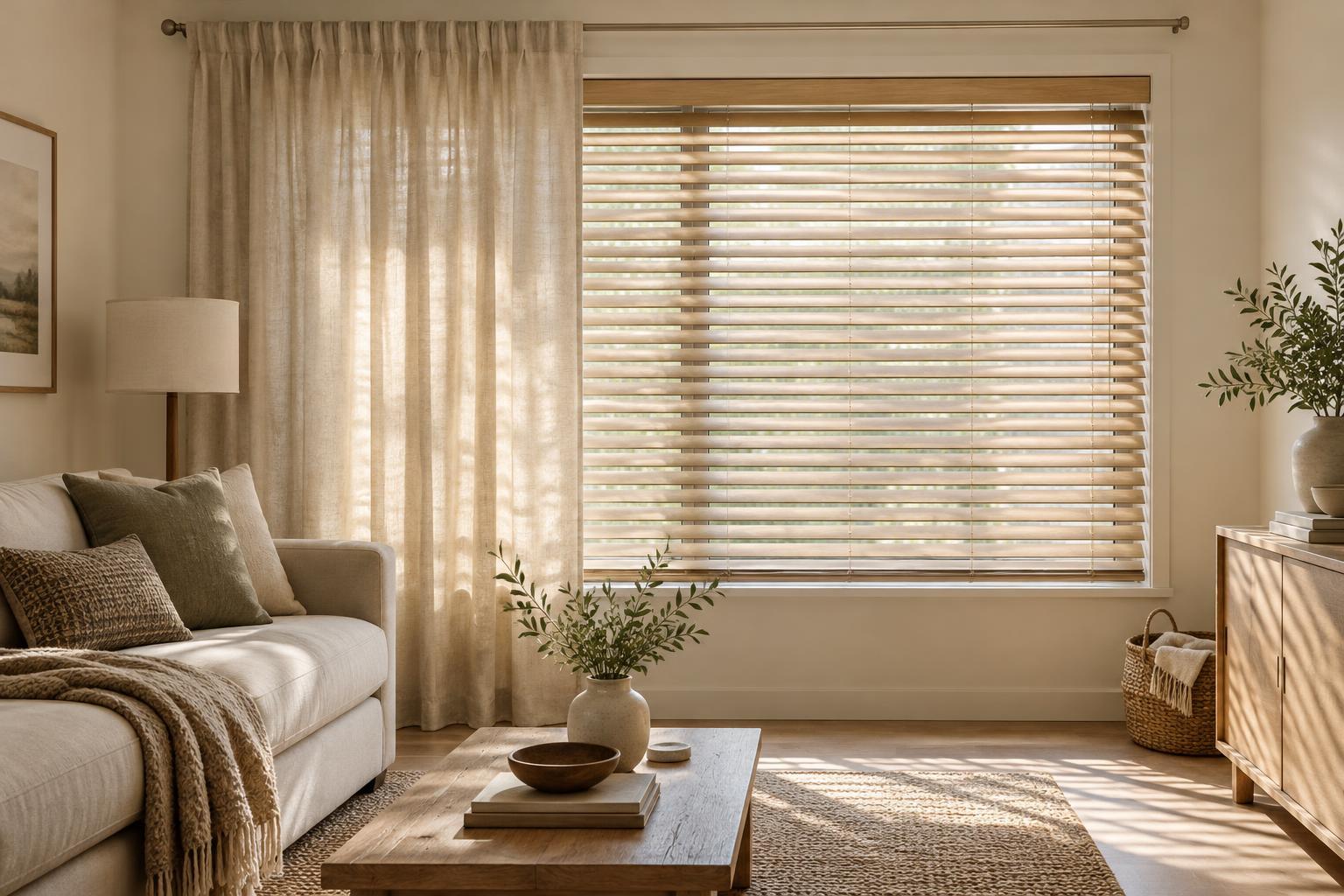
You do not have to choose only one. A sheer curtain paired with a lined curtain lets you keep a gentle daytime screen and close the heavier layer at night. A blind beneath curtains offers another option: adjust the blind for glare during the day, then draw the curtains for fuller evening coverage. Layering can be especially useful in a room where privacy needs change with the light.
Keep the arrangement simple enough to use. If you rarely open both layers, two coverings may add bulk without much benefit. Choose colours and textures that work together, and check that curtain panels will not catch on a blind’s fittings. Around a small window, a blind in a colour close to the wall can look quiet, leaving curtains to provide the decorative accent.
Make the final choice with a few practical checks
Before ordering, measure the window and decide where each covering will sit. For curtains, check the space available above and beside the frame, the finished length, and whether the panels will meet comfortably when closed. For blinds, confirm whether they will fit inside or outside the recess and whether handles will obstruct them. Follow the measuring instructions for the specific product rather than assuming every style uses the same dimensions.
A simple test can clarify your priorities: write down the times when you need privacy and the times when you want daylight. If softening the room and covering a wide window matter most, curtains may be the better starting point. If you need frequent, precise adjustments or have little space around the window, consider blinds. When daytime light and dependable evening privacy are equally important, plan two layers and let each do a clear job.