Start with the room, not the artwork
A wall piece can bring colour into a quiet room, soften a hard-edged one or give a seating area a clear focal point. Before choosing a material, stand back and look at the wall in context. Is it above a sofa or console, where furniture already gives it an anchor? Or is it a narrow stretch beside a doorway that needs something visually light?
An easy starting point is to decide what the wall lacks. A room full of plain surfaces may welcome texture. One with patterned upholstery and busy shelves might benefit from a simple image with space around it. Note the colours and finishes already present, but do not feel obliged to match everything. Repeating one colour from a cushion, rug or lamp can create a connection without making the room look overly coordinated.
Choose a framed print for definition and detail
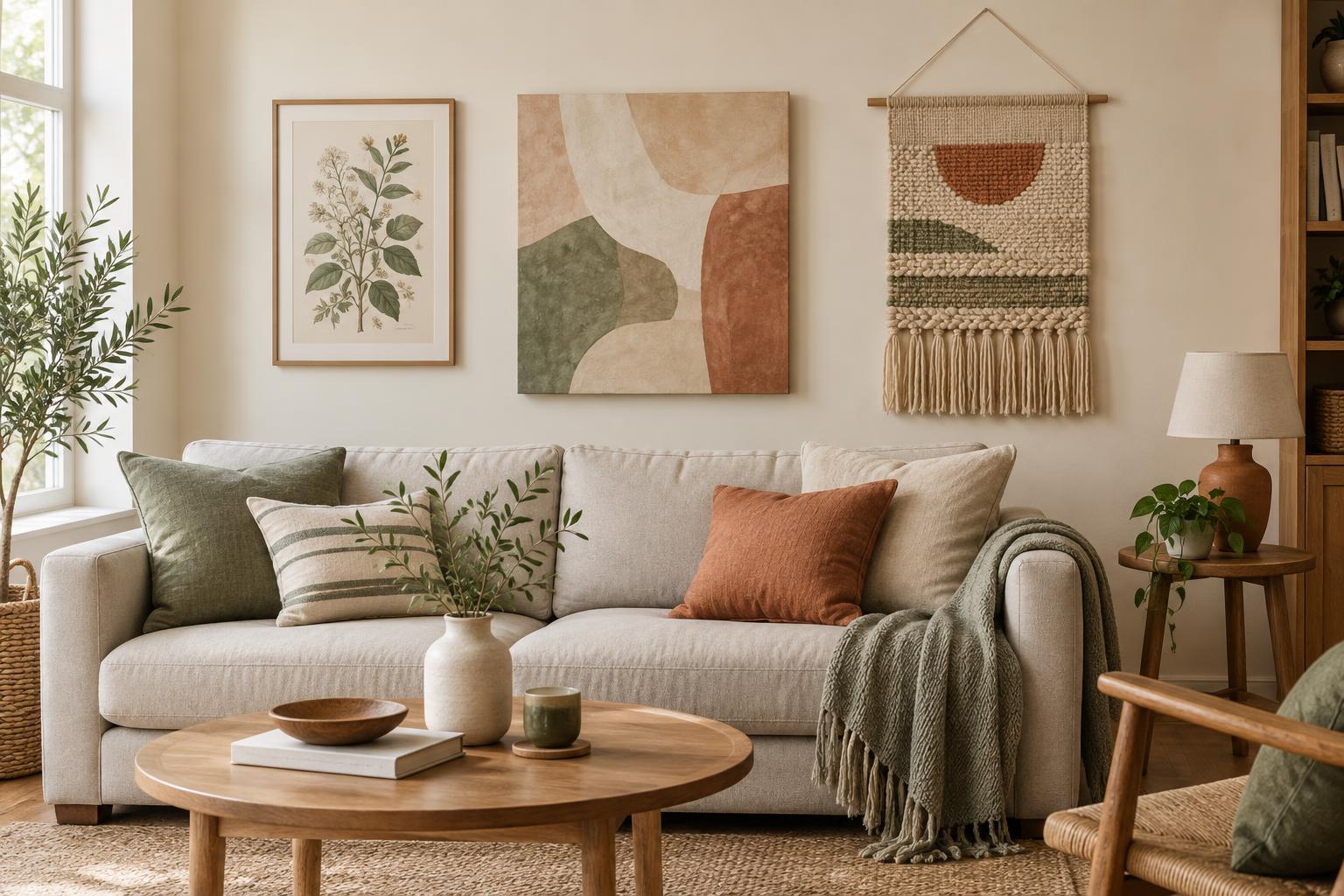
Framed prints work especially well when you want a crisp edge, a detailed image or a small collection of pieces. The frame helps define the artwork and can relate it to other finishes in the room: a dark frame can echo furniture legs, while a pale wood frame may sit comfortably alongside natural materials. A mount adds breathing room around an image and can make a modest print feel more considered.
Think about the viewing conditions before settling on a finish. Glazing can catch reflections opposite a window or lamp, so check the wall at different times of day. Frames also add physical and visual weight. A slim frame suits a compact wall or gallery arrangement; a broad frame makes more of a statement. Whatever size you choose, use fixings appropriate for the wall and the finished piece, rather than assuming a lightweight-looking print will be light once framed.
Choose canvas for a softer-edged focal point
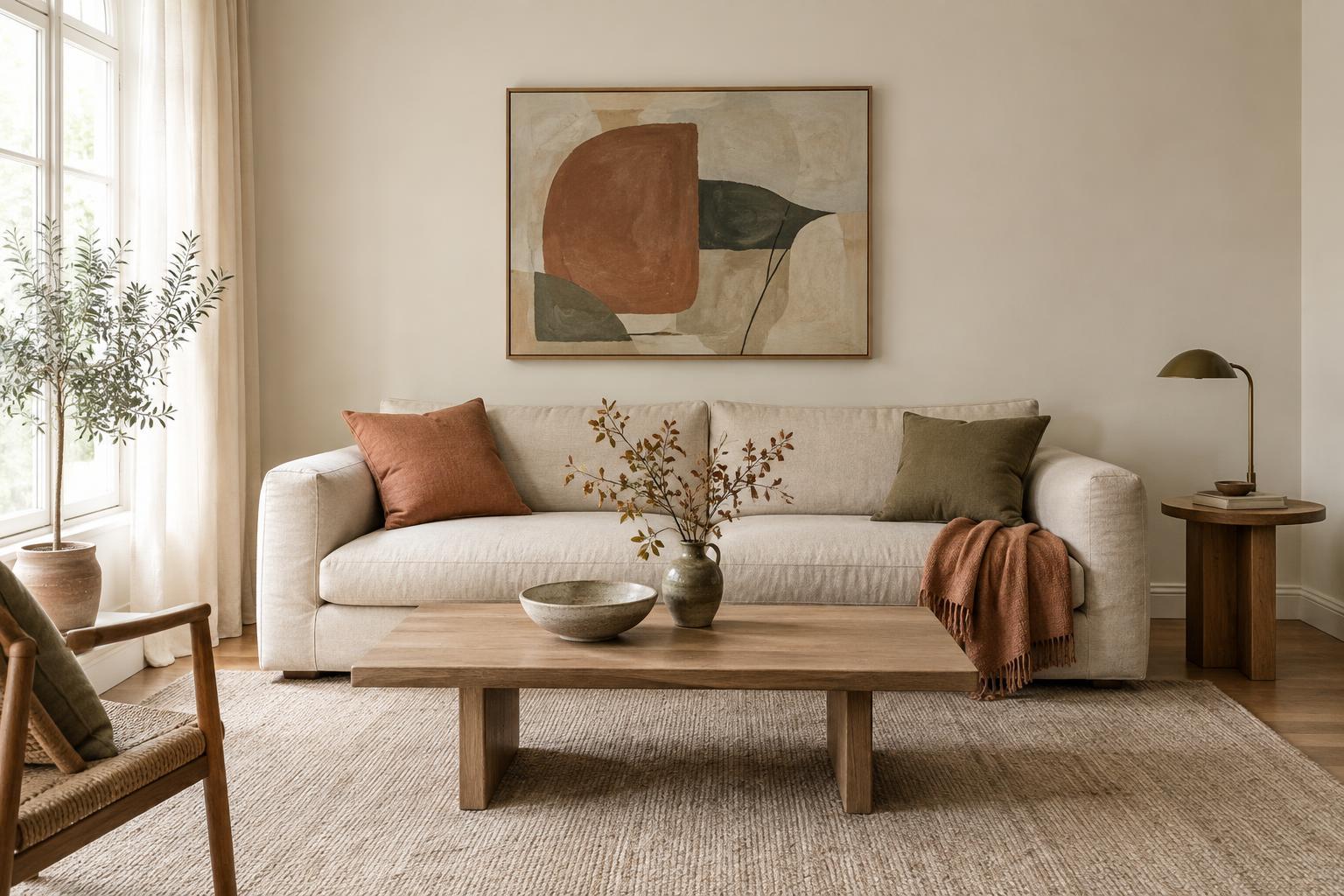
Canvas presents an image without the defined border of a conventional frame. Its surface can give colour and large shapes a gentler presence, making it useful above a sofa, bed or sideboard where you want one substantial piece. Because it is usually viewed without glazing, reflections are less of a concern than with a glazed print. That can help on a wall facing strong indoor light.
Look closely at the edges as well as the front. An unframed canvas may have printed, painted or plain sides, and those details affect how finished it looks from an angle. A floating frame can add definition if the canvas feels too bare. Canvas is not automatically the best option for every large wall: a small canvas floating alone in a wide empty area may feel lost. Mark out its dimensions with removable paper before buying, and judge its scale from your usual seat.
Choose textiles when the room needs texture
A woven hanging, quilted panel or fabric piece introduces a different kind of detail. Threads, folds and irregular edges can soften a room with smooth walls, glass and straight-lined furniture. Textiles are particularly effective where you want visual warmth without adding another bold picture. Their natural variation can also make a simple colour scheme feel more layered.
Consider how the piece hangs and how you will care for it. Some textiles sit flat against the wall; others need room to drape without brushing against furniture. Dust can collect in fibres and folds, so choose a piece you can reach and maintain according to its care guidance. Keep delicate fabrics away from spots where they are likely to be splashed or handled often. If the room already has heavy curtains, a thick rug and many cushions, a restrained textile may work better than one with dense fringe or a busy pattern.
Test scale and placement before you commit
Any of the three can work in the same room; the deciding factor is often the relationship between the piece and its surroundings. Above furniture, aim for an arrangement that feels connected to the item below rather than stranded high on the wall. In a gallery grouping, lay the pieces out on the floor first and look for consistent spacing or a clear shared edge. Mixing materials can be appealing, but give the arrangement a link, such as a limited colour palette or similar overall scale.
If you are undecided, make a temporary outline of each option on the wall with removable paper. Live with the outlines for a day or two and view them from the doorway as well as up close. Then ask a practical question: do you want to notice the image, the surface or the framing first? That answer often points to a print, canvas or textile more clearly than any decorating rule.