Start with the room you already have
Before bringing out decorations, look at what makes the room feel comfortable now. Notice its main colours, the amount of pattern already present and the surfaces that tend to collect objects. A room with bold wallpaper or colourful cushions may need only one or two Halloween accents. A quieter room can accommodate a slightly stronger display without feeling crowded.
Decide what must stay easy to use. Keep the coffee table clear enough for drinks, leave walking routes open and avoid covering lamps or everyday storage with decorations. This gives you a practical limit before you start arranging anything. The aim is to make the room feel seasonal while keeping the habits that make it work.
Choose a small palette, not every Halloween colour
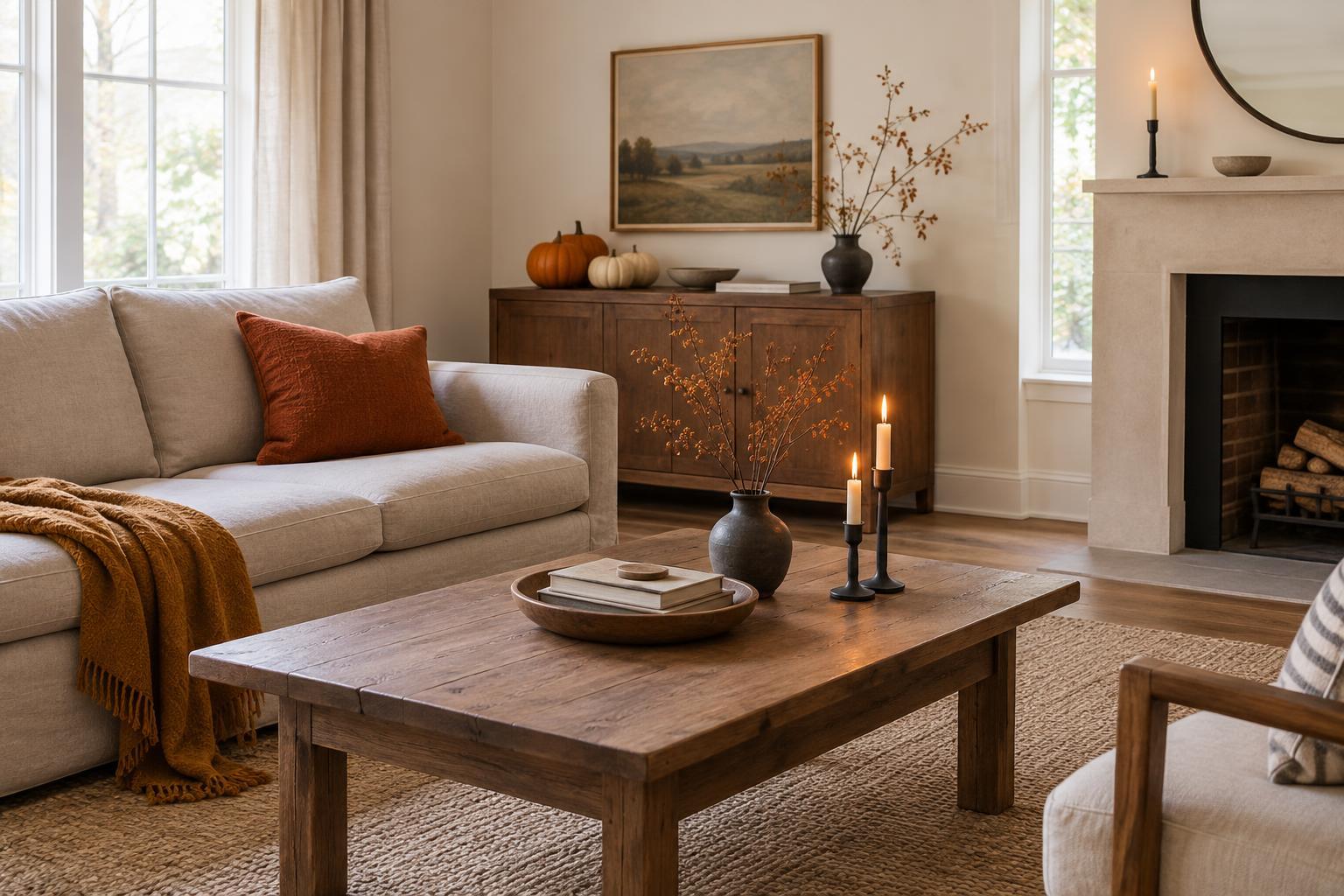
You do not have to use bright orange and black throughout the room. Choose one Halloween colour that works with your existing scheme, then pair it with familiar neutrals or materials. Rust, cream and warm brown can sit comfortably alongside wood and linen. Black and off-white may suit a room with dark frames or graphic patterns. Deep purple or muted green can provide a quieter alternative.
Repeat the chosen accent in just a few places so the decorations feel connected. For example, a rust-coloured cushion, a small pumpkin on a shelf and a matching ribbon on a branch create a thread through the room. Repetition is more effective when it is restrained: you want the eye to notice a relationship, not encounter the same motif on every surface.
Give one spot the main role
Pick a natural focal point, such as a mantel, sideboard, entry table or open shelf. Build a compact arrangement there instead of distributing small decorations everywhere. Start with an object that provides height, such as a vase with bare branches, then add one or two lower pieces. Leave some empty space around the grouping so each item remains visible.
Varying shape and texture makes a modest display more interesting. A matte ceramic pumpkin, a paper bat and a glass vessel contribute different surfaces without requiring a large collection. If you prefer a playful look, choose one expressive item and let simpler objects support it. A room can carry a humorous or spooky detail more easily when it is not competing with several others.
Use textiles for a temporary change
Textiles can shift the mood without rearranging furniture. Try changing one cushion cover, placing a textured throw over a chair or laying a narrow runner on a console. These additions work especially well when their colour relates to something already in the room. You can keep your usual cushions and simply add one seasonal piece rather than replacing the whole arrangement.
Pattern deserves particular care. If your curtains, rug or upholstery already have a strong print, choose mostly plain seasonal textiles. In a simpler room, a single patterned cushion might be enough to signal Halloween. Look for pieces you would be happy to use through autumn, too, if you want fewer items to store once the holiday has passed.
Adjust the atmosphere, then edit
Soft lighting can make a small display feel deliberate. A lamp near your focal point may be enough; battery-operated candles are another option where you want a gentle glow without an open flame. Keep decorations away from bulbs, heaters and anything that could knock them over. If children or pets use the room, place small or fragile objects out of their reach.
Finally, step back and look at the room from its entrance and from the seat you use most. Is the focal point clear? Can you still see and enjoy the room’s usual features? If several objects seem to be asking for attention at once, remove one or two and check again. A balanced Halloween update should feel like a seasonal layer over your home, not a replacement for it.