Plan for the room’s two main uses
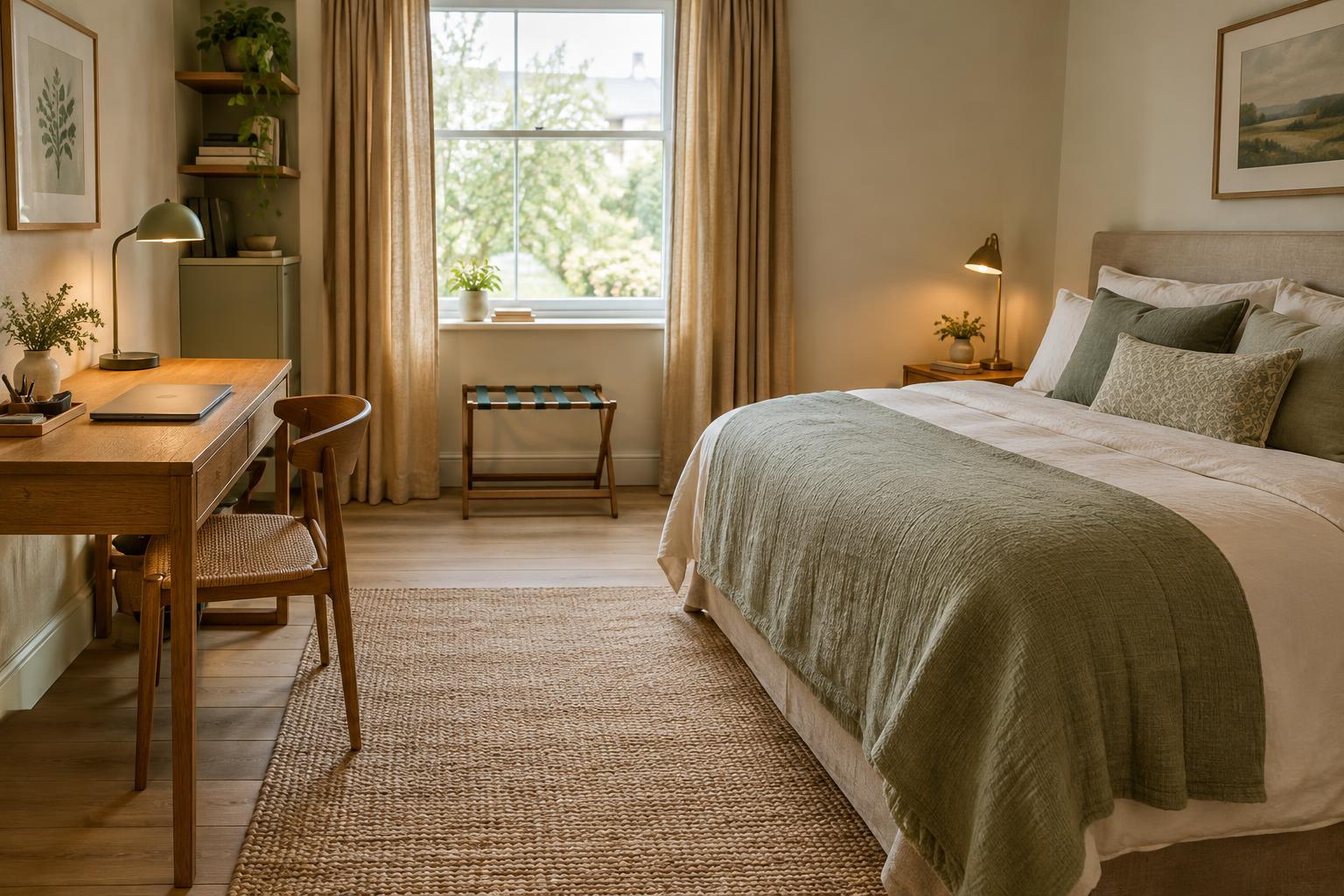
Before moving furniture, consider how often the room is used for work and how often guests stay. A room used as an office most weekdays may need a permanent desk and a bed that stays neatly made in the background. If overnight visits are frequent, give the sleeping area enough space to feel welcoming rather than squeezing a bed around office furniture.
Sketch a simple floor plan and mark the door, windows, sockets and any wardrobe doors that need room to open. Try to keep a clear path from the entrance to the bed. If possible, place the desk where it receives daylight without forcing you to sit facing a bright window. Check the view behind the desk, too: a calm wall or tidy shelf is easier to live with than a pile of guest bedding.
Choose furniture that leaves room to move
Start with the largest piece: the bed. A standard bed can be the most comfortable choice when guests stay regularly, while a daybed or sofa bed may free up floor space when visits are occasional. Whatever you choose, check its full dimensions in sleeping mode. A sofa bed that fits neatly when closed may block the desk or doorway when opened.
A compact desk with drawers can handle everyday work without taking over the room. If the space is narrow, a shallow desk may work better than a wide tabletop. Choose a chair you can sit in comfortably for your usual work sessions, then decide where it will go when guests arrive. A chair that tucks fully under the desk keeps the room feeling open and makes it easier to move around the bed.
Give work supplies and guest belongings separate places
The quickest way to make the room feel ready for visitors is to give office items a home out of sight. Use a drawer, lidded box or closed cabinet for papers, chargers and small equipment. Keep only the items you need each day on the desk. If you store supplies on open shelves, group them in matching containers so they read as part of the room rather than as unfinished work.
Guests need some storage of their own, even for a short stay. Leave a few empty hangers, an accessible drawer or a clear shelf, and provide a spot for a bag. A bedside surface large enough for a phone, book and glass of water is more useful than a purely decorative table. If the office chair doubles as a place to set a suitcase, make sure moving it will not interfere with the desk or door.
Layer lighting and textiles for both moods
Work and rest call for different kinds of light. A desk lamp can illuminate the work surface without lighting the entire room, while a bedside lamp lets guests read without relying on an overhead fitting. Where daylight creates glare on a screen, curtains or an adjustable blind can help you control it. Choose a window covering that also gives guests the level of privacy the room needs.
Textiles help the space feel like a guest room even when the desk is in use. Keep bedding in a restrained palette that works with the desk, chair and storage, then add interest through a throw or a couple of cushions. A rug can visually anchor either the bed or the desk area, but leave enough clearance for the office chair to move easily. Soft furnishings are most helpful when they add comfort without creating extra items to relocate before each visit.
Make the changeover easy
A dual-purpose room works best when preparing it for a guest takes only a few minutes. Keep clean bedding and towels together in a labelled drawer or cupboard. Before a visit, put away work materials, clear the bedside surface, check that a socket is accessible and leave space for belongings. If you need the office chair elsewhere while guests stay, choose its temporary location in advance.
Use a small number of decorative details to bring the two functions together: perhaps one print, a plant suited to the room’s light, or a tray for bedside essentials. Avoid filling every surface. The aim is not to disguise the desk completely, but to make it feel like an intentional part of a comfortable room. When both work tools and guest necessities have clear places, switching between the two uses becomes much simpler.