Start with the space people need
Before choosing a cushion arrangement, sit on the sofa as you normally would. Notice where you lean back, where your arms rest and which seats people use most. A display can look balanced from across the room yet feel awkward if someone has to move several cushions before sitting down. Aim to keep the centre of the sofa open and avoid placing a large cushion against every backrest.
Think of cushions as support and decoration, not a covering for the entire sofa. On a compact two-seater, one cushion at each end may be enough. A longer sofa can accommodate a small group at either end while leaving the middle clear. These are starting points rather than rules: deep sofas may benefit from extra back support, while shallow sofas often need fewer, slimmer cushions. If the arrangement looks appealing but reduces the usable seat depth, remove a cushion and try again.
Build small groups instead of a continuous row
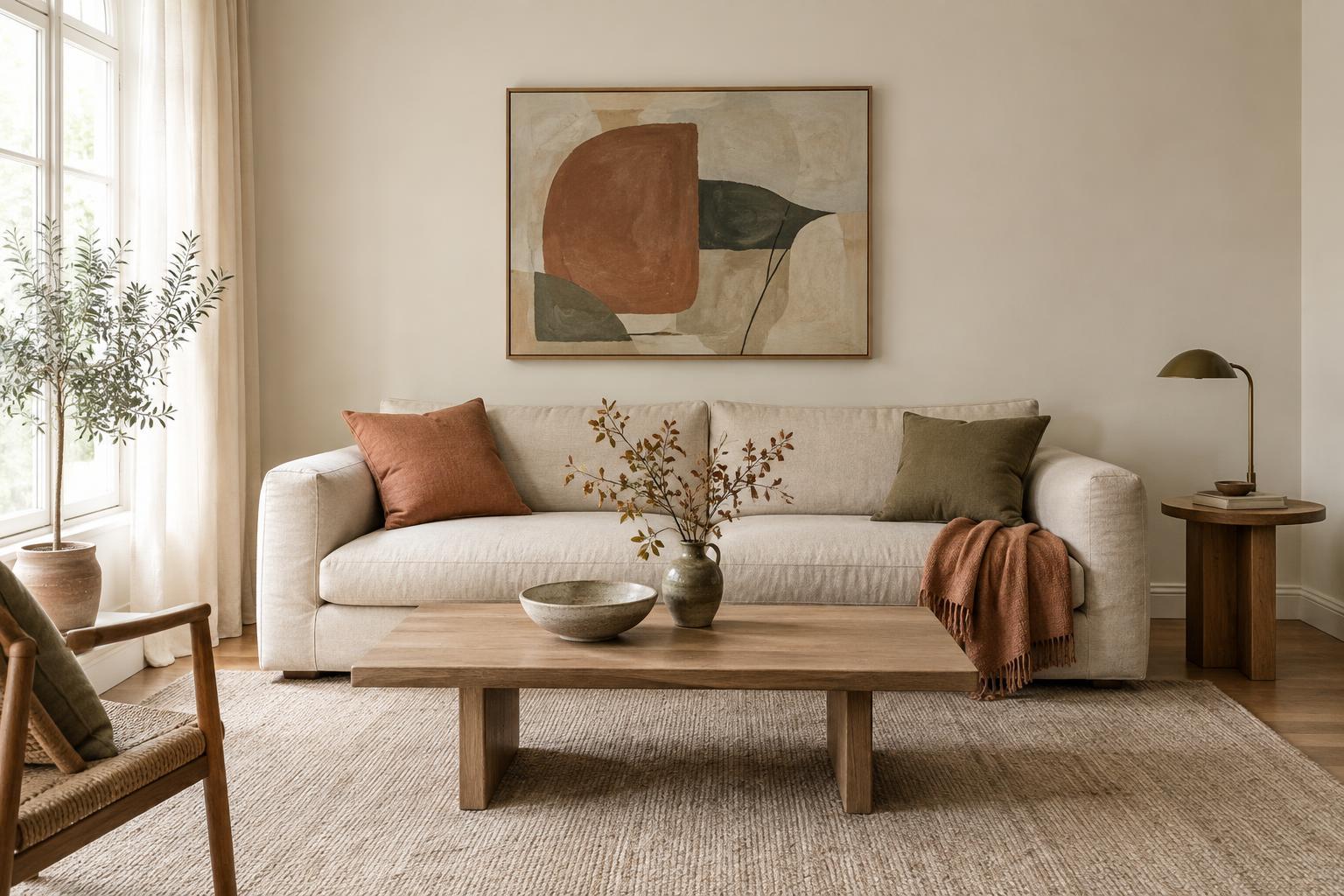
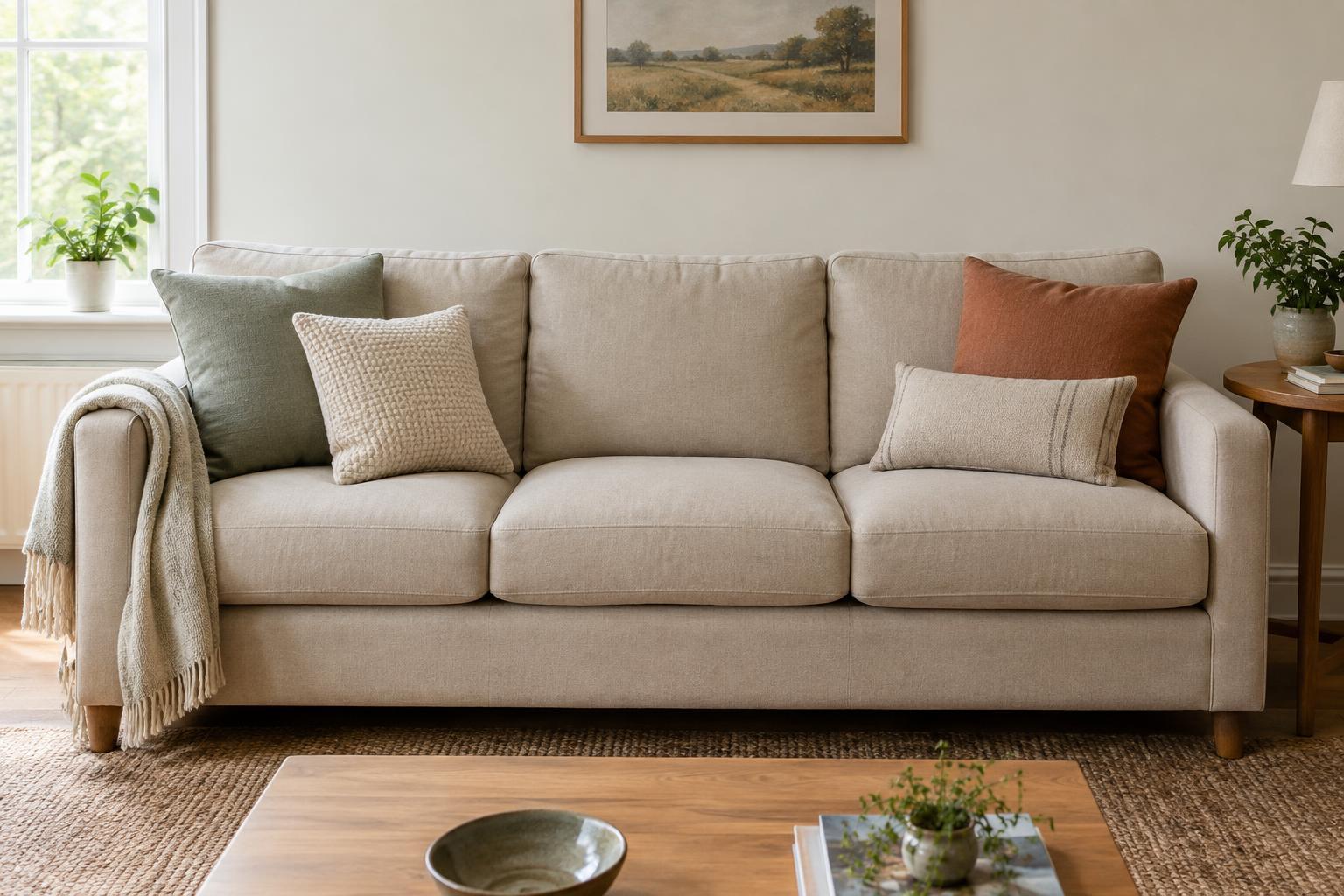
Grouping cushions at the ends gives the eye a place to rest and makes the seating area feel welcoming. For a simple arrangement, place a larger cushion near one arm and a smaller one slightly in front of it. Repeat on the other side if you want a symmetrical look. For a more relaxed effect, style one end with two cushions and the other with just one. The open space between the groups is part of the design.
You do not need to fill a gap simply because the sofa is long. On a three-seater, two modest groups can frame the seating without occupying the middle place. On a chaise sofa, keep the chaise relatively clear if someone uses it for stretching out, and concentrate cushions near the back corner instead. Leave enough room to shift position comfortably. A cushion that constantly falls forward or has to be removed during ordinary use is a good candidate for another chair or room.
Choose sizes that suit the sofa
Scale matters as much as quantity. Large cushions can make a generous, deep sofa feel inviting, but the same cushions may overwhelm a narrow seat. Start with a cushion that sits comfortably against the back without jutting far onto the seat, then add a smaller shape only if there is room. Mixing two sizes creates depth without requiring a large pile. A rectangular lumbar cushion can be useful where you want support with less bulk.
Pay attention to thickness and firmness, too. An overfilled cushion takes up more seating space than a soft, flatter one of similar width. If you like a layered look, place the fuller cushion at the back and a smaller, more flexible one in front. Check the arrangement from the side as well as the front: cushions should not form a barrier that pushes the sitter toward the edge. It helps to test them while sitting rather than judging their size by appearance alone.
Use colour and texture to make fewer cushions count
A restrained number of cushions can still give a sofa plenty of character. Choose a small palette that connects with something already in the room, such as the rug, curtains or upholstery. You might pair one patterned cushion with a plain cushion that picks up a colour from the pattern. Repeating a colour creates a deliberate look without requiring matching cushions across the entire sofa.
Texture offers another way to add interest without adding volume. A smooth cotton or linen-look cover beside a softly woven or velvet-like one creates contrast you can notice even when the colours are close. Keep practical use in mind: covers that are comfortable to lean against and straightforward to care for are more likely to stay on the sofa. If a favourite decorative cushion is delicate or scratchy, it may work better on a seat used less often.
Edit the arrangement in everyday use
Once the cushions are in place, live with the arrangement for a few days. Notice whether they stay where you put them and whether anyone moves them before sitting down. Frequent rearranging is useful feedback, not a styling failure. Try taking away one cushion, swapping a bulky shape for a slimmer one, or moving a cushion from the centre to an arm. Small changes often improve both comfort and appearance.
A nearby basket or chair can hold an occasional extra cushion, but it should not become a necessary step before anyone can use the sofa. For an easy seasonal refresh, change a cover or introduce a different texture while keeping the same comfortable layout. The best arrangement is one that looks considered when the room is quiet and still leaves the sofa ready for people to sit, lean back and relax.