Start with the routes people actually use
A room with several doorways often has less usable wall space than it first appears to. Before moving furniture, sketch the room and mark each opening, including the direction in which any door swings. Then notice the routes people take: from the hall to the kitchen, from a sofa to a window, or from an entrance to storage. A doorway that is rarely used may affect the layout less than one on a daily route.
Try to keep those main routes direct and easy to follow. People should not have to squeeze behind a chair or weave around a coffee table each time they cross the room. Width needs will vary with the household and the furniture, so test a route by walking it rather than relying only on measurements. Leave room for doors to open fully and for drawers or cupboards to be used without moving another piece.
Choose a purpose before choosing a position
Decide what the room needs to do most often. In a living room, that might be conversation, watching a screen, reading or a combination of these. This gives the largest pieces a reason to face a particular direction, even when the doorways prevent a symmetrical arrangement. A fireplace, view or bookcase can provide a visual focus, but it does not have to sit at the exact centre of the furniture.
Identify the best uninterrupted wall for a sofa, cabinet or dining table, then consider whether placing a large piece there would force everyone onto an awkward route. Sometimes a shorter sofa or a pair of chairs fits the room better than one long piece. The goal is not to fill every available stretch of wall; it is to make the main activity comfortable while letting people pass through.
Let furniture define a space away from the walls
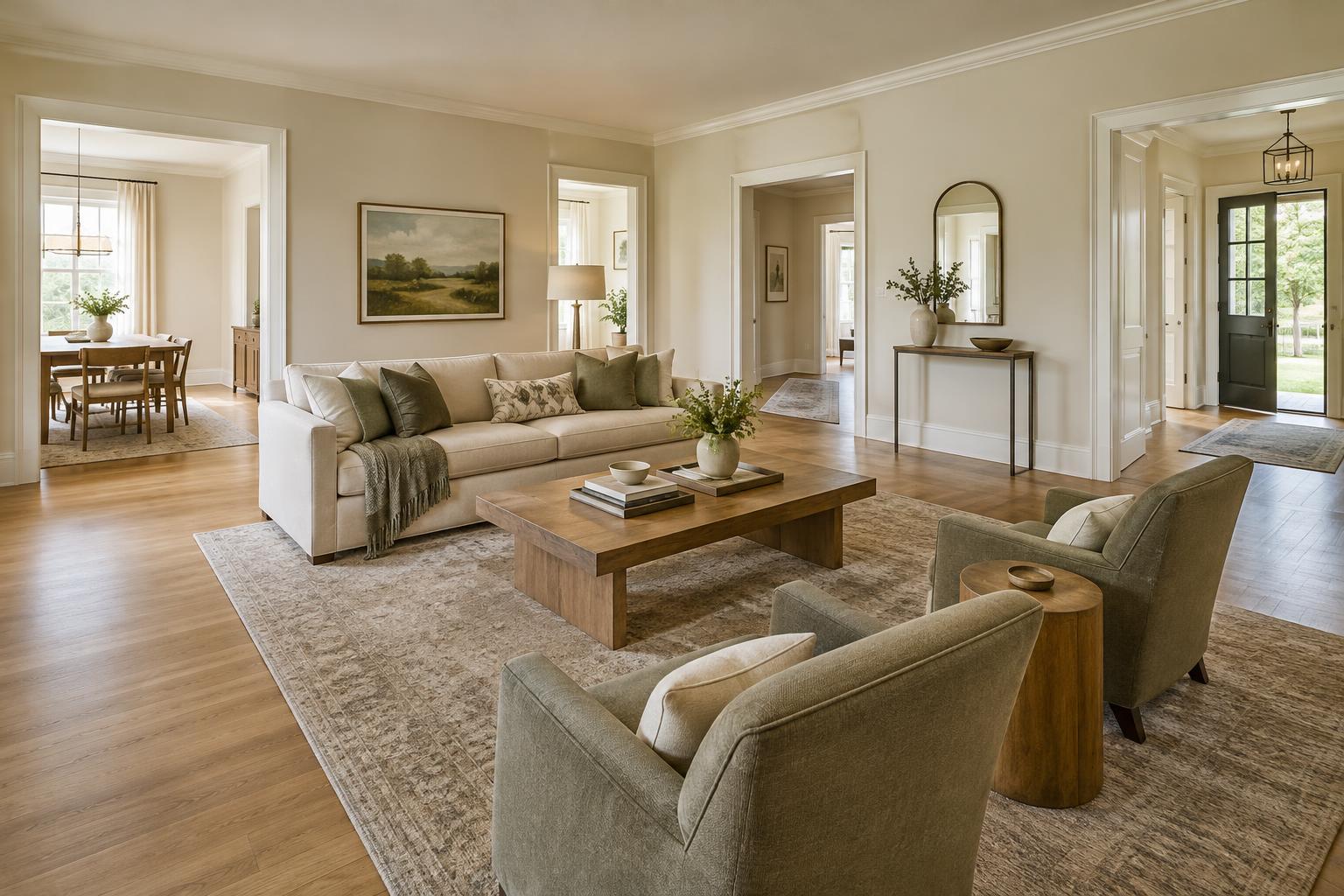
When doorways break up most of the walls, try bringing seating into the room. A sofa with its back to a walking route can mark the edge of a conversation area, while chairs angled toward it make the grouping feel deliberate. Leave enough space behind the sofa for the route to remain comfortable. If its back is visible from an entrance, a slim console can make that view feel finished, provided the console does not narrow the path.
A rug can help establish the seating area without blocking circulation. Position it so the furniture reads as a group rather than as separate pieces pushed into spare corners. A low coffee table or a small side table may be easier to move around than an oversized central table. Where two doorways face each other, consider keeping their connecting route clear and arranging the seating to one side of it.
Use the smaller spaces with restraint
The wall sections between doorways can still be useful, but they suit carefully chosen pieces. A shallow cabinet, narrow bookcase or compact chair may fit where a full-size sofa will not. Check the space with doors open as well as closed: handles, door swings and the way someone turns through an opening can all make a piece feel too close.
Not every gap needs furniture. A lamp, artwork or mirror can give a short wall a purpose without crowding the floor. Keep frequently used items near the places they are needed, rather than distributing them simply to make the layout look balanced. For example, a reading chair benefits more from a reachable light and table than from matching the position of a chair across the room.
Test the layout at full size
A floor plan can help narrow the options, but a trial arrangement shows how the room feels in use. Mark the footprint of a possible sofa or table on the floor with removable tape, or move lighter pieces into position first. Walk through every doorway, carry a laundry basket or tray along the main routes, and sit in each seat. These simple tests reveal tight turns and blocked views that may not be obvious on paper.
Make small adjustments before buying anything new. Moving a chair away from a door, choosing a smaller side table or shifting a rug can improve the flow without changing the whole room. Once the routes work, add cushions, lighting and decorative details to make the furniture grouping feel inviting. In a room with multiple doorways, a clear path and a comfortable place to settle are more valuable than a perfectly centred arrangement.