Start with the room’s main activity
Before moving furniture, decide what the living room needs to do most often. A layout for regular gatherings benefits from seats that face one another. A room used mainly for films may work better with its largest sofa facing the screen. Many households need both, so the aim is not to make every seat equally suited to every activity. Instead, give the main activity the clearest arrangement and make the second one comfortable enough to enjoy.
Look at the room’s fixed features: doors, windows, a fireplace, built-in storage and the likely position of the TV. Then notice the route people take through the space. A seating plan should not require anyone to squeeze between a sofa and a coffee table or walk in front of the screen every time they enter. If the room feels awkward, identify the clearest walking route first and arrange furniture around it.
Bring seats together for conversation
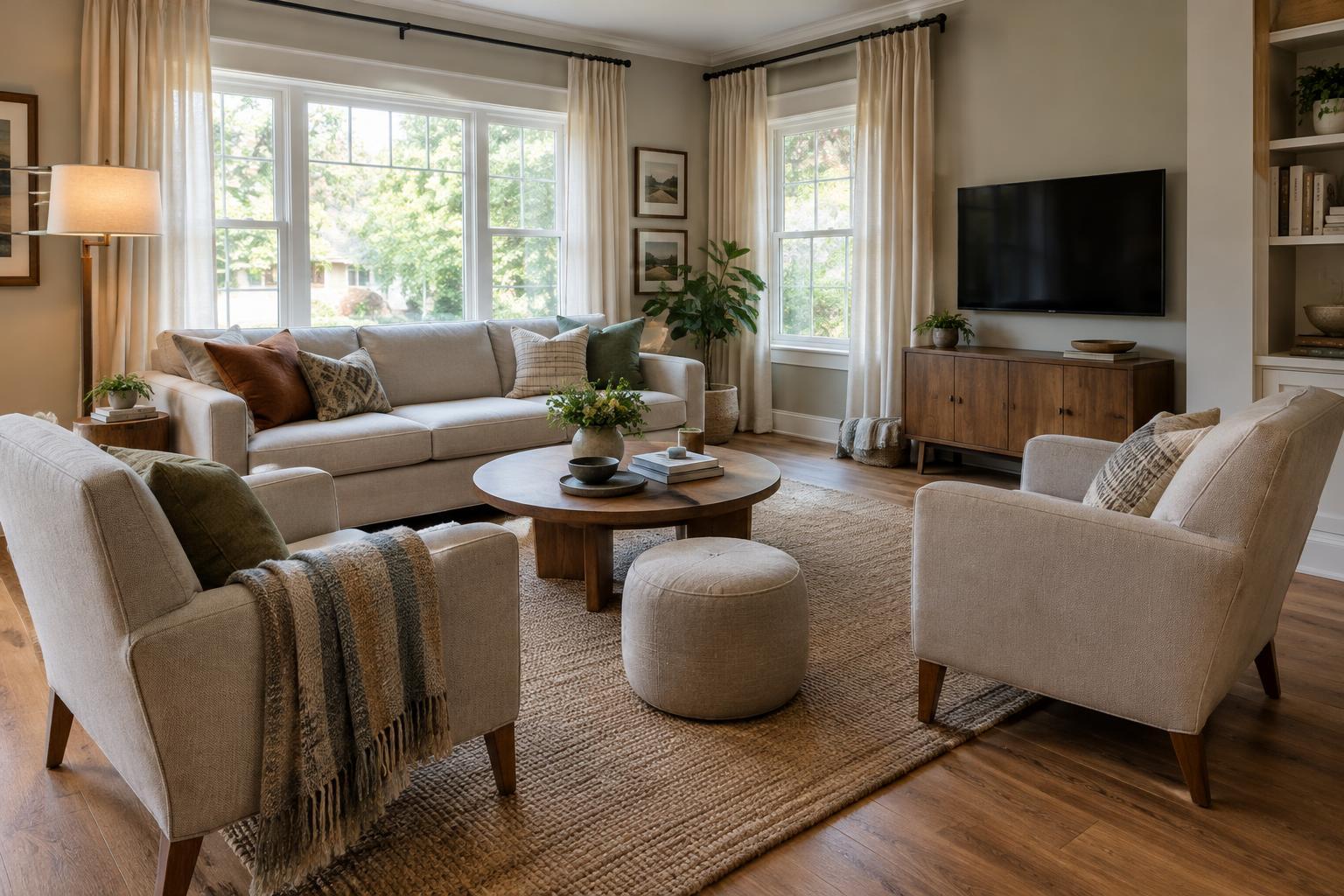
Conversation feels easier when people can see one another without twisting around. Try placing a sofa opposite two chairs, or set a chair at an angle beside the sofa to form a loose U shape. In a compact room, even one movable armchair can make a sofa arrangement feel more sociable. Avoid pushing every piece against a wall simply to leave an empty centre; bringing seats a little closer may make the space feel more welcoming.
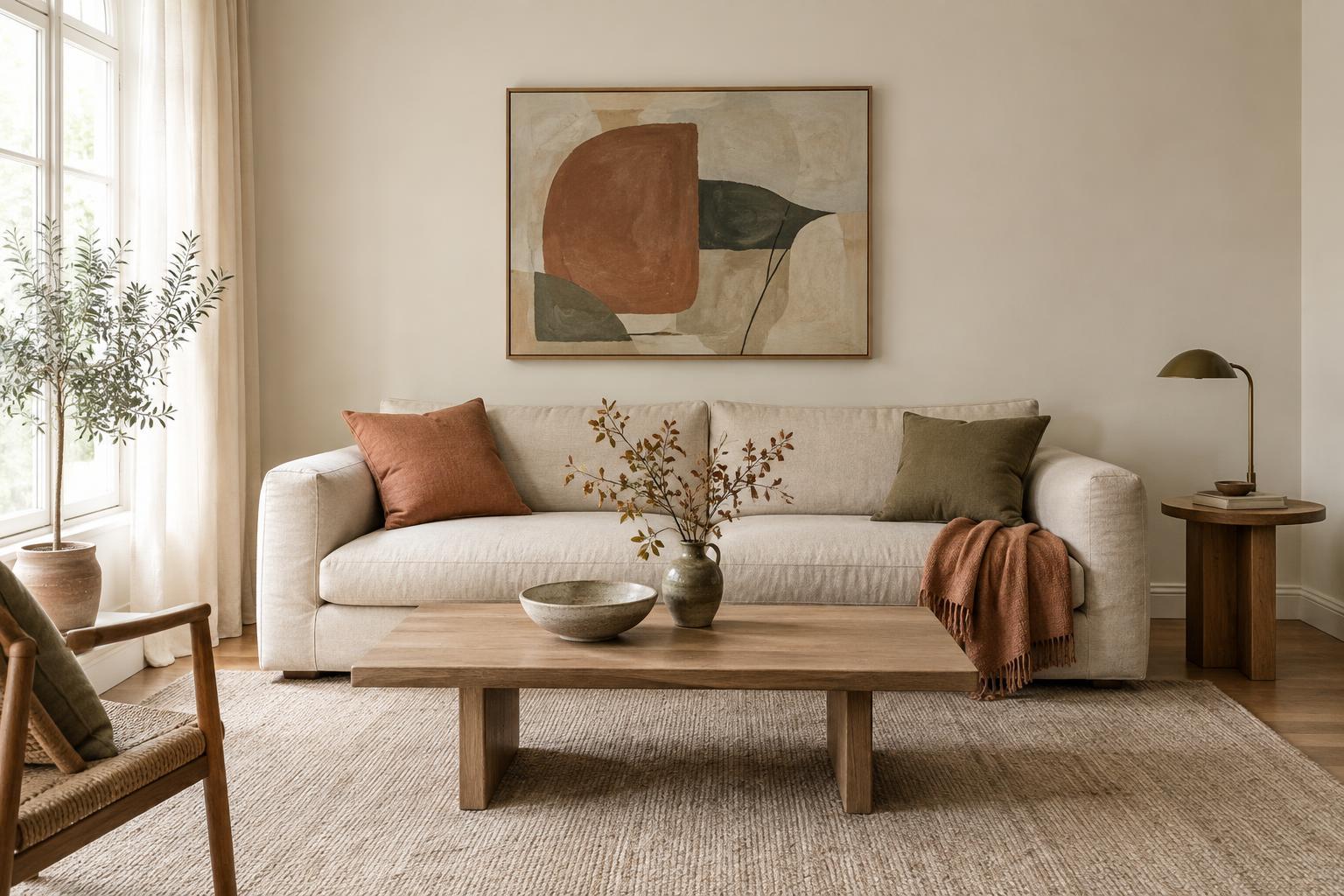
Keep a shared surface within comfortable reach of the main seats. A coffee table can anchor the group, while a small side table gives someone in a chair a place for a drink. If a large coffee table blocks movement, choose a smaller table or a pair of lightweight ones that can be shifted. An area rug can visually connect the seats, particularly when its edges sit beneath at least part of the main furniture rather than floating alone in the middle.
Make TV viewing comfortable without letting the screen dominate
For a TV-focused layout, start with the seat most people use and check its view of the screen. A direct view is usually more restful than sitting with your head turned for a long period. Place occasional chairs where they can angle toward the TV when needed; they do not all have to line up like cinema seats. If the screen sits beside a fireplace or bookshelf, consider which feature should draw attention when the TV is off.
Check the view from each seat at the time of day the room is commonly used. Bright windows may create glare, and a lamp reflected in the screen can be distracting. Curtains, blinds or a change in lamp position may help without forcing a complete furniture rearrangement. Keep cables and equipment tidy, but allow access where you need to reach plugs or controls. A layout that looks neat yet makes everyday use difficult is unlikely to stay that way.
Combine both purposes with flexible pieces
If conversation and TV viewing matter equally, use an angled arrangement rather than aiming every seat at a single point. A sofa can face the screen while a chair sits across from one end of it, turned slightly toward both the sofa and the TV. A second chair can complete the group when guests visit. Swivel chairs are useful if they suit your room and budget, but ordinary lightweight chairs can be just as adaptable.
Think about what happens when someone changes position. A pouffe can serve as a footrest during a film and an extra perch for a casual gathering. Nesting tables can move beside different seats. Keep the most frequently used pieces in convenient spots, and give movable items somewhere to rest when they are not needed. Flexibility works best when rearranging takes a moment, not a complete room reset.
Test the layout before refining the details
Try the arrangement for a few ordinary days before deciding it is finished. Sit in every chair, imagine a guest joining the group and walk the routes to doors and storage. Notice whether anyone has to lean forward to hear, turn sharply to see the screen or stretch to reach a table. Small changes in angle or spacing often solve more than replacing furniture.
Once the seating works, use textiles and lighting to make it feel connected. Cushions can pick up colours from different chairs, while a throw softens a seat used for longer viewing. A floor lamp near a reading chair and gentler light around the sofa let the room shift between activities. The best arrangement is not the one that looks most symmetrical from the doorway; it is the one that supports how people actually spend time together.