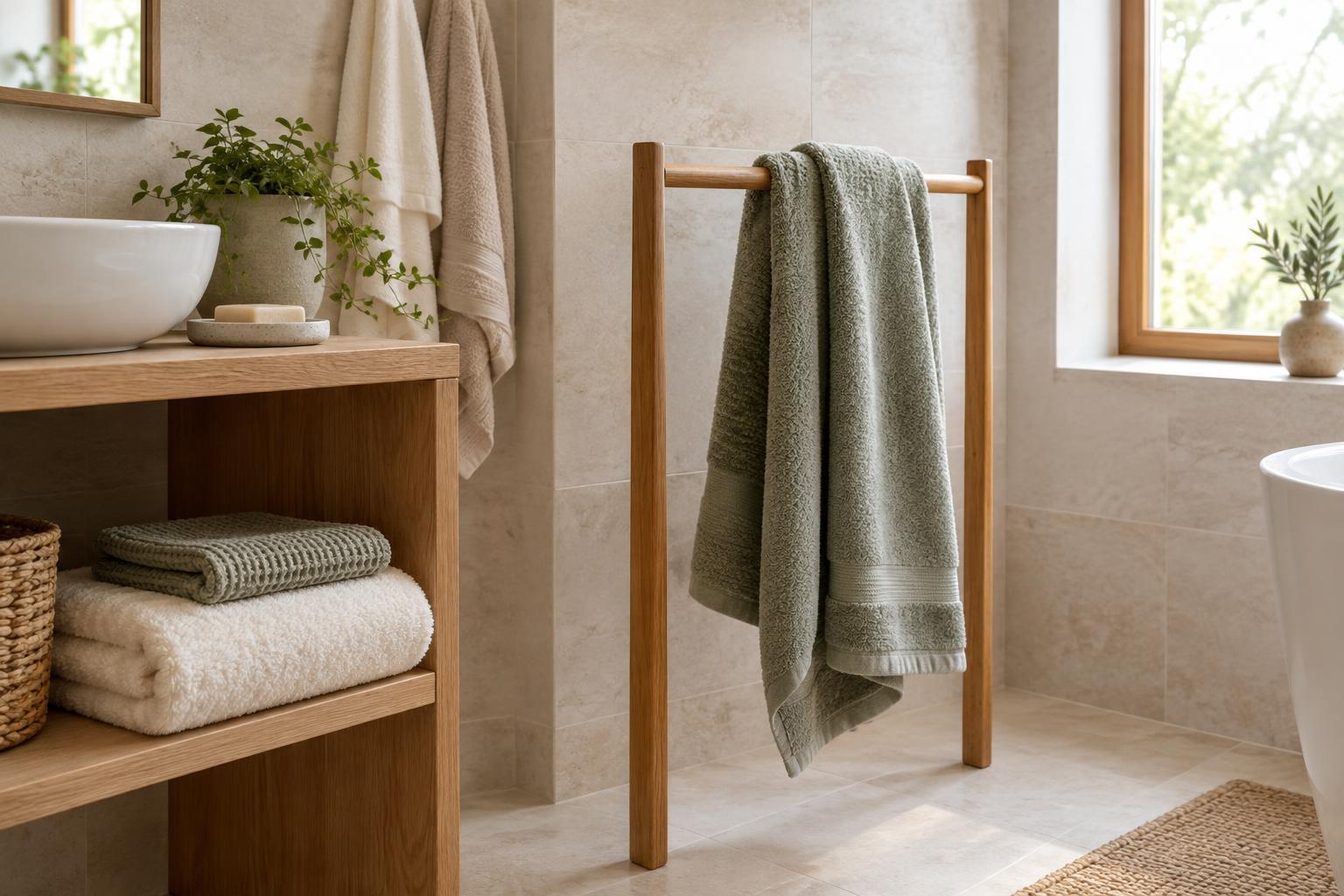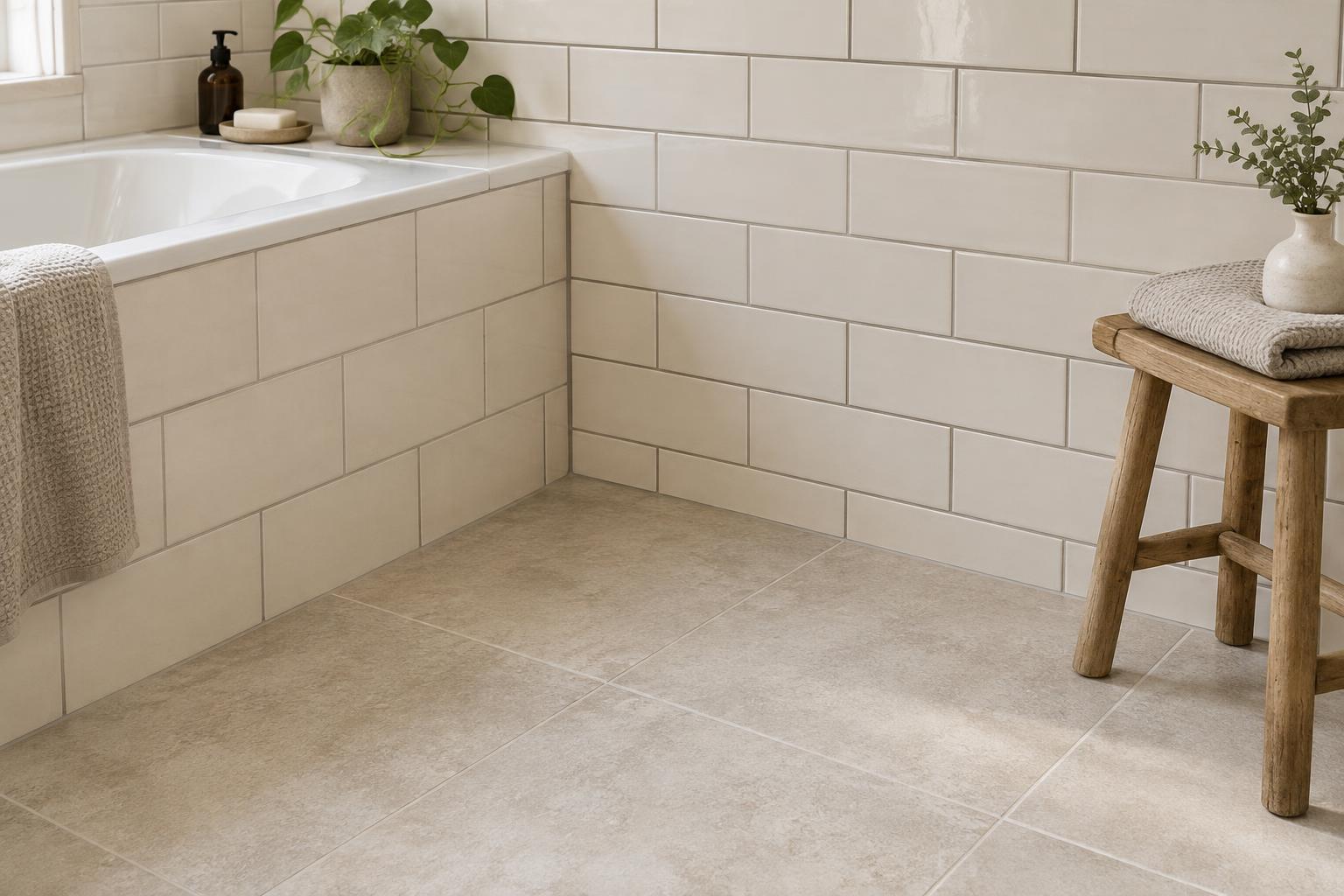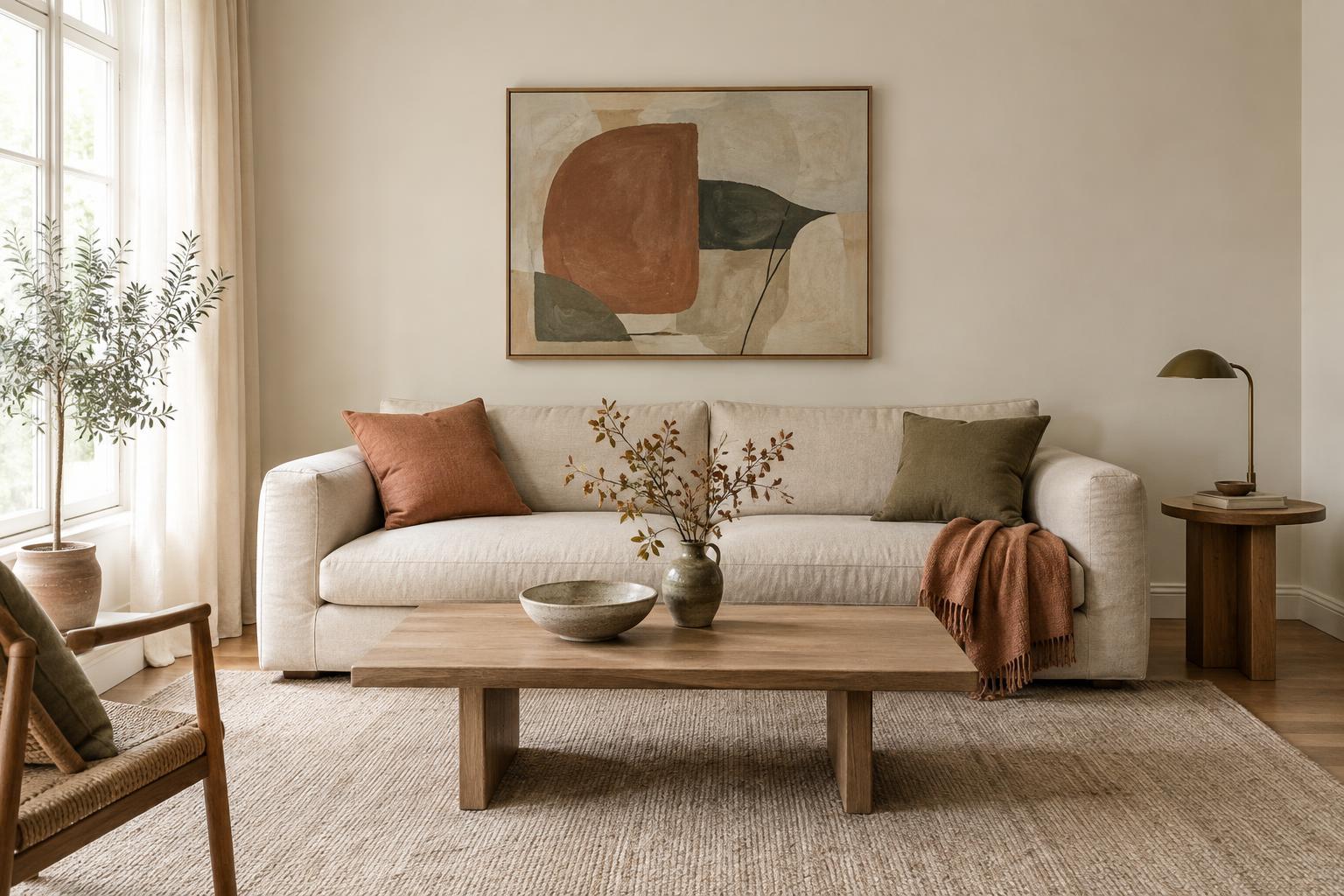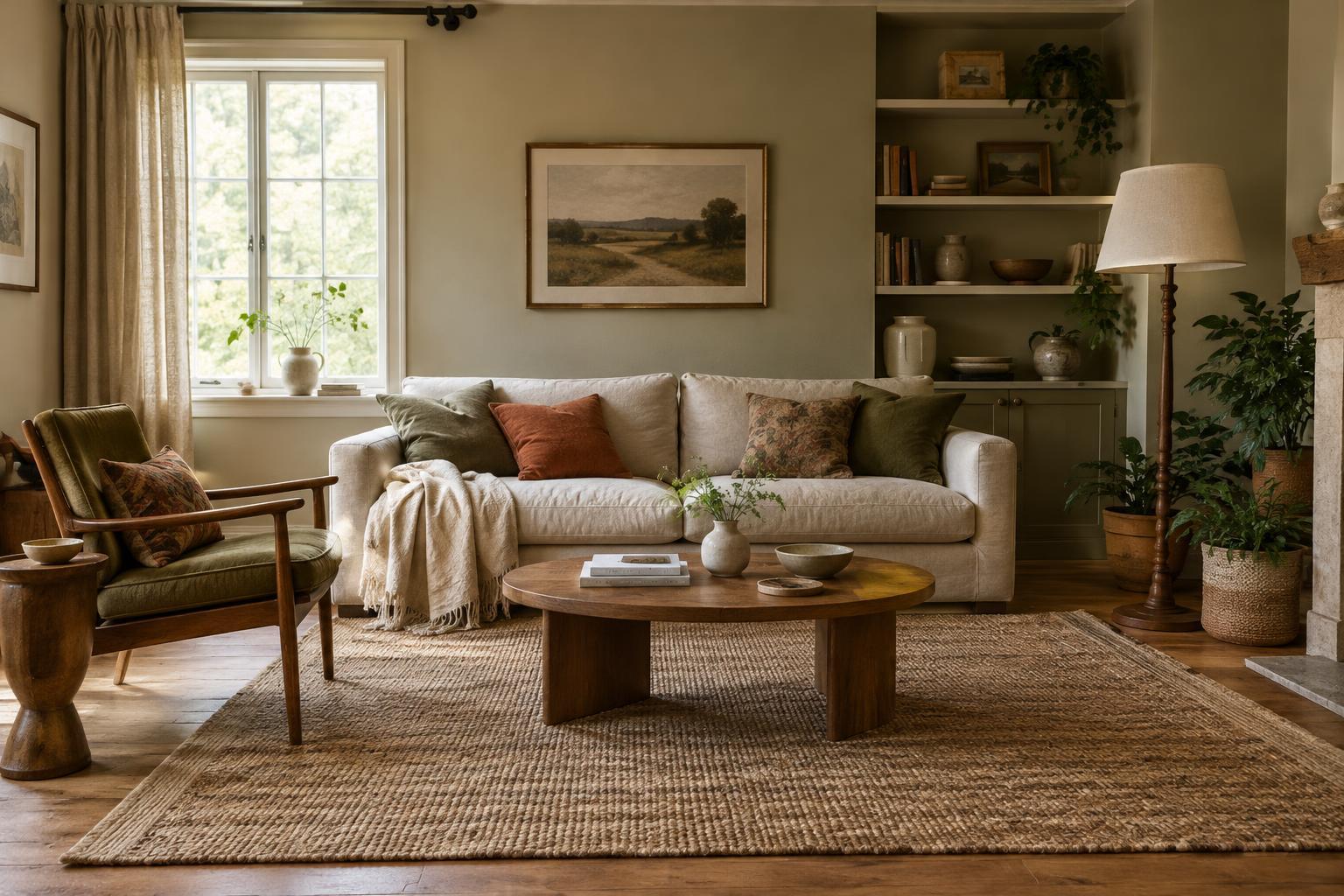
Start with the room’s anchor
An asymmetrical room does not need to look symmetrical. Its aim is to feel settled: one side should not seem crowded while the other feels forgotten. Begin by standing at the main entrance and noticing what draws your eye first. A fireplace, large window, sofa or dining table may serve as the room’s anchor. Once you know where attention naturally goes, you can arrange the remaining pieces to support it rather than trying to recreate a mirror image.
Check the practical layout before moving decorative items. Keep a comfortable route between doors and frequently used seats, and make sure drawers and cupboard doors can open. In a living room with a fireplace near one corner, for example, the sofa might face the seating area rather than sit directly opposite the fireplace. A chair placed at an angle can connect the two. Let the room’s shape guide the arrangement instead of forcing every piece against a wall.
Balance visual weight, not identical objects
Furniture has visual weight as well as physical size. A dark, solid cabinet often appears heavier than an open-legged table of similar dimensions. Upholstery, height and the amount of visible floor beneath a piece also affect how prominent it looks. If a large sofa occupies one side of the room, you do not need another large sofa opposite it. A smaller armchair, a floor lamp and a substantial plant might provide enough presence together.
Think in groups rather than pairs. Two lightweight chairs can balance one bulky bookcase, while a low console and artwork above it can hold their own across from a tall window. Leave some empty space between pieces so each group is readable. If one side still feels busy, the answer may be to remove an item rather than add something to the quieter side.
Use colour and materials to create connections
Mismatched furniture feels more intentional when pieces share a few visible details. Choose two or three recurring elements, such as warm wood, muted green and black metal, then distribute them across the room. A wood-framed chair might relate to a side table on the opposite side; a green cushion can echo a ceramic vase without being an exact match. Repetition gives the eye a way to travel through an uneven layout.
Keep the connections loose. If every object has the same finish, the room can feel overly coordinated, while too many unrelated finishes can make it feel scattered. Notice undertones when placing materials together: warm timber and creamy textiles tend to read differently from cool grey upholstery and bright white paint. You can bridge a contrast with an intermediate texture or colour, such as a woven rug that picks up tones from both sides.
Let textiles soften awkward proportions
Textiles are useful because they can change how large or connected an area feels without changing the furniture. A rug can bring an uneven seating group together when the main seats rest at least partly on it. If a sofa is long and the opposite chair is compact, a generous rug helps the arrangement read as one area rather than separate pieces floating in the room.
Curtains can also reduce the visual pull of an off-centre window. Extending the curtain rod beyond the frame, where space allows, can make the treatment feel broader and give the wall a more deliberate composition. Avoid covering a radiator or blocking a walkway simply to create an even outline. Throws and cushions provide smaller adjustments: place a darker or more textured fabric on the quieter side when it needs a little more presence.
Finish with lighting and a final edit
Overhead lighting alone can exaggerate an uneven room by leaving corners dim. Place light where people sit or use the space: a table lamp near a chair, a floor lamp beside a sofa or a small lamp on a console. The lamps need not match. Similar warmth of light and a sensible spread around the room can make different furniture groups feel related.
Finally, look at the room from the doorway and from the seats you use most. Notice whether your eye moves around the space or stops at one crowded corner. Try shifting one lamp, artwork or side table before making a larger change. A balanced room often retains its quirks; the goal is to make those quirks feel comfortable and purposeful, not to hide them.