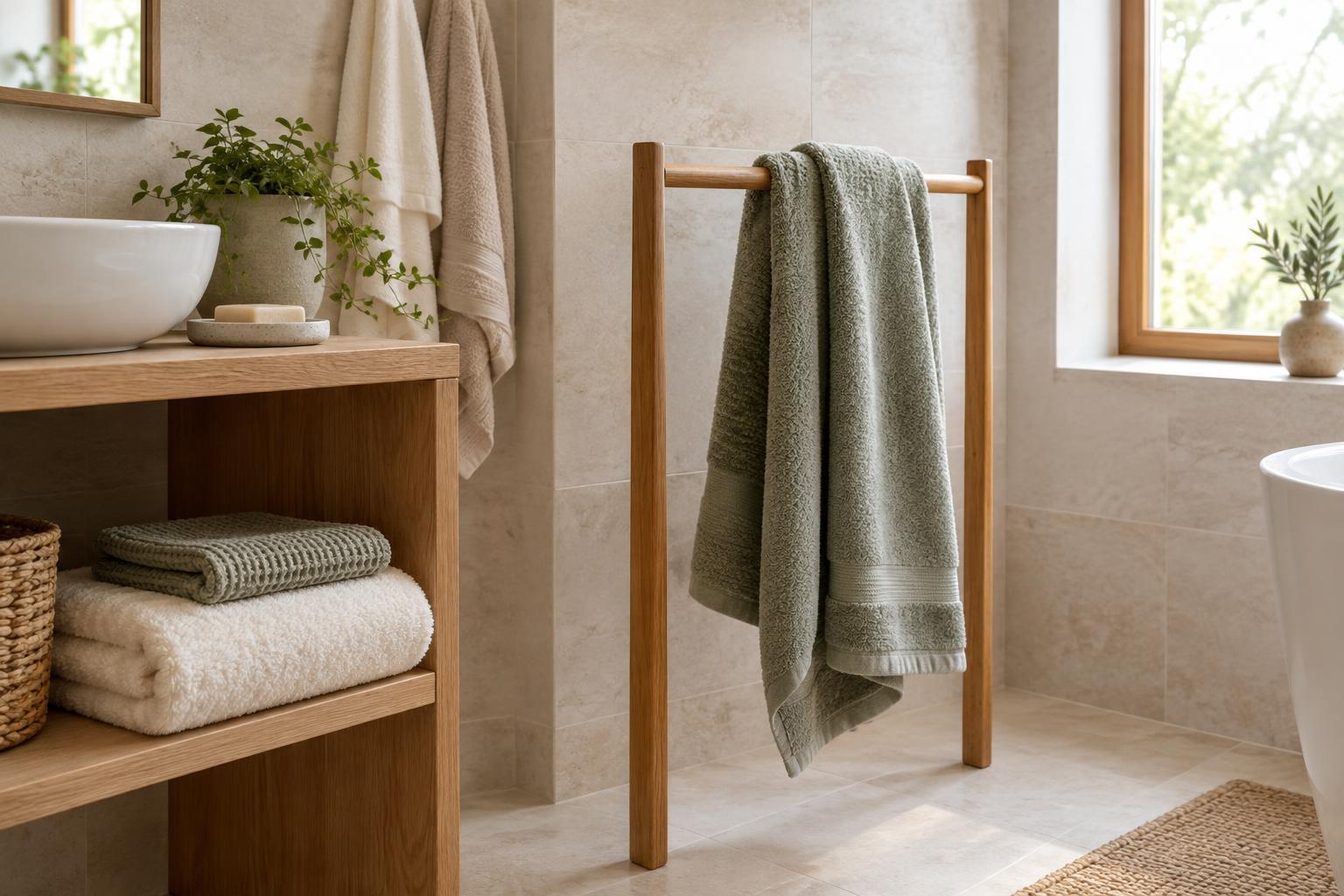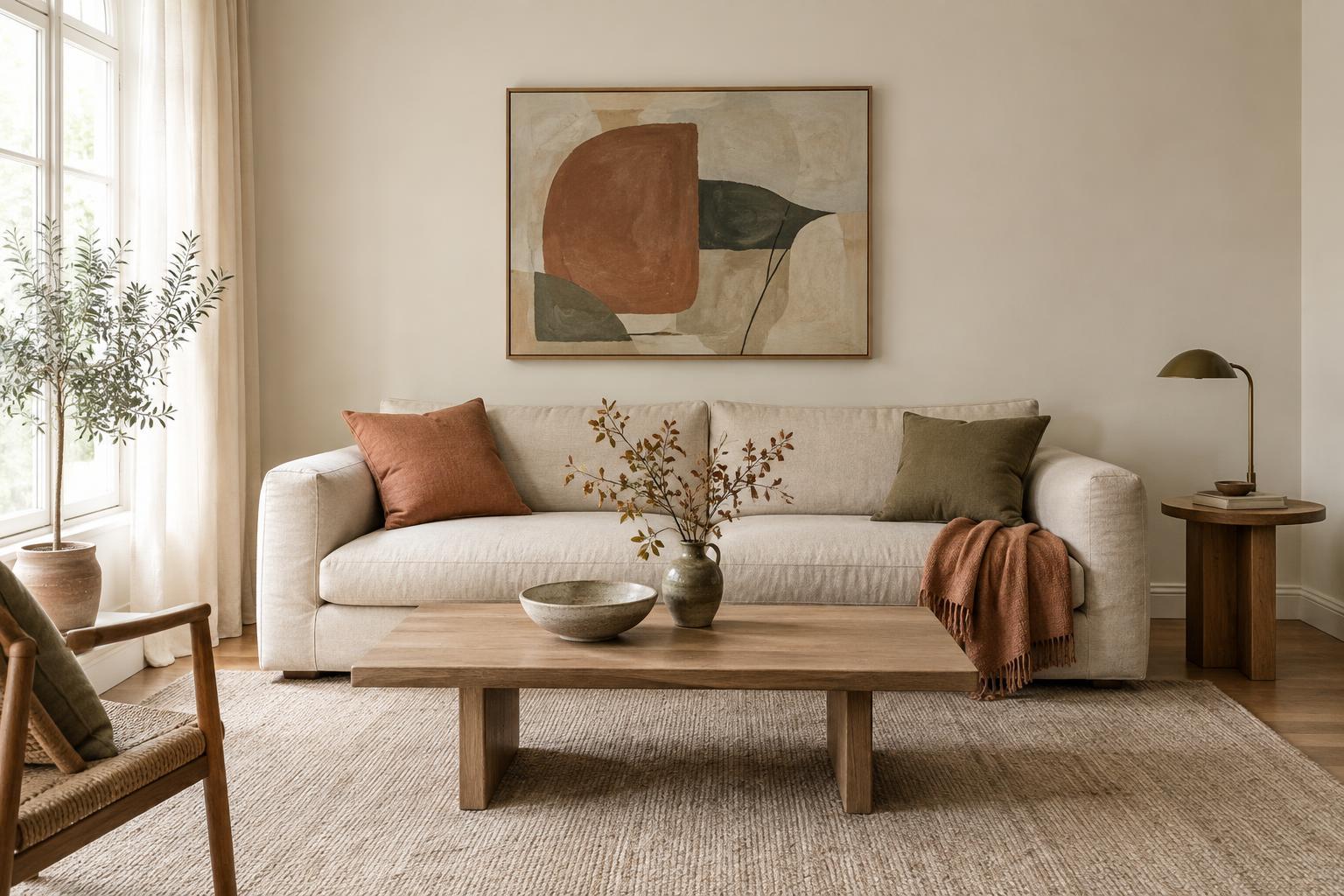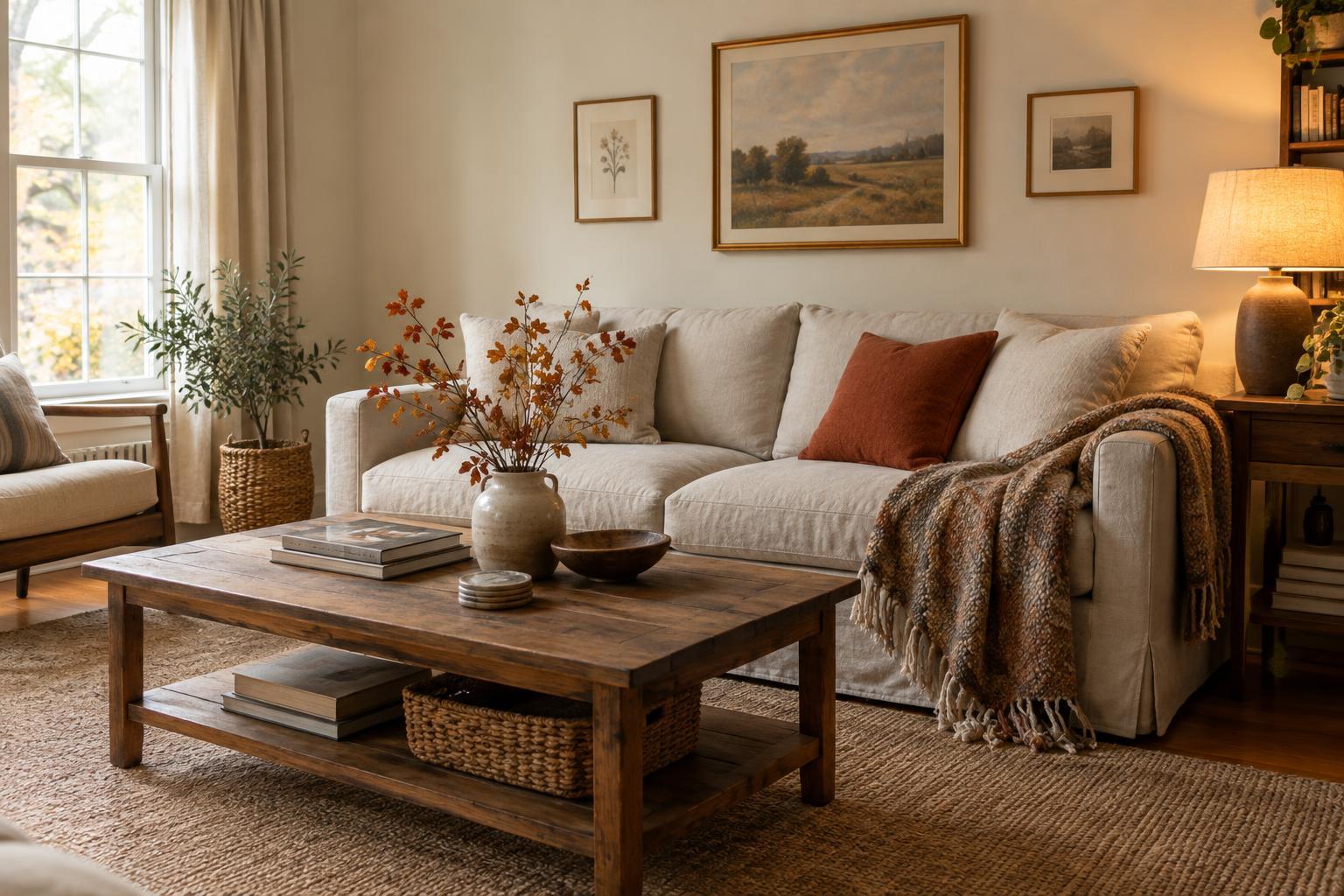
Start with the room you already like
Before changing anything, notice what makes the room comfortable now. Your sofa, main rug, curtains and larger pieces of furniture may already work well across the year. They do not need to become part of a seasonal rotation. Instead, identify a few smaller areas that are easy to adjust: the sofa cushions, a side table, a mantel or a dining table. A limited set of changeable spots gives the room continuity while leaving space for a fresh mood.
Take a quick inventory of what you have. Which objects feel useful or pleasant regardless of season? Which ones feel tied to a particular temperature, colour palette or activity? Keep the first group in place. Set aside only the pieces you genuinely want to change. This avoids the common cycle of clearing every surface and then trying to fill it again.
Make one change before adding another
A gradual update is easier to judge when you work in stages. Begin with one noticeable but reversible change, such as replacing a heavy throw with a lighter one or adding a warmer layer as the weather cools. Live with it for a few days, then decide whether the room needs anything else. You may find that one textile changes the feeling of the space more than several new ornaments would.
If the room still feels out of step, move to a second area. Swap a cushion cover, change what sits on a tray or rearrange a small group of objects. Try to change one type of detail at a time rather than replacing textiles, artwork and accessories all at once. This makes it easier to see what is working and keeps the refresh from turning into a full redecoration project.
Let texture do some of the seasonal work
Seasonal decorating does not require a new colour scheme. Texture can create a shift while preserving the colours that already suit your room. In a cooler period, a knitted throw, a denser cushion cover or a woven basket can make a seating area feel more sheltered. In a warmer period, lighter fabrics and less layering can make the same furniture feel more open. Choose materials that are comfortable to use, not just attractive to look at.
Think about how the room functions, too. A throw that is within reach will be more useful than one arranged somewhere nobody sits. Cushions should leave enough space to settle comfortably on the sofa. If you are storing textiles between seasons, clean them as appropriate and keep them somewhere dry and easy to access. A simple rotation works best when putting things away is nearly as easy as bringing them out.
Repeat familiar colours in small doses
If you want a seasonal colour change, connect it to something already in the room. Pick a shade from the rug, artwork or upholstery and use a lighter, deeper or softer version of it in a small detail. For example, a room with muted green accents might feel different with pale green cushion covers than with deeper olive ones, while still looking like the same room. Repeating an existing colour helps new pieces feel intentional.
You can also adjust the balance of colours without buying anything. Move a bright decorative object to a more visible shelf, or gather similar-toned items on one table instead of scattering them around the room. Leave some open space between objects so each choice can be seen. If a new accent makes the room feel busy, remove or relocate something before adding another piece.
Use a stopping point, not a shopping list
Seasonal displays can expand until every surface demands attention. Set a stopping point before you begin: perhaps one change to the seating area and one to a tabletop. Step back and look at the whole room once those changes are in place. Does it feel comfortable and appropriate for how you use it now? If so, the update is complete, even if you have other decorations in storage.
When the next season approaches, reverse the process gently. Remove the pieces that no longer feel right, then decide what, if anything, should take their place. You do not have to fill every gap. Keeping a familiar base and rotating only a few well-chosen details gives your home a sense of change without losing the character you have built over time.