Start with the room, not the season
An autumn palette works best when it feels like a natural change to your room rather than a separate set of decorations placed on top of it. Before choosing new colours, look at the surfaces that will stay: the walls, floor, sofa, rug and larger pieces of furniture. Note whether they lean warm, cool or fairly neutral. A room with cream walls and oak furniture gives you a different starting point from one with grey upholstery and dark wood.
Choose one or two of those existing colours as the foundation of your palette. Then decide what you want autumn to add. That might be softness in a bright room, warmth in a cool one, or a little contrast in a space that feels flat. Keeping the foundation familiar makes it easier to introduce seasonal pieces without replacing everything else.
Find warmth beyond orange
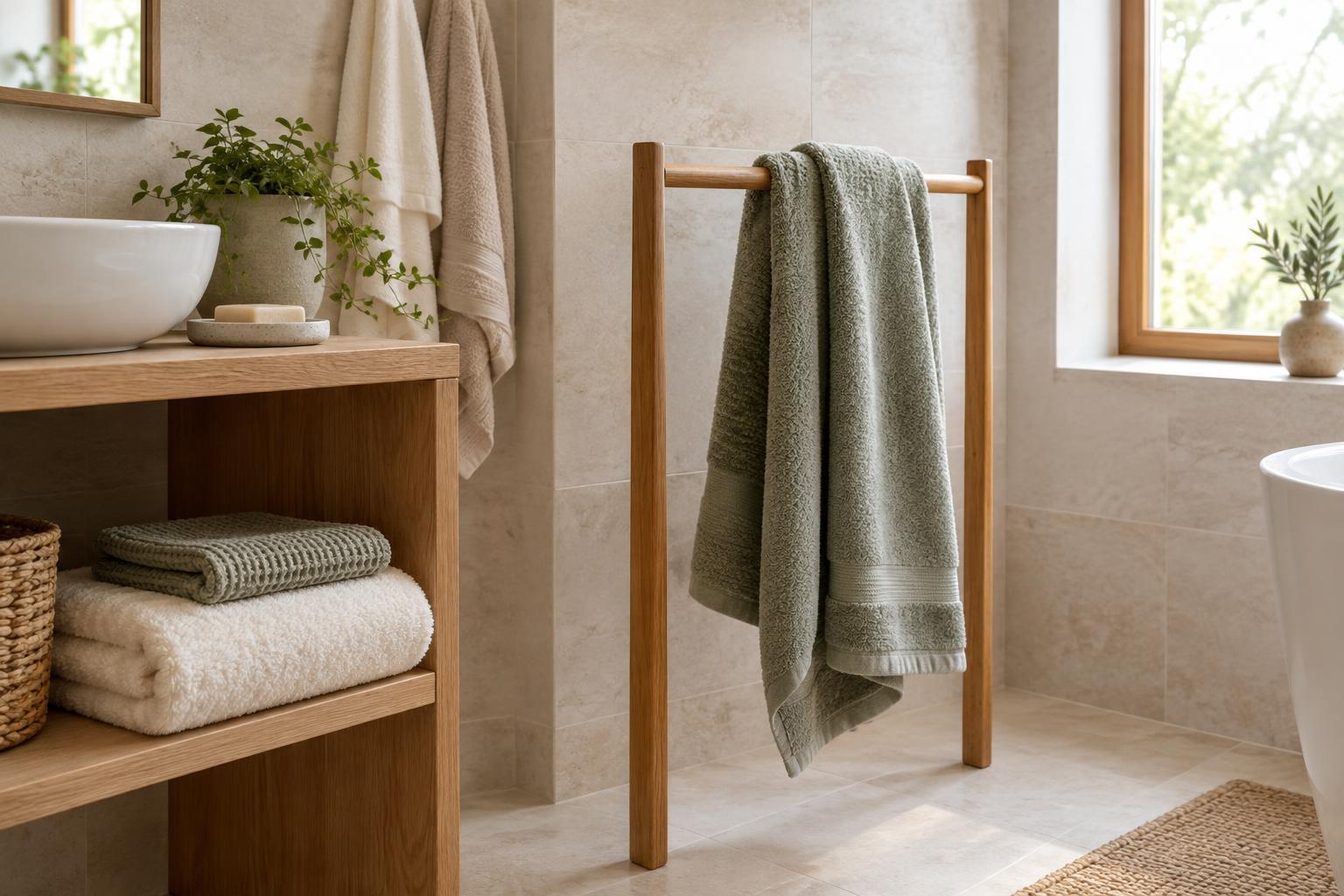
Warmth can come from many colours besides orange. Oatmeal, camel, mushroom and chocolate brown create a quiet, earthy look. Burgundy, plum and deep rose offer richness without feeling bright. If you prefer greens, try olive, moss or a muted sage alongside warm wood and natural linen. Navy or charcoal can also suit autumn when balanced with softer neutrals and tactile materials.
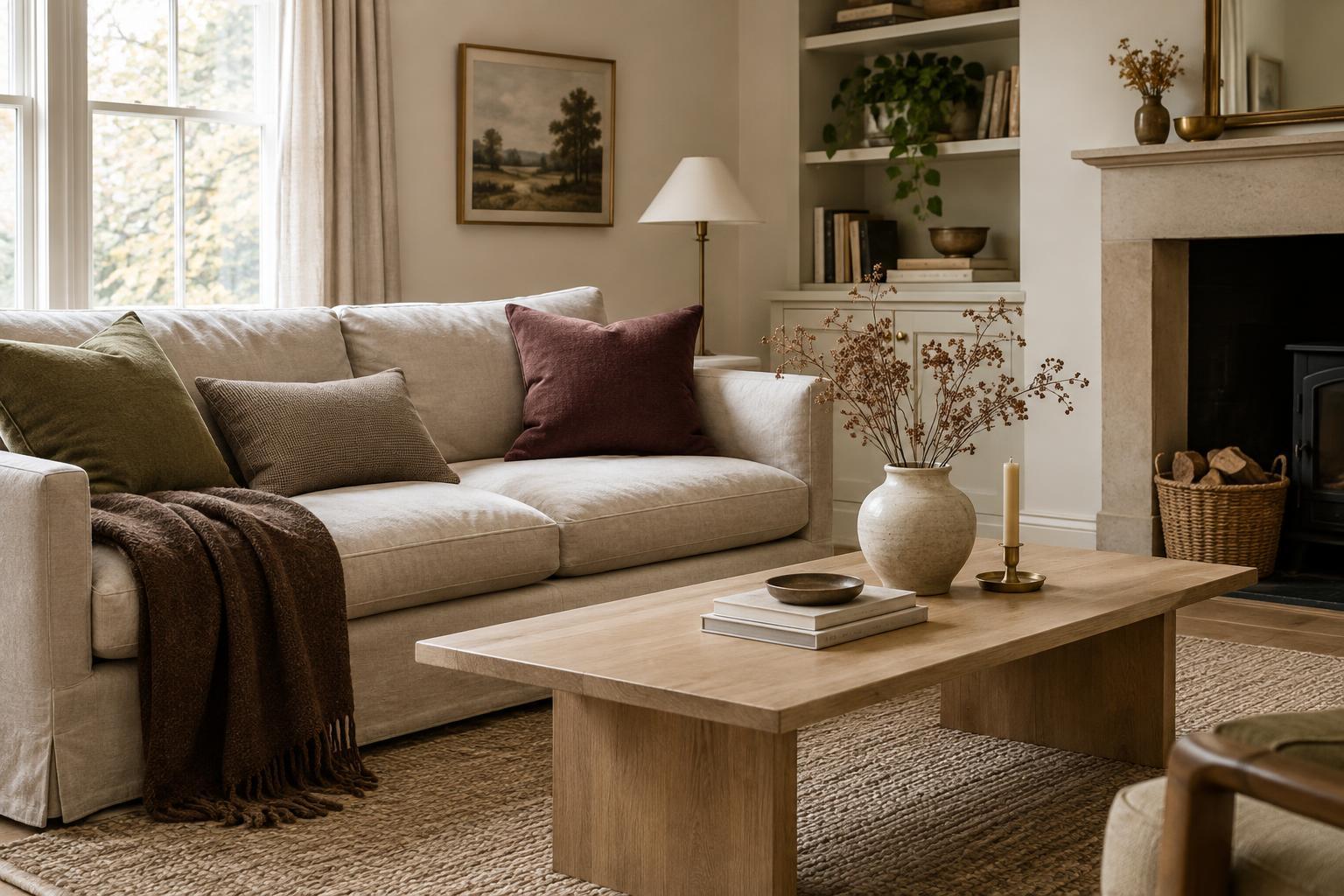
For a simple starting palette, choose a main neutral, a deeper colour and one restrained accent. Cream, walnut brown and olive might feel calm and grounded; stone, burgundy and dusty pink may feel softer. Repeat the deeper colour in two or three small places, such as a cushion, a vase and a patterned throw. Repetition helps separate items look intentional, even when they were collected at different times.
Check undertones and daylight
Colour names are useful, but they cannot tell you exactly how two items will look together. A beige cushion may have a pink undertone, while a beige rug may lean yellow. Neither is wrong, yet the difference can become noticeable when they sit side by side. Compare samples or items in the room where you will use them, next to the furniture and textiles they need to complement.
Look at your choices in daytime and again with the lamps you normally use in the evening. A deep burgundy may feel inviting in one room but heavy in another; a pale neutral can look fresh by a window and dull in a dark corner. If a colour feels too strong, use less of it rather than discarding the whole palette. A narrow stripe or small decorative object can give you the contrast you want without dominating the space.
Let texture carry the seasonal feeling
A room can feel ready for autumn even when its colours barely change. Texture does much of the work: a wool-look throw adds a different impression from a smooth cotton one, and a matte ceramic bowl feels quieter than a glossy summer accessory. Try layering one or two tactile pieces over what you already own, rather than changing every cushion, curtain and ornament at once.
Vary textures so the room stays balanced. If the sofa is upholstered in a thick fabric, pair it with a smoother cushion and a loosely woven throw. If the room already has plenty of pattern, let the new pieces be mostly plain. Curtains can make a strong difference because they cover a large area; if replacing them is impractical, a throw or cushion covers are easier ways to test a seasonal palette.
Edit the details before adding more
Once you have chosen your colours, clear a small surface such as a side table or shelf and rebuild its display using fewer objects. A vase, a stack of books and a small dish may be enough. Look for opportunities to bring your palette into the arrangement through colour or material, but leave some open space so each piece can be seen. Branches, dried foliage or other natural elements can add shape without requiring a bright autumn colour.
Finally, step back and look across the whole room. Is the accent colour visible in more than one place? Do the textiles suit the furniture already there? Does any new item feel as though it belongs to a different palette? Remove or move anything that competes with the overall effect. The result does not have to announce autumn immediately: a room that feels warmer, more layered and comfortable is a seasonal update in its own right.