Start with the cover, not the label
A cushion insert has two jobs: it should reach the corners of the cover and give the cushion enough body to hold its shape. If it is too small, the fabric may wrinkle and the corners may droop. If it is too large or too firm, the seams and zip may look stretched. The best fit depends on the cover as well as the number printed on the insert.
Lay the empty cover flat, smooth it without pulling, and measure from seam to seam across its width and height. Check both dimensions, especially for rectangular covers. A cover’s listed size may be rounded, and details such as piping or a thick seam can affect how spacious it feels inside. Measuring also helps when you are replacing an insert in a cover you already own.
Choose a size that suits the fabric
For many square covers, an insert slightly larger than the cover gives a fuller appearance. For example, a 20-inch cover may work well with a 22-inch insert. Treat that as a starting point rather than a rule: insert dimensions, compressibility, and cover construction vary. An insert the same size as the cover can also work if it is generously filled or the cover has little room to stretch.
The fabric offers useful clues. A soft cotton or linen cover can often accommodate a little extra volume, while a tightly woven, heavily embellished, or delicate cover may need a less forceful fit. Velvet and other fabrics that show tension marks are worth checking closely at the seams. For a long lumbar cushion, a modest increase in size may be enough; adding too much length can make its ends look crowded. When in doubt, compare two inserts in the actual cover rather than relying on measurements alone.
Match the fill to the shape you want
Insert material changes how a cushion looks and feels even when the dimensions are identical. A soft, compressible fill settles into a relaxed shape and can be reshaped by hand. A firmer polyester-fill insert tends to keep a rounder outline and may be easier to position neatly on a sofa or chair. Neither is automatically better: choose according to whether you want a casual, pliable cushion or one that looks consistently plump.
Pay attention to how evenly the fill reaches the edges. An insert that feels dense in the middle but thin at the corners may still leave a square cover looking underfilled. Some inserts have an inner casing or internal construction that helps keep the fill distributed; others need regular fluffing. If you are choosing a fill for a household with sensitivities, check its stated materials and care instructions rather than assuming all inserts of one type will suit everyone.
Test the fit before deciding
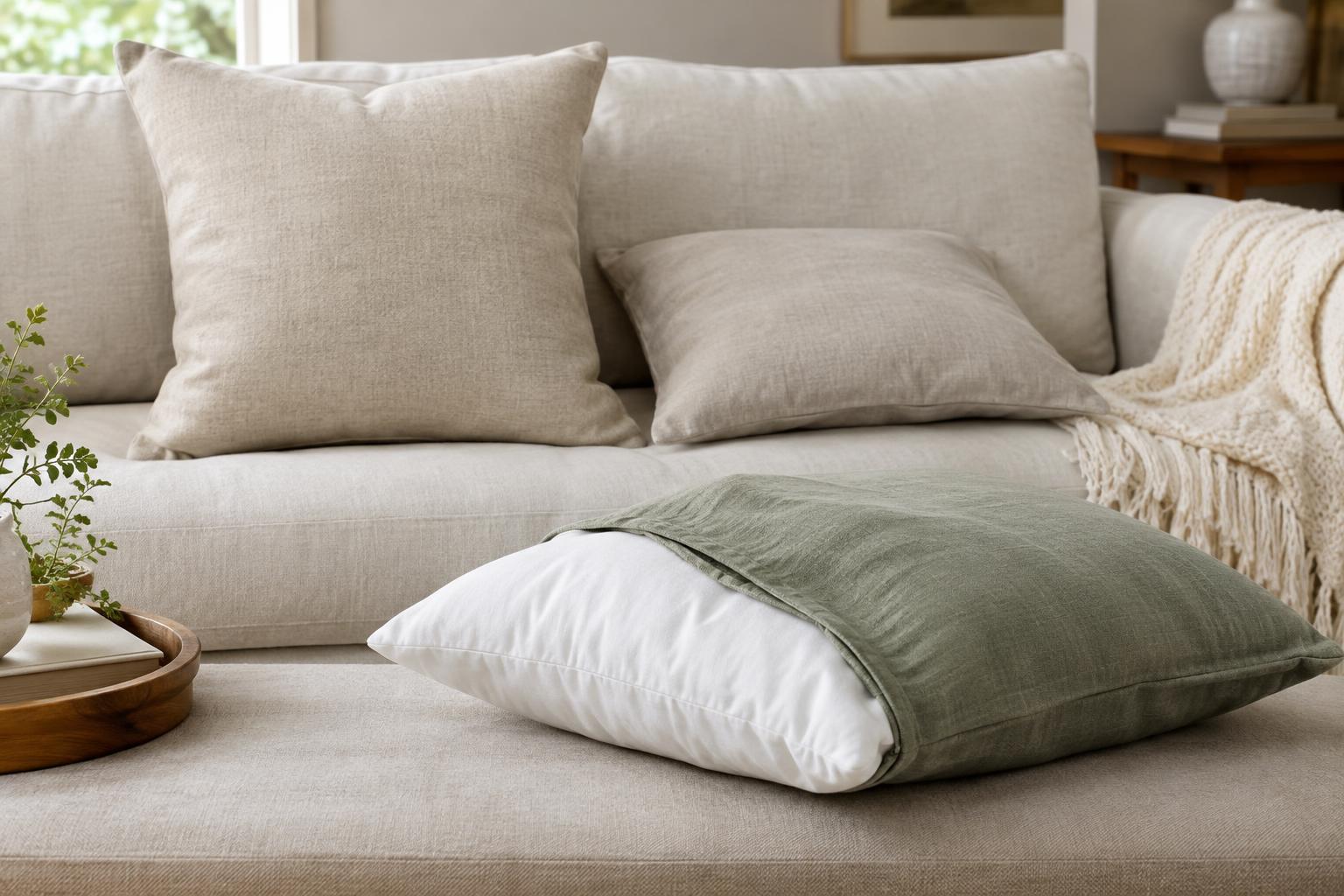
To put an insert in without stressing the zip, fold it gently in half, guide it through the opening, and then ease each corner into place. Avoid pulling hard on the cover to close it. Once zipped, set the cushion upright and smooth its surface. Look at the corners, the seams, and the overall silhouette from a short distance, as you would see it on the sofa.
A good fit fills the corners without making the cover look taut. If the corners sag and excess fabric gathers along the edges, try a fuller or slightly larger insert. If the zip bows, the piping twists, or the seams appear strained, try a smaller or softer one. Also sit against the cushion: a decorative insert that looks good but feels uncomfortably rigid may not be right for a cushion you use every day.
Keep the cushion looking full
Even a well-fitted cushion can flatten with use. Fluff and rotate it occasionally so the fill does not remain compressed in one area. Follow the care labels on both the cover and insert before washing or drying them; their instructions may differ. Let a cleaned insert dry fully before putting it back into the cover.
When a cover starts looking loose, check the insert before replacing the whole cushion. The fill may simply need redistributing, or the insert may have lost enough loft that a fresh one would fit better. Keeping the cover’s measurements on hand makes future replacements easier and helps you choose a cushion that looks inviting without putting unnecessary pressure on its seams.