Start with the artwork, not the frame
Before shopping, gather the pieces you want to display and look at each one separately. A small print with fine lines may benefit from breathing room around it, while a bold photograph might look better in a simple frame that stays close to the image. Notice the colours, contrast and mood of the work, but also what it is made of. A canvas, a photograph and a drawing on thin paper may need different ways of being held in place.
Decide whether you want to show the whole sheet or only the image. The paper edge, a signature or a textured border may be part of what you like about a piece. If so, plan to leave it visible rather than covering it with a mount. If a print has an uneven or distracting edge, a mount can give it a cleaner outline. Making this choice first will narrow down the frames that fit.
Measure the piece and plan the mount
Measure the full height and width of the artwork, then measure the part you want visible. Keep these as separate measurements: the sheet size tells you what must fit inside the frame, while the visible area helps determine the mount opening. Also check whether the work is perfectly square. Even a small variation can matter when a mount is cut close to the image.
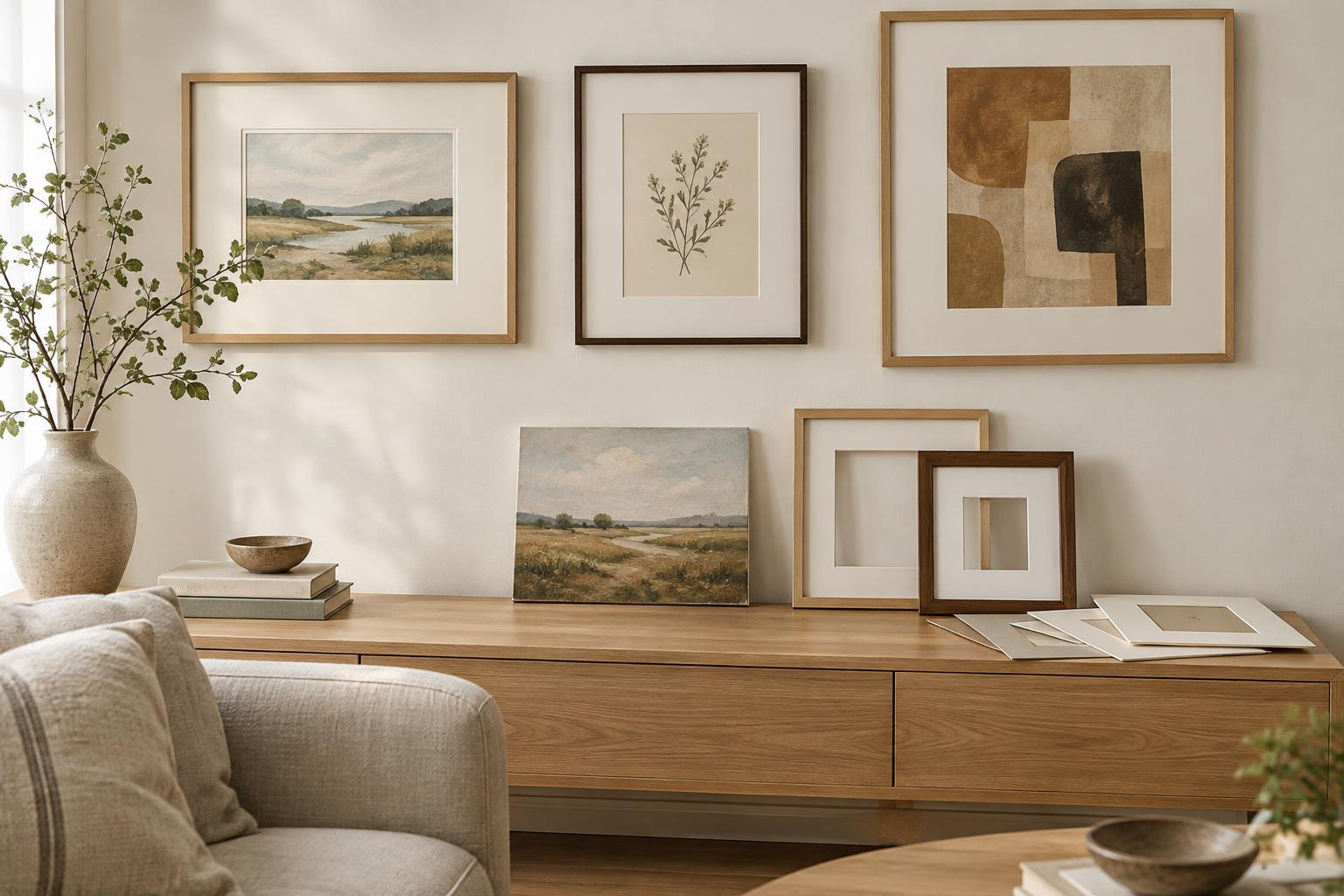
A mount, sometimes called a mat, is the border between the artwork and the frame. It can give a small piece more presence and provide visual space between a detailed image and the frame. A wider mount tends to feel calm and spacious; a narrow one creates a more compact look. An off-white mount is often gentler than bright white beside aged paper or warm colours, while a dark mount can add contrast. Hold samples next to the artwork in the room where it will hang, if possible, rather than judging them in isolation.
Check the mount’s outer dimensions against the frame’s stated size, and confirm the opening will show the area you intend. A mount opening is commonly cut slightly smaller than the visible image so the artwork does not slip through. For an original or personally valuable piece, consider materials described as acid-free or conservation-grade, and avoid sticking tape directly to the front of the artwork. A specialist framer can help if you are unsure how to secure a delicate piece.
Choose a frame that supports the image
Frame colour is only one decision. Width, profile and finish all affect the result. A slim frame usually feels quiet, leaving more attention on the artwork. A wider or more decorative profile can give a modest piece greater presence, but may overwhelm a fine drawing. Matte finishes tend to recede; glossy or metallic finishes catch more light. When comparing options, place the frame sample beside both the image and its proposed mount.
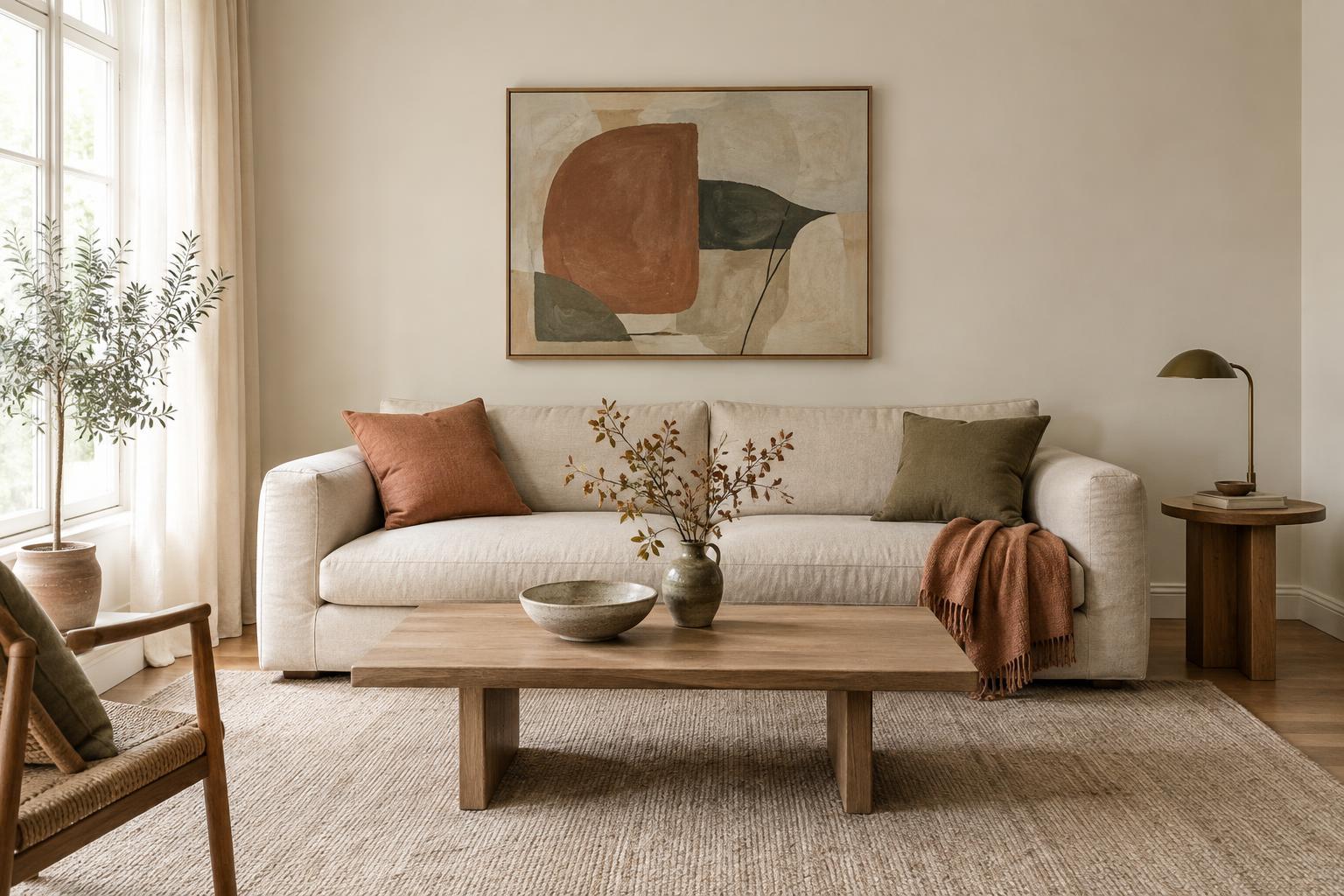
You do not have to match every frame in a room. Repeating one feature—such as a similar wood tone, a shared mount colour or consistently simple profiles—can make different pieces feel related. For example, a dark frame around a photograph can sit comfortably beside a pale wood frame around a print if their proportions and overall mood work together. Let the artwork lead, then use the room’s furniture and finishes as a final check.
Check depth, glazing and placement
A frame must be deep enough for everything it holds: the artwork, mount if used, backing and glazing. This is especially important for thick paper, layered work or an object you want to display without pressing it against the glass. Check the frame’s usable depth before buying. Standard glazing can protect a piece from dust and handling, while non-reflective options may make it easier to see in a bright room. Some glazing is designed to reduce ultraviolet exposure, but it does not make direct sunlight harmless.
Consider where the piece will live before making the final choice. Reflections may be distracting opposite a window, and a heavy frame needs suitable wall fixings. Damp or frequently steamy spaces may not be a good place for artwork on paper. If you are arranging several pieces together, lay the framed pieces on the floor first. Adjust the spacing until the group feels balanced, then check that the arrangement can be enjoyed from the places where you usually sit or walk.
Make a final check before committing
If you are choosing between two combinations, keep the artwork in view and ask which one you notice first: the piece or its frame. The best answer depends on the effect you want, but the frame should feel like a deliberate companion rather than an accidental distraction. Recheck your measurements, visible edges and frame depth before ordering or cutting a mount.
You can also start with one piece instead of framing an entire collection at once. Living with it for a few days may reveal whether the mount feels too bright, the frame too heavy or the hanging position too high. Those small observations make it easier to choose the remaining frames with confidence—and to create a display that feels collected rather than forced.