Start with the duvet, not the bed label
The simplest rule is to choose a duvet cover with the same stated width and length as your duvet. A mattress described as double, queen or king does not tell you the size of the duvet on top of it. People often choose a larger duvet for extra coverage or to share more comfortably, so a cover sold under the mattress’s size name may not be the right fit.
Look for the dimensions on the duvet’s care label or packaging. If you no longer have them, lay the duvet flat, smooth it gently and measure from edge to edge in both directions. Do not pull it taut. Write down which measurement is the width and which is the length, especially if the duvet is not square. Measure in the same unit used by the covers you are shopping for, and compare actual dimensions rather than relying on names such as “king”.
Decide how much coverage you want
If you are choosing a duvet as well as a cover, consider the bed’s width and the amount of drape you prefer. A duvet that is only as wide as the mattress will sit close to its edges; a wider one can hang over the sides. That extra width may make a bed feel more generously dressed and can help two sleepers keep their share of the covers.
Measure the mattress, then picture where you would like the duvet’s edges to fall. Check that your preferred width does not trail on the floor or crowd nearby furniture. Bed height matters here: the same duvet can look different on a low platform bed and a taller bed. Length is worth checking too, particularly if you like to pull the duvet high toward the pillows or tuck it at the foot. Once you settle on the duvet size, shop for a cover to match that duvet.
Know what a good fit looks like
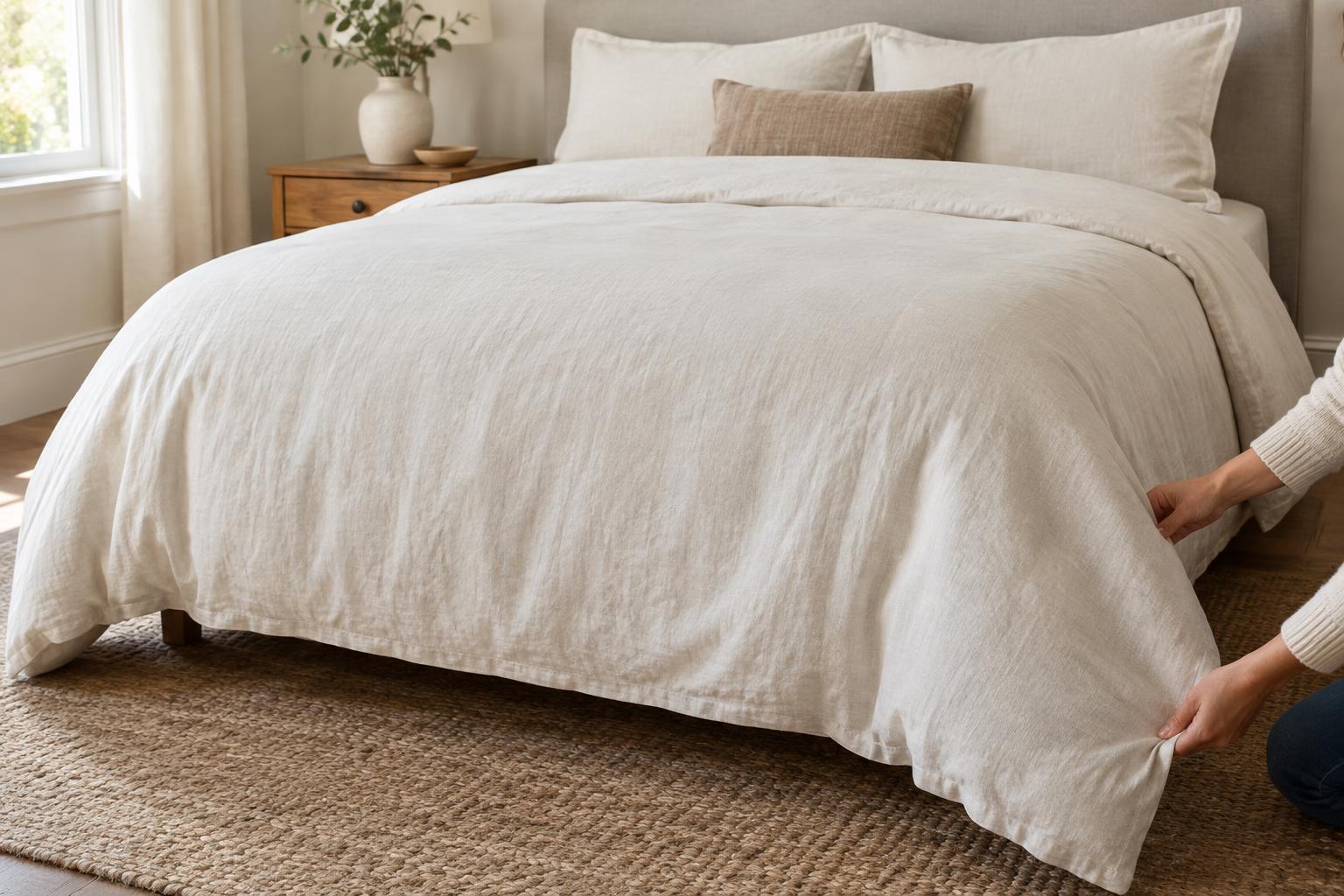
A well-fitting cover lets the duvet spread into the corners without bunching, while keeping it from shifting noticeably inside. If the cover is substantially larger than the duvet, empty fabric may gather along the sides and the filling can move away from an edge. If it is too small, the duvet may bunch up or feel compressed, making the bed look uneven.
Matching the printed measurements is a reliable starting point, but finished sizes and fabric behaviour can vary between products. Read the cover’s listed dimensions and care instructions rather than assuming every item with the same size name is identical. If you already own a cover that fits well, measuring it can provide a useful comparison. Corner ties or loops, where both cover and duvet have compatible attachments, can help hold the duvet in place; they are not a substitute for choosing the right dimensions.
Check the details before you buy
Confirm that the width and length on the cover correspond to those on your duvet. This is particularly useful when shopping across brands or countries, where familiar size labels may refer to different measurements. If one measurement is close but the other is not, do not assume rotating the cover will solve the problem: its opening and any decorative details may end up in an awkward position.
Consider the fabric and washing instructions as part of the fit decision. Follow the stated laundering guidance, since an unsuitable wash or drying method may affect how a cover fits afterward. Also check where the closure sits. Buttons, a zip or an envelope opening can all work well, but you may find one easier to use when changing the bed. If the cover includes pillowcases, check their dimensions separately; a matching set does not necessarily mean every piece fits the bedding you already own.
Make the final choice work in the room
Size affects the look of a made bed as much as the colour or pattern does. A duvet with a relaxed drape can soften a simple bed frame, while one that ends near the mattress edge creates a neater outline. Neither is inherently better: choose the effect that suits your room and the way you sleep, then keep the cover matched to the duvet rather than sizing the cover up for visual effect.
Before ordering, make a short note of three things: your duvet’s width and length, your mattress’s width and height, and your preferred amount of overhang. The duvet measurement tells you which cover to select; the mattress measurements help you judge whether the duvet itself gives you the coverage you want. Keeping those decisions separate makes it easier to find bedding that looks intentional and feels comfortable night after night.