Start with the seating area, not the room
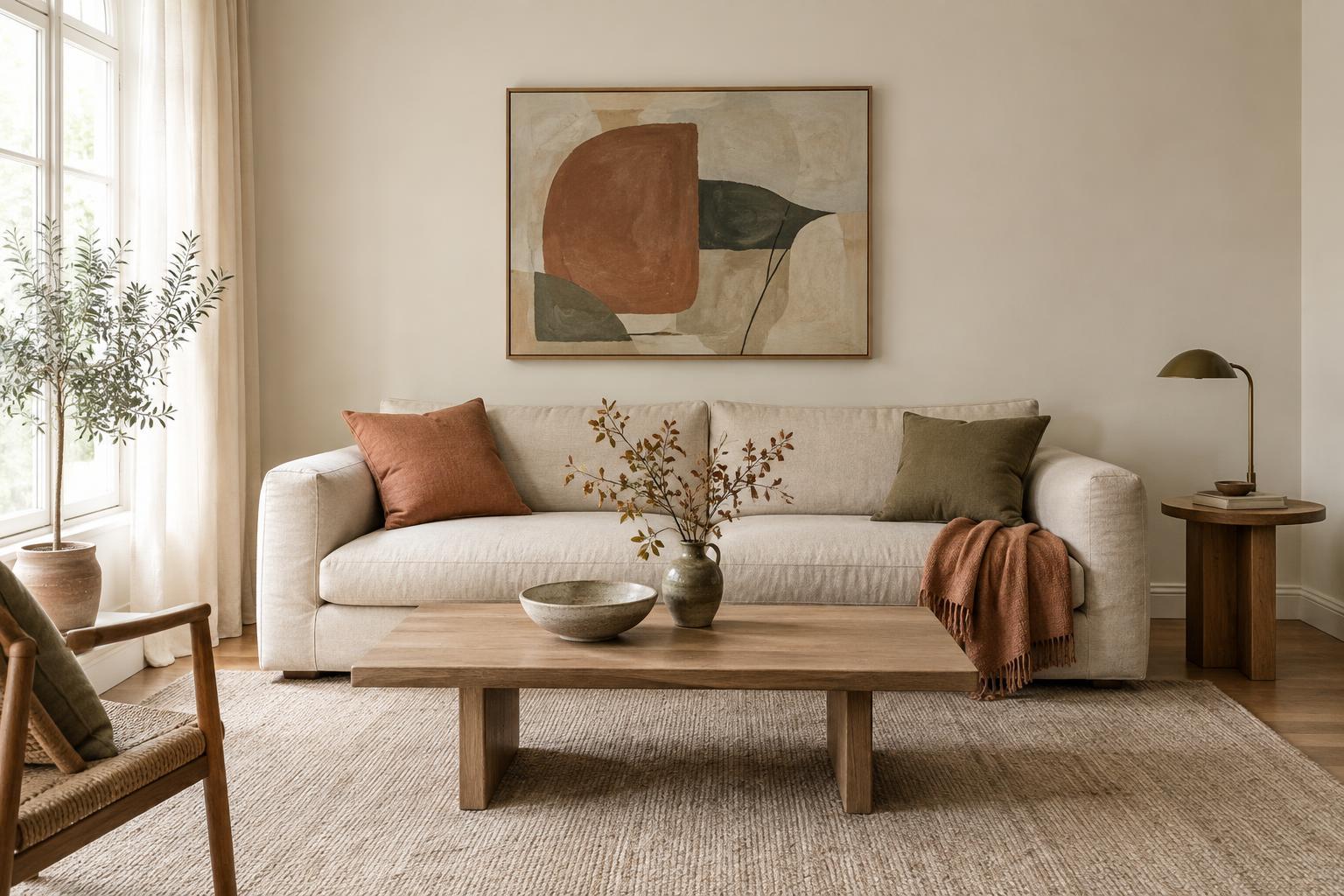
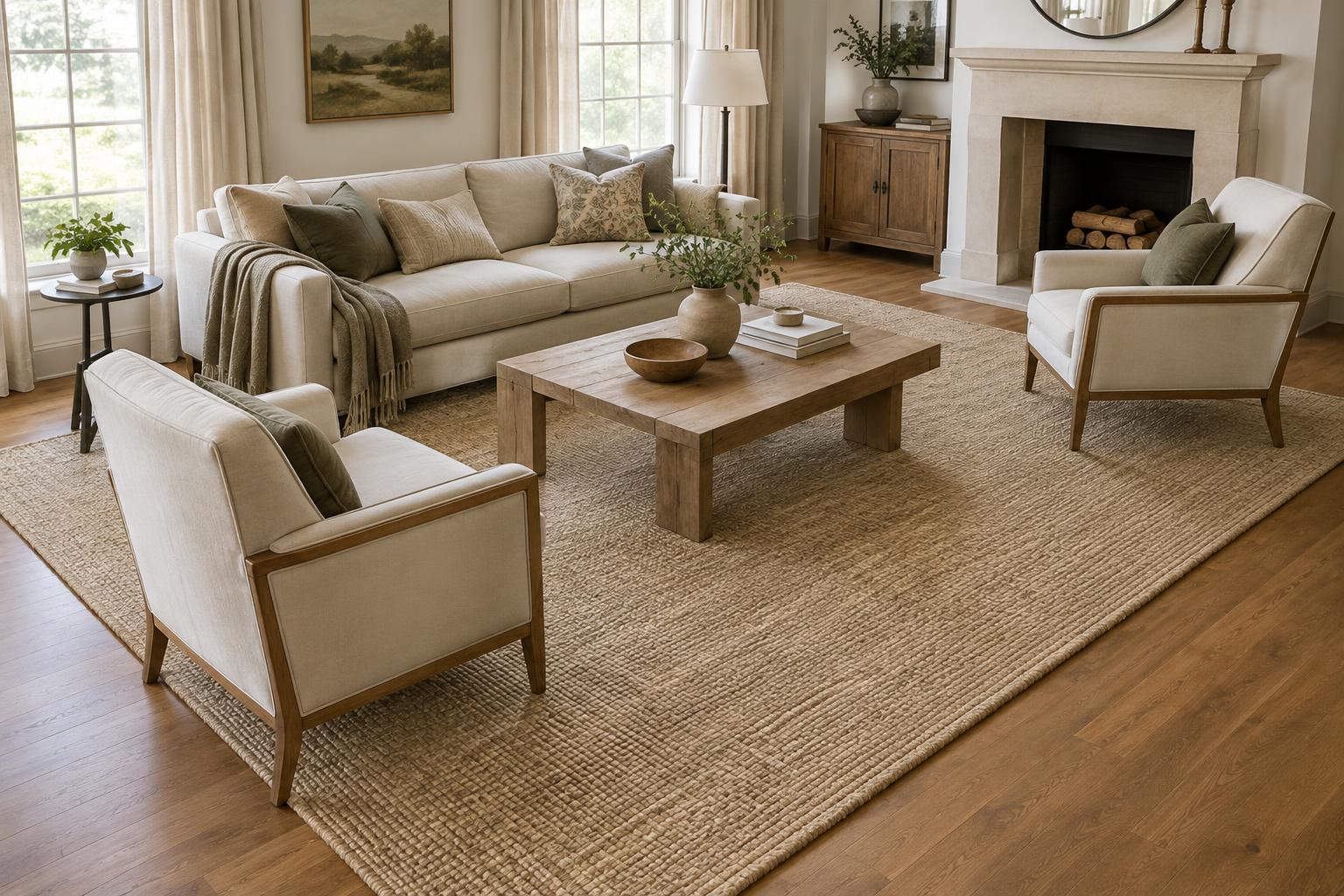
A rug can make a living room feel more settled by visually connecting the sofa, chairs and coffee table. The most useful starting point is therefore the furniture arrangement, rather than the overall dimensions of the room. Sketch the seating area as it is used: include side chairs, an ottoman or a second sofa if they belong to the conversation space.
Measure the width and depth of that grouping, then note any boundaries the rug needs to respect. A fireplace hearth, a doorway or a main route through the room may limit how far it can extend. In an open-plan space, the rug can also help define where the living area ends without needing to reach the walls. Leave visible floor around its edges where possible so the outline reads clearly.
Choose how the furniture will meet the rug
There are three useful ways to place seating on a rug. With all legs on, the entire sofa and every chair sit on the rug. This gives a generous, unified look and works when there is enough floor space to keep the rug from feeling crowded against the room’s edges. It can be especially helpful when several pieces face one another.
With front legs on, the front feet of the sofa and chairs rest on the rug while their back feet remain on the floor. This often provides a good balance: the rug connects the seating without having to cover the full depth of each piece. Aim for enough rug beneath the front legs that they do not sit right on its edge. If a chair is regularly pulled forward or turned, allow for that movement too.
A rug with no furniture legs on it can work in a compact arrangement, but its size needs careful attention. It should occupy more than just the space beneath the coffee table; otherwise, it may look like a small mat stranded between larger pieces. Try to keep the gap between the rug and surrounding seats reasonably consistent so the placement looks intentional.
Measure the layout on the floor
Before choosing a rug, mark out a possible size with painter’s tape or place sheets of paper at the corners. Check it from the doorway and from each seat, not just from above. Does it reach the furniture legs you intended? Does it extend beyond the sides of the coffee table? A rug close to the table’s footprint may feel undersized even if the table fits comfortably on top.
Walk through the room with the outline in place. Keep door swings, floor vents and frequently used routes clear. If the rug sits near a wall or storage unit, look at the strip of exposed floor between them: a small, uneven gap can look accidental. Measure the space available after making these checks, and compare those measurements with the actual dimensions listed for a rug rather than relying only on a size label.
Adjust for the room’s shape and furniture
A rectangular rug usually suits a sofa-led arrangement because it follows the length of the main seat. If the room is long and narrow, position the rug to support the seating group instead of automatically aligning it with the room. For a square grouping of chairs, a square rug may echo the arrangement; a round rug can soften a group built around a round table.
Not every piece has to fit in the same way. For example, a sofa and its facing chairs can have their front legs on the rug while a separate reading chair remains outside it. The important distinction is whether that chair is part of the same seating area. If it is, consider moving it closer or choosing a larger rug so the group feels connected.
Make a final comfort and care check
Size is only one part of how a rug works in daily life. Consider whether chair legs will catch on a thick edge, whether a door can open freely and whether a low coffee table will feel stable on the pile. A rug pad can help keep a rug in place, but check that both the rug and pad are suitable for the floor beneath them.
If two sizes seem possible, return to the taped outlines and compare them while the furniture is in its usual position. The better choice is the one that clearly anchors the seating, leaves comfortable routes through the room and looks deliberate from the places where you actually spend time.