Start with the sofa, not the empty wall
A large wall can make even a generous artwork look small when you view it on its own. Above a sofa, however, the art usually works best when it relates to the furniture beneath it. Measure the sofa’s overall width, including its arms, and use that as your first reference point. You can then decide whether you want the artwork to feel quietly contained or to make a stronger statement.
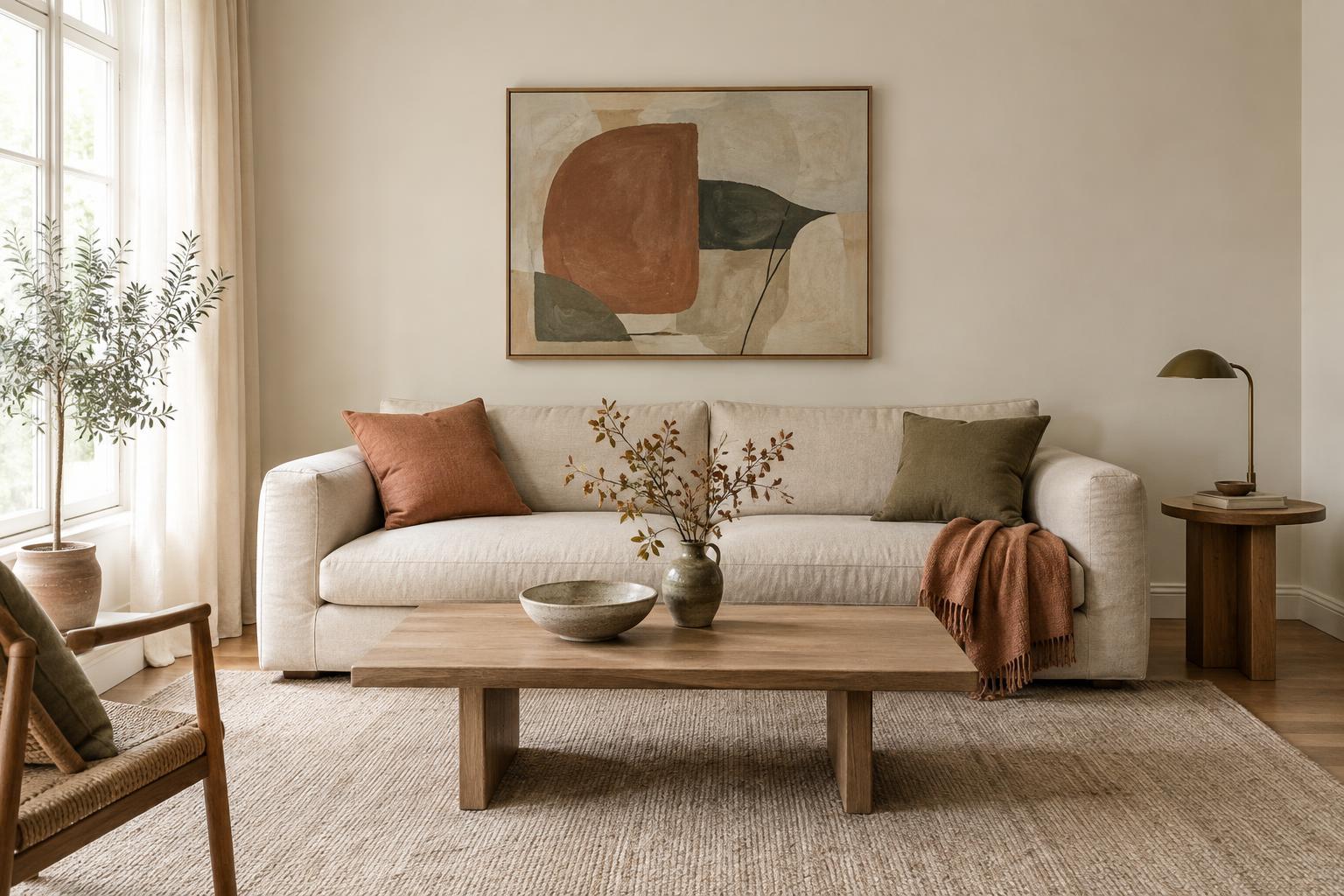
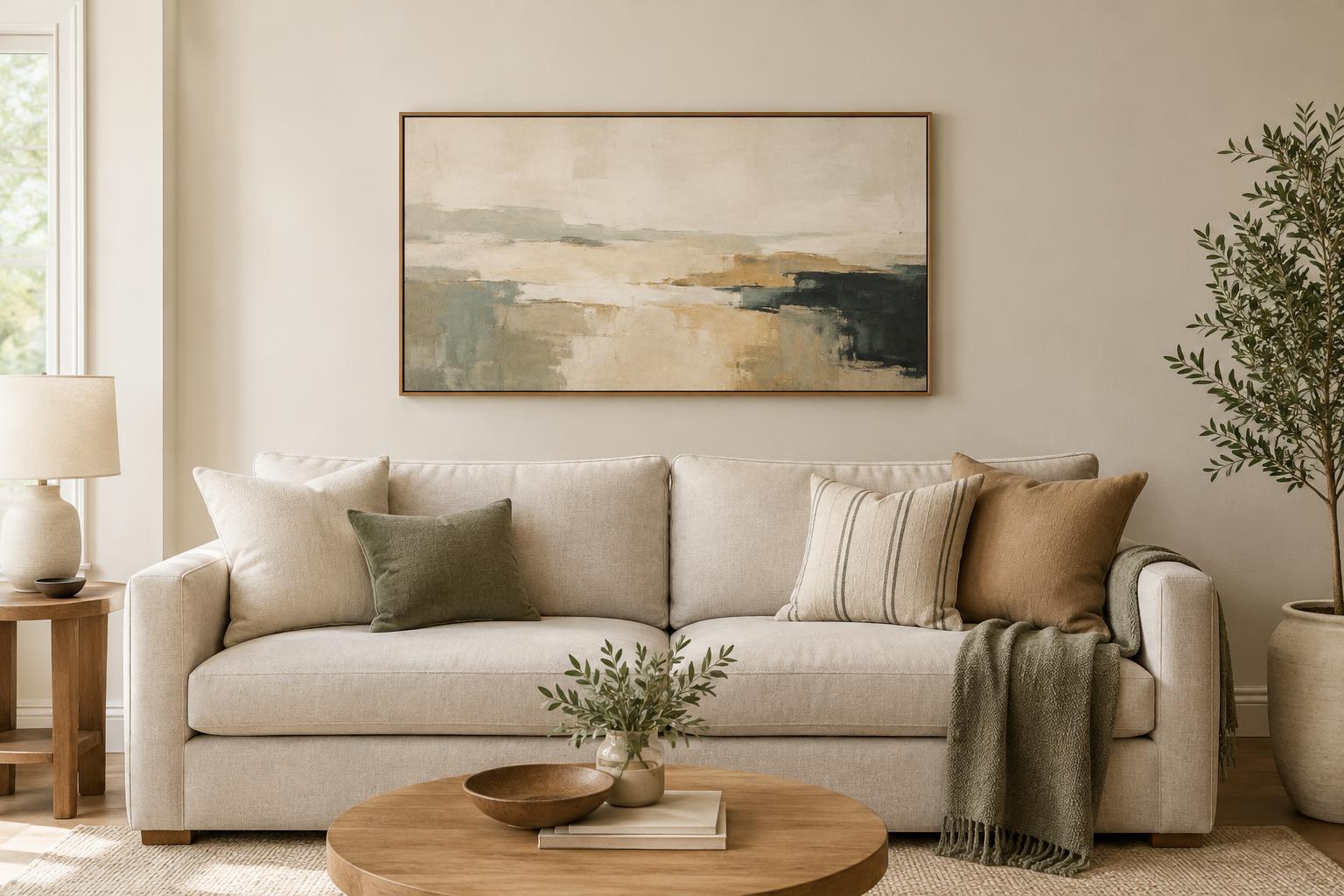
For a single piece, a width of roughly two-thirds to three-quarters of the sofa’s width is a useful starting range, not a rule. For example, above a 210 cm sofa, you might begin by considering art around 140–160 cm wide. A narrower piece can still work if it has a substantial frame or sits within a larger grouping. An artwork as wide as, or wider than, the sofa may feel top-heavy unless the surrounding wall and furnishings give it room to breathe.
Judge the finished outside dimensions, including any frame or mount. A wide mount can change how much wall space a print occupies, while a frameless canvas may have a lighter outline. If you are choosing between sizes, mark both on the wall with removable tape or paper. Step back to the place where you normally enter or use the room; the view from the sofa alone will not tell you how the arrangement reads.
Consider height and the space around the art
Artwork above a sofa should usually feel connected to the seating area rather than floating near the ceiling. As a starting point, try leaving about 15–25 cm between the top of the sofa back and the bottom of the frame. You may need more space if tall cushions or people leaning back could touch the artwork. If the sofa has an unusually low back, look at the full wall before settling on the gap.
The available height matters too. A tall, narrow picture may suit a wall with generous space above the sofa, but it can feel crowded beneath a low ceiling or close to a picture rail. In those cases, a landscape-format piece or a wider grouping may fit more comfortably. Keep nearby features in view: a wall light, window, doorway or shelf can make an otherwise well-sized picture feel squeezed.
The goal is not to centre the art on the bare wall at all costs. In many rooms, centring it over the sofa creates a clearer relationship. If a side table, floor lamp or asymmetrical sofa changes the balance, a small shift may look better than mathematically perfect placement. Test the position before making holes.
Size a pair or gallery wall as one arrangement
If you prefer several pieces, think of their combined outline as the artwork. The full arrangement, including gaps, can follow the same approximate two-thirds to three-quarters width starting point as a single piece. Measure from the far left edge to the far right edge rather than sizing each frame separately. This prevents a collection of individually modest prints from spreading well beyond the sofa.
Consistent gaps help separate frames without making them feel unrelated. You might begin with around 5–10 cm between pieces, then adjust according to frame size and the look you want. Two large prints often need a more deliberate central gap, while a group of small frames can sit closer together. Aligning a pair along its top or bottom edge gives it a calm, orderly feel; a gallery wall can be looser while still keeping a clear overall shape.
Arrange paper templates on the wall before hanging anything. Label each template so you can move pieces without losing track. From across the room, check whether the collection reads as one feature and whether its visual centre sits over the sofa. If it looks scattered, bring the pieces closer or remove one rather than automatically adding more.
Account for visual weight, not just measurements
Two pieces with identical dimensions can feel very different above the same sofa. A dark painting in a thick frame often looks more substantial than a pale line drawing in a slim frame. Strong contrast, dense detail and heavy materials can all make art appear larger. If the sofa is deep-coloured or bulky, a lighter work may offer welcome relief; if the room is visually quiet, a bolder piece may give the seating area a useful focal point.
The sofa’s shape also affects your choice. A long, low sofa often pairs naturally with horizontal art, while a compact sofa may accommodate a square piece or a balanced pair. These are options, not fixed rules. Try to repeat at least one colour, material or shape already present in the room so the art feels connected without needing to match every cushion and throw.
Before you commit, look at the proposed size in daylight and under the lighting you use in the evening. Reflections on glass and dark corners can change how prominent an artwork feels. If a small piece gets lost, consider a wider frame or a companion piece. If a large one overwhelms the sofa, allow more wall around it or choose a quieter image.
Make a final check before hanging
Take one last measurement of the framed piece and the available wall area, then mark its outline at the intended height. Sit down, stand up and view it from the room’s main approach. Make sure the bottom edge clears cushions and that the arrangement does not crowd lamps or nearby furniture. A few minutes of testing is easier than repositioning a row of frames.
Finally, choose fixings suited to the artwork’s weight and your wall type, and check for anything that could be hidden behind the wall before drilling. Secure hanging is especially important above seating. Once the art is in place, leave the surrounding area alone for a day or two before adding more decorative details. The right size often becomes obvious when the sofa, artwork and open wall space have a chance to work together.