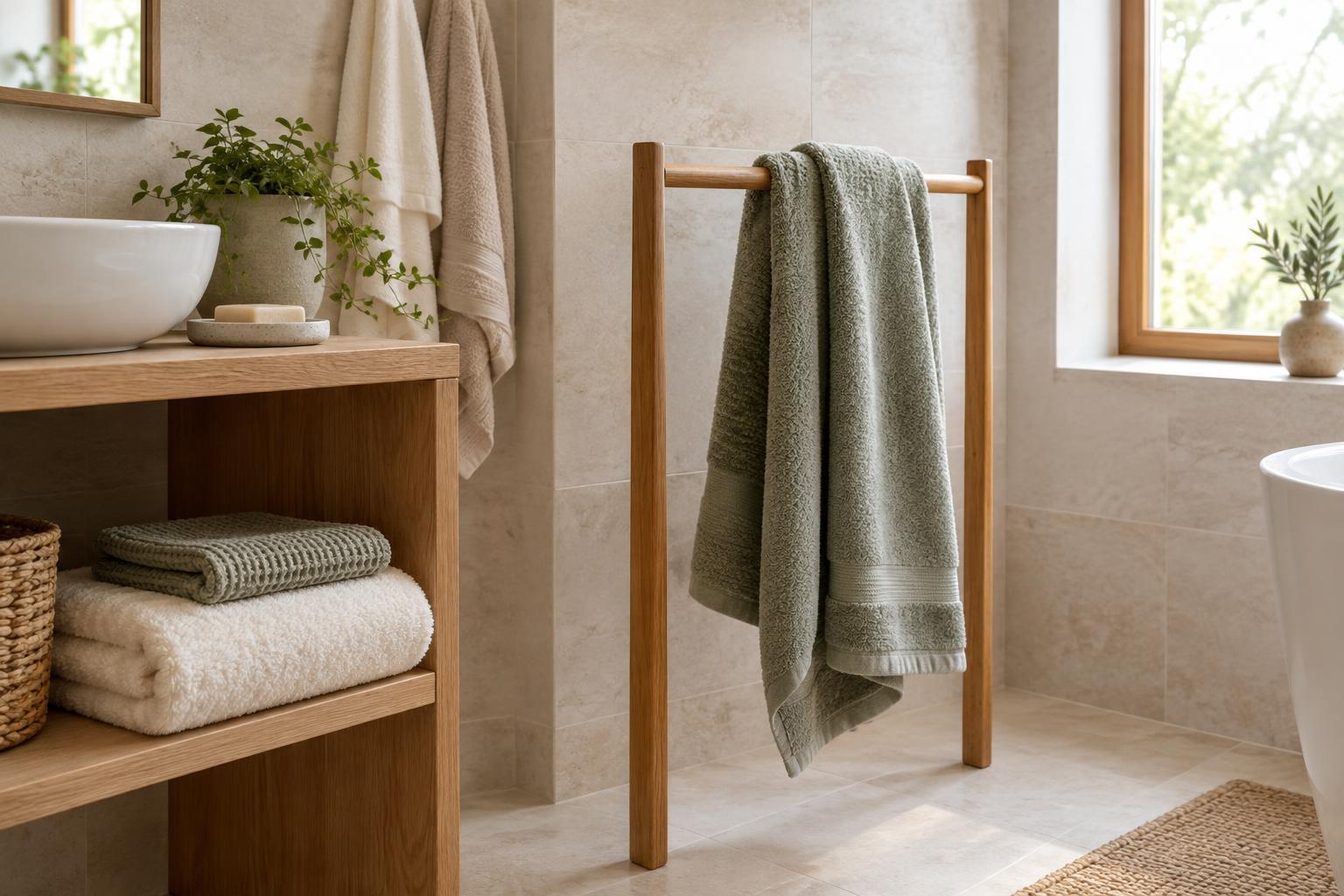
Start with what you want the throw to do
The right throw size depends less on the name of the furniture than on how you plan to use the throw. A decorative piece folded over an arm needs less fabric than one you want to pull across your lap. If two people might share it, coverage matters more than a perfectly tidy fold. Decide which purpose comes first before comparing sizes.
Also consider how much of the sofa or chair you want to keep visible. A throw can add colour and texture to a plain seat, but a very large one may hide upholstery, cushions and the shape of the arms. On a compact armchair, a smaller throw often looks more deliberate; on a deep sofa, a larger one may feel better balanced.
Measure the furniture, then allow for drape
For a throw you will use, measure the area it needs to cover rather than relying on the sofa’s overall width. Check the depth from the back cushion to the front edge of the seat, then think about how far you want the fabric to reach over your legs. For an armchair, measure the usable seat width and note whether the arms limit where a folded throw can sit.
For a decorative drape, use a tape measure to trace the path the fabric will take: down the back, across the seat or arm, and over the edge. This gives you a more useful estimate than measuring a straight line across the furniture. Leave a little extra for a relaxed fold, especially if the throw is thick or you want it to look informal.
You can test the proportions with a bath towel or a sheet folded to the approximate dimensions of a throw you are considering. Place it where the throw will go and step back. Check whether the ends hang where you want them, whether the seat remains usable, and whether the fabric gathers on the floor.
Use listed sizes as a starting point, not a rule
Throw dimensions vary between makers, so check the measurements rather than relying on labels such as “sofa throw.” As a rough starting point, a throw around 120 × 150 cm may suit an armchair or one person on a sofa. A size around 130 × 170 cm can offer more room for lounging, while approximately 150 × 200 cm may work better when generous coverage or sharing is the priority. These are examples, not guaranteed fits.
Pay attention to which dimension runs across your body and which runs from shoulder to foot. A throw that is wide enough to share may still feel short when you stretch out. If possible, compare the listed dimensions with a blanket you already enjoy using. That familiar reference can be more helpful than a standard size chart.
Match the size to the fabric and styling
Fabric changes how large a throw feels. A lightweight woven throw can be folded several times and tucked neatly over a narrow arm. A bulky knit takes up more visual space and may look crowded in the same position, even if its measurements are identical. Fringes and tassels add visible length but usually do little for warmth or coverage, so assess the size of the main fabric separately.
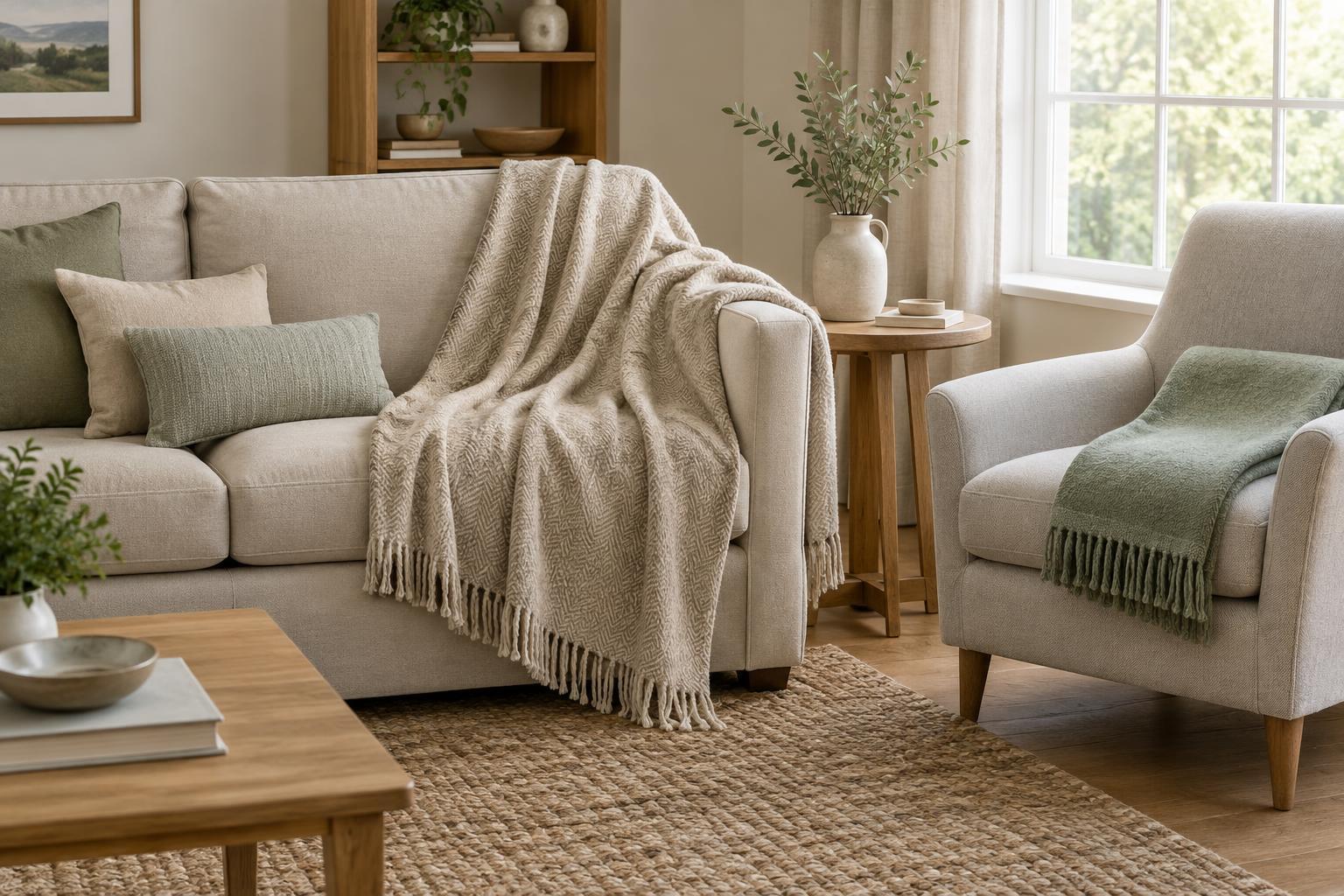
For a tidy look, fold the throw lengthwise and lay it over an arm or the back of the seat, with the ends falling clear of the floor. For a relaxed look, let it fall across one corner and soften the fold by hand. If it constantly slips, bunches under a cushion or covers most of a small chair, try a different fold before assuming you need a different size.
Make a final practical check
Before choosing, check the care label and think about where the throw will be stored when it is not on the furniture. A generous throw may be comfortable in use but awkward to fold into a small basket. If it is washable, follow its care instructions; its fabric and construction may affect how it holds its shape over time.
The best size is one you can use without repeatedly rearranging it. Picture an ordinary evening: can you reach for the throw easily, cover what you want to cover and put it back without a struggle? When the answer is yes, the dimensions are doing their job—whether the throw is neatly folded or casually draped.