Start with the opening, not the colour
When choosing a vase, first look at the width of its opening. A narrow neck gathers stems into a compact bunch and gives them support near the top. A wide opening lets stems spread apart, which can suit a loose arrangement but make a small bunch look sparse. Try holding the flowers together in your hand: if they already form a tidy shape, a narrower opening will usually help preserve it.
Consider the stems as well as the blooms. Thin, flexible stems may lean over a wide rim, while thick stems need enough room to sit comfortably without being forced into place. The vase should allow you to add water and remove the flowers without damaging them. Once its shape works for the arrangement, choose a colour or finish that complements the flowers and the surrounding room.
Match familiar vase shapes to your flowers
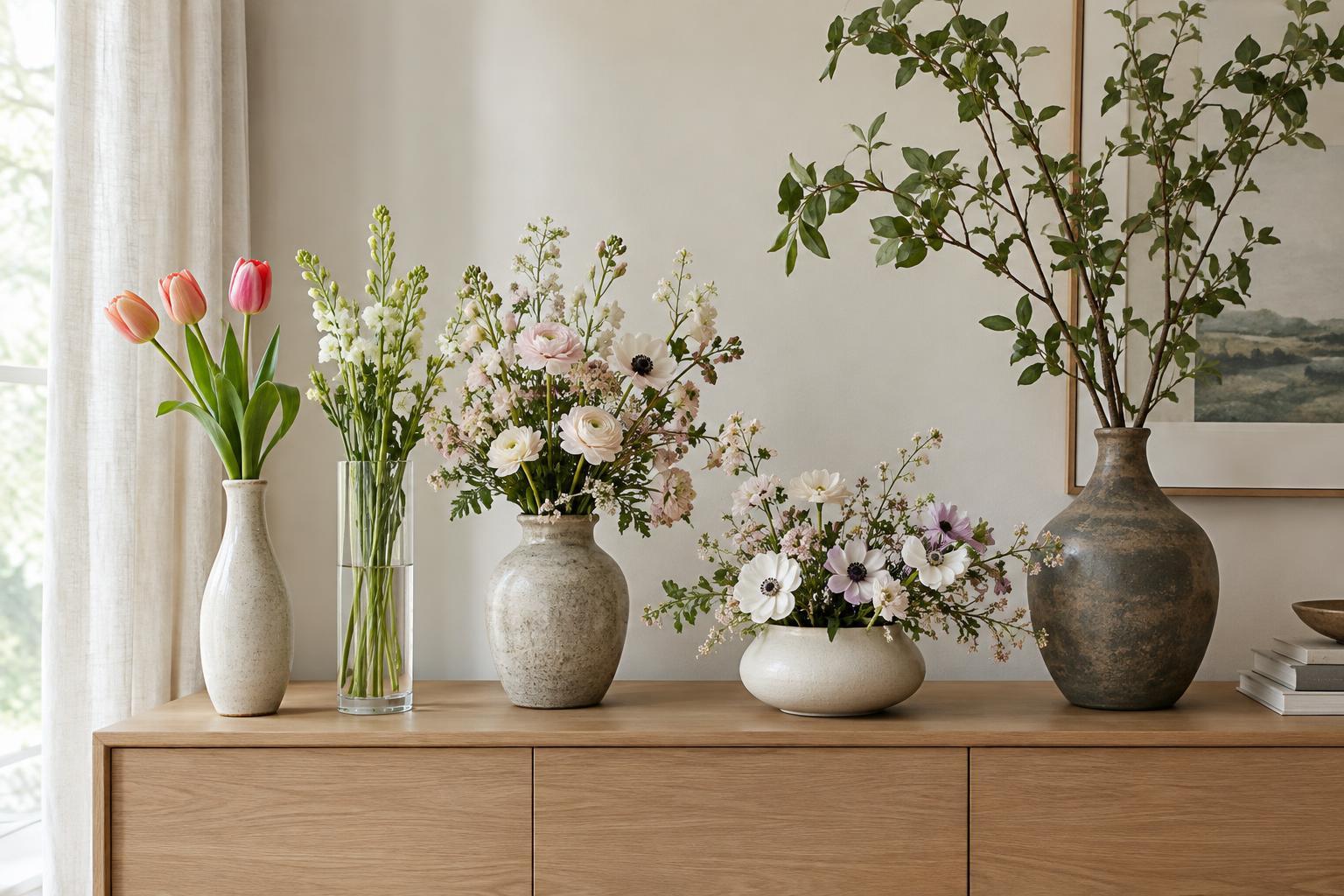
A bud vase is useful for one stem or a few small cuttings. Its narrow opening holds a simple display upright, making it an easy choice for a bedside table, shelf or small corner. Several bud vases can also make use of flowers left over from a larger bunch; they need not match exactly, but a shared material or colour can help them look deliberate.
Straight-sided cylinders suit flowers with firm, fairly upright stems. They give the arrangement a clean outline and leave the stems visible when made of clear glass. An hourglass or gently pinched vase offers more support at the neck while allowing a fuller body below. Rounded vases with smaller openings can make a modest bunch appear generous, because the stems gather at the rim and the flowers fan out above it.
Give wide arrangements room to spread
For flowers that naturally spread or have many small heads, consider a wider vessel. A low bowl or squat vase can create an arrangement that feels broad rather than tall, which may work well on a coffee table or dining table where you want to see across it. It is often easier to start with more stems in a wide vessel; just a few may slip toward the edges and leave an empty centre.
Look at the overall outline from where you will usually sit or walk past. A vase that looks balanced straight on may appear crowded from the side. Turn the vessel as you arrange, and let some stems sit at different angles and heights. If the flowers will stand on a dining table, keep their height in mind so they do not interrupt conversation or block the view across the room.
Choose a stable base for tall branches
Branches introduce weight and leverage that a bunch of flowers may not. A tall, narrow vase can look elegant, but its base needs to be broad and steady enough for the height and spread of the branches. A substantial floor vessel or a heavy tabletop vase is often a better match than a lightweight container with a small footprint. Test the arrangement on a level surface before deciding where it will go.
Check the opening, too. A very wide mouth may allow a branch to tip dramatically to one side; a narrower neck can help guide it upward. Avoid cramming thick branches into an opening that barely fits. For a natural silhouette, use fewer branches and leave visible space between them. Place the finished display away from busy walkways, where an extended branch could be brushed or knocked.
Make the vase work in the room
The vase and its contents should feel proportionate to the surface beneath them. A tiny bud vase may disappear on a large console, while a broad arrangement can overwhelm a narrow shelf. Try grouping smaller vessels in varying heights, or give one sculptural vase enough empty space around it to be noticed. On patterned surfaces, a simple vase shape can provide a useful visual pause.
Before settling on a display, check that the vase is clean, holds water securely and is easy enough to handle when filled. Refresh the water as needed and remove any leaves that would sit below the waterline. The best choice is not necessarily the most decorative empty vase: it is the one that supports your stems, sits safely in its chosen spot and makes the flowers or branches enjoyable to look at.