Start with how the cushions will be used
A cushion on a sofa used every evening has different demands from one placed on a guest-room chair. Before choosing a cover, think about where it will sit, who will use it and what tends to get on it. Snacks, pets and frequent lounging make easy removal and straightforward washing more useful than a delicate finish. For a lightly used cushion, you may have more freedom to choose an intricate texture.
Check what “washable” means on the care label rather than relying on a product description alone. Some covers can go in a washing machine, while others call for hand washing or a cool, gentle cycle. If you want a low-effort routine, look for care instructions you can realistically follow. Check whether the cover must be washed separately, whether it can be tumble-dried and whether its decorative details need special handling.
Compare fabrics by feel and upkeep
Cotton is a practical starting point because it is commonly available in washable covers and comes in many weaves. A firm cotton canvas or twill can feel more structured, while a softer cotton weave gives a relaxed look. Linen and linen blends offer visible texture and an informal finish, but they may crease more readily. If a crisp appearance matters to you, consider how much ironing or smoothing you are willing to do.
Synthetic and blended fabrics can be useful when you want a smooth finish or a cover that needs less pressing, though their feel varies considerably. Whatever the fibre, inspect the weave as well as the label: a loosely woven fabric may snag more easily in a busy household. For comfort, run a hand over any embroidery, piping or raised pattern. A detail that looks attractive on a shelf may feel less pleasant against your back.
Check fit, closures and construction
Measure the cushion insert rather than guessing from the old cover. Compare its dimensions with the cover size and consider its depth and firmness. An insert that is too small can leave loose corners; one that is too large can strain the seams and make the cover difficult to close. If you are keeping existing inserts, measure several of them, as cushions that look alike may not be identical.
A good everyday cover should be easy to take off and put back on. Open and close the zip, buttons or envelope flap if you can. Check that the opening is wide enough for the insert and that the closure sits comfortably out of the way. Look at the seams, especially around corners and along the opening, for neat stitching. Removable covers with sturdy closures are less frustrating when washing becomes part of a regular routine.
Choose colours and textures that work between washes
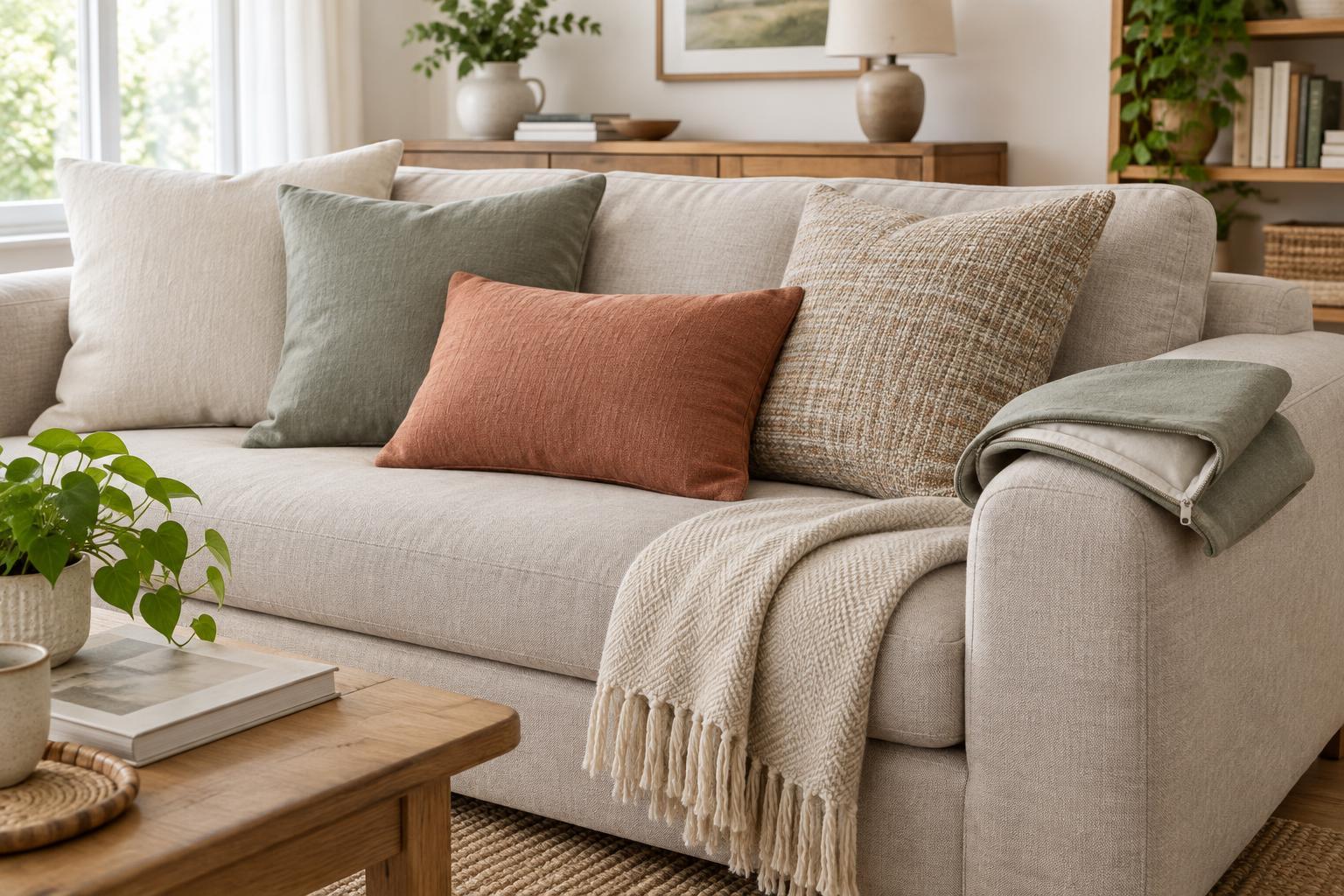
Washability does not mean every cover will look equally tidy through a normal week. A pale, plain surface can show small marks quickly, while a subtle pattern or mid-tone colour may make everyday wear less noticeable. Choose a colour that connects with something already in the room, such as the curtains, rug or sofa, so the cushions feel considered without requiring a complete restyle.
For an easy combination, vary texture before adding several competing patterns. A smooth cover beside a woven or lightly textured one adds interest even when both are in a similar colour family. If you prefer patterned cushions, mix a larger-scale design with a quieter stripe or solid. Keep the covers that receive the most handling comfortable and simple to care for, and use more decorative pieces where they are less likely to need frequent washing.
Plan a care routine you can maintain
Before the first wash, read the instructions for both the cover and any trim, then close zips or fasten buttons. Turning a cover inside out may help protect its visible surface during washing. Follow the recommended temperature and drying method; excess heat can affect fit or finish, depending on the fabric. If you are uncertain whether a colour may run, washing it separately at first is a cautious choice.
Having a spare set can make everyday care easier: the sofa stays usable while one set dries. You need not duplicate every design. A few simple covers in colours that coordinate with your existing cushions can give you a practical rotation and a small change of look. The most useful choice is the one that feels good in the room and still fits your laundry routine after the novelty of a new pattern has worn off.