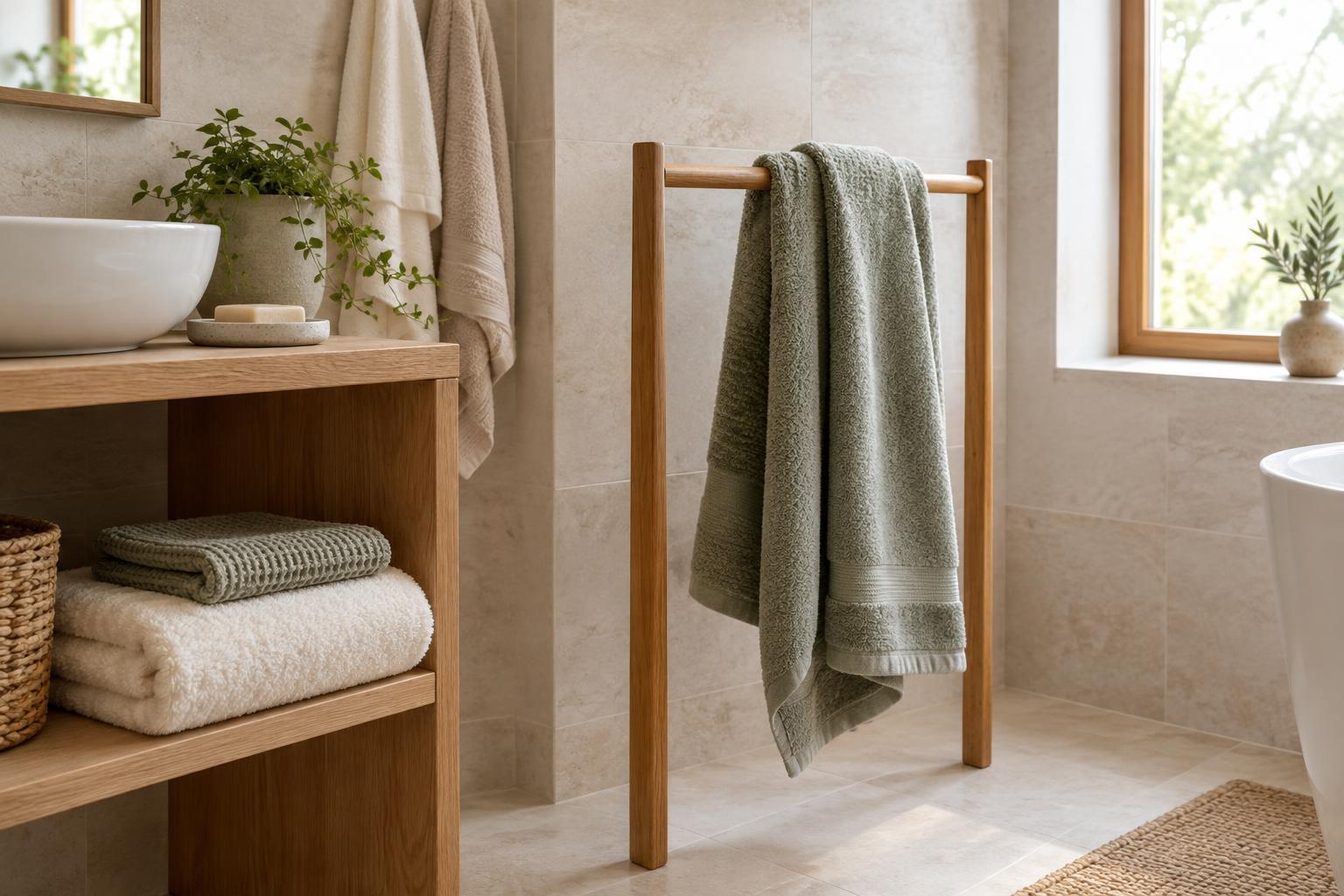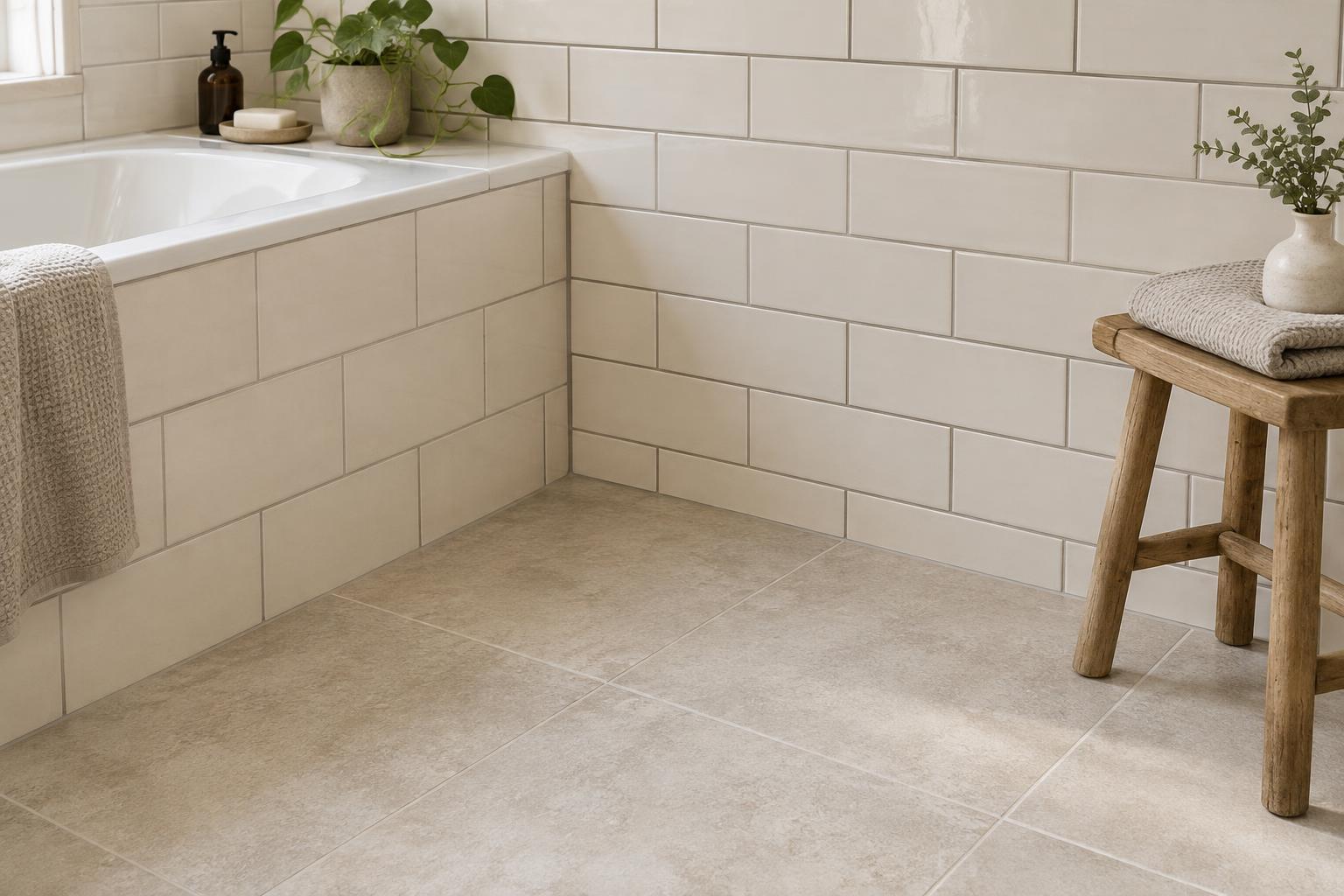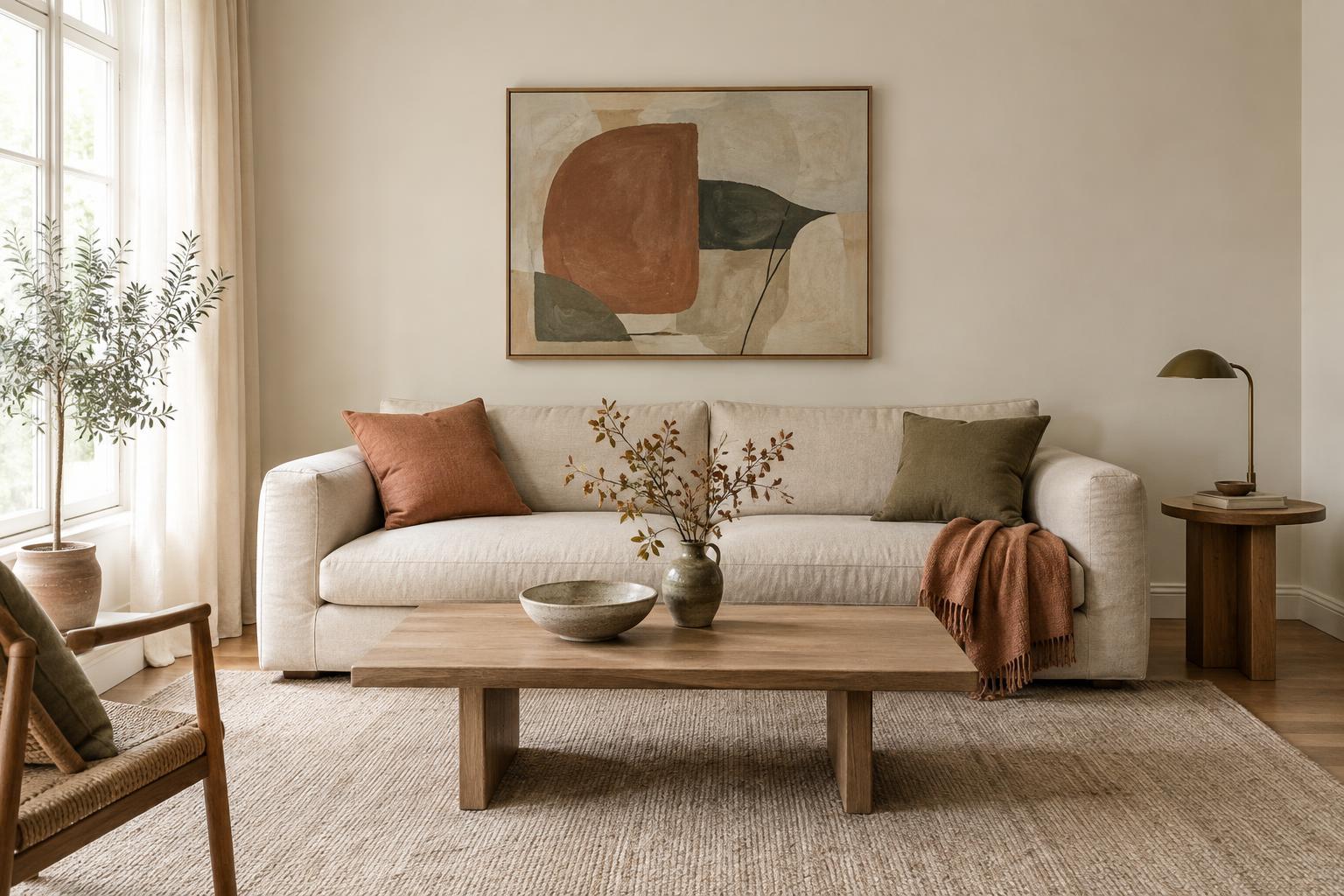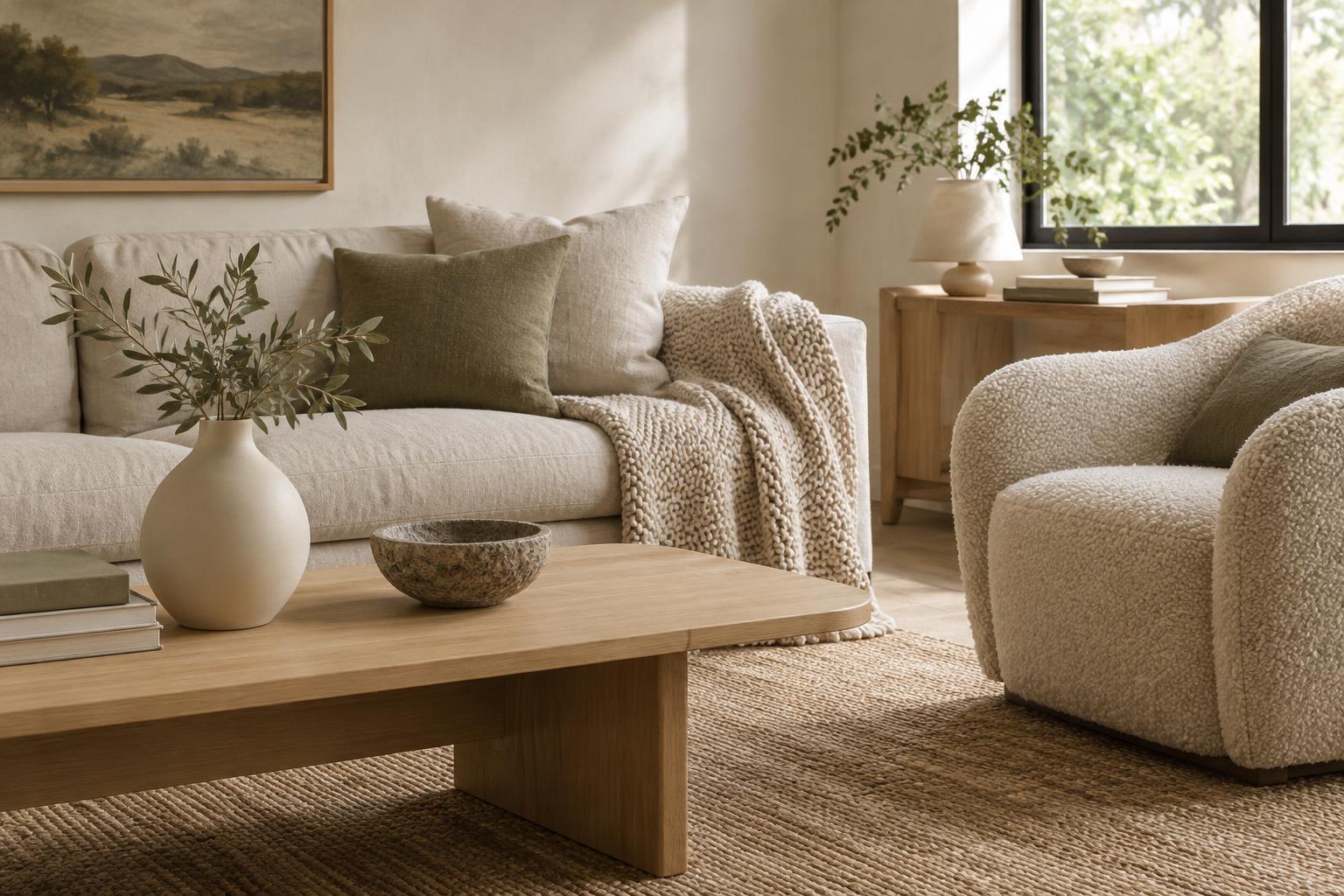
Start with the surfaces already in the room
Texture is the way a surface looks and feels. A polished tabletop, painted cabinet or tightly woven cushion reads as smooth; linen with a visible weave, unfinished wood or a nubby throw reads as rougher. Neither is better on its own. Smooth finishes can bring a sense of order, while irregular ones can make a room feel more relaxed. The aim is to let them support each other rather than compete for attention.
Before buying anything, look at the largest surfaces in the room: floors, walls, seating and tables. A space with smooth flooring, flat-front storage and a sleek sofa may benefit from a woven rug or textured upholstery. A room with exposed brick, rustic timber and a coarse rug may need a few quieter surfaces, such as a plain lampshade or a smooth ceramic bowl. Working from what you already have helps you add contrast without replacing furniture.
Choose a dominant texture, then add contrast
A balanced room does not need equal amounts of smooth and rough material. Let one character lead, especially across large items, and use the other as an accent. If your furniture has clean lines and smooth finishes, a textured rug, curtains or throw can soften the overall effect. If the main furnishings are visibly grainy or heavily woven, smooth accessories can give the eye places to rest.
Think about where textures sit as well as how many you use. A rough cushion stands out more clearly against a smooth sofa than it does among several other chunky fabrics. A simple tray can create a calm boundary for objects with different finishes. Keeping some neighbouring pieces similar prevents every surface from demanding attention at once.
Use colour and light to keep the mix cohesive
Texture creates contrast even when colours are similar. Pairing a cream linen cushion with a cream cotton one, for example, introduces variety without adding another colour to the room. If you want to combine several pronounced textures, a restrained palette can help them feel connected. Repeating one colour across a smooth object and a rough fabric is another way to make the pairing look intentional.
Light changes how strongly texture appears. Side light can reveal the weave of a curtain or the grain of wood, while a reflective finish may look more prominent near a window or lamp. Check potential combinations in the room at different times you normally use it. If a glossy item catches more attention than you intended, moving it away from direct light or pairing it with a matte surface may be enough.
Build combinations around how the room is used
In a living room, a smooth coffee table can sit comfortably beside a textured rug and a soft, loosely woven throw. In a bedroom, plain bedding can provide a quiet base for a quilted coverlet or a pair of linen cushions. A dining area might pair an easy-to-wipe table with woven chair seats or a fabric runner. These combinations give each material a purpose rather than adding texture only for display.
Practicality matters where people touch surfaces often. A heavily textured fabric may trap crumbs on a dining chair, while a delicate rough finish may not suit a busy worktop. Consider cleaning, comfort and wear before choosing an accent. Removable cushion covers and washable textiles can be useful places to try a new texture, because they are easier to care for or change than a large piece of furniture.
Edit the room from a few steps back
Once you have added a contrasting element, step back and notice where your eye goes first. One rough feature may give a smooth room enough depth; adding several more could weaken its effect. If the room feels busy, remove or group a few small objects before changing the larger pieces. Leaving open space around a textured item helps its shape and surface remain visible.
You can also test combinations with items you own. Move a throw from the bedroom to the sofa, place a smooth vase on a wooden shelf, or try a woven basket beside a plain cabinet. Live with one change before making another. A balanced interior is not about following a fixed ratio: it is about creating enough variation to feel welcoming and enough calm to feel comfortable.