Start with the view that matters most
A focal point is the place your eye lands first when you enter a room. It gives the space a sense of direction and helps you decide where furniture and decorative details should go. A fireplace can serve this purpose, but it is not essential. A sofa, an artwork, a view through a window or a carefully arranged shelf can all anchor a room.
Before choosing one, stand in the main doorway and look at the room as a whole. What do you notice first? Which wall has enough space to support a feature, and where do people naturally sit or walk? If the room already has a pleasant view, you may only need to frame it with curtains and keep nearby decoration restrained. If nothing stands out, choose one area to develop rather than trying to make every wall compete.
Give a key piece of furniture a supporting role
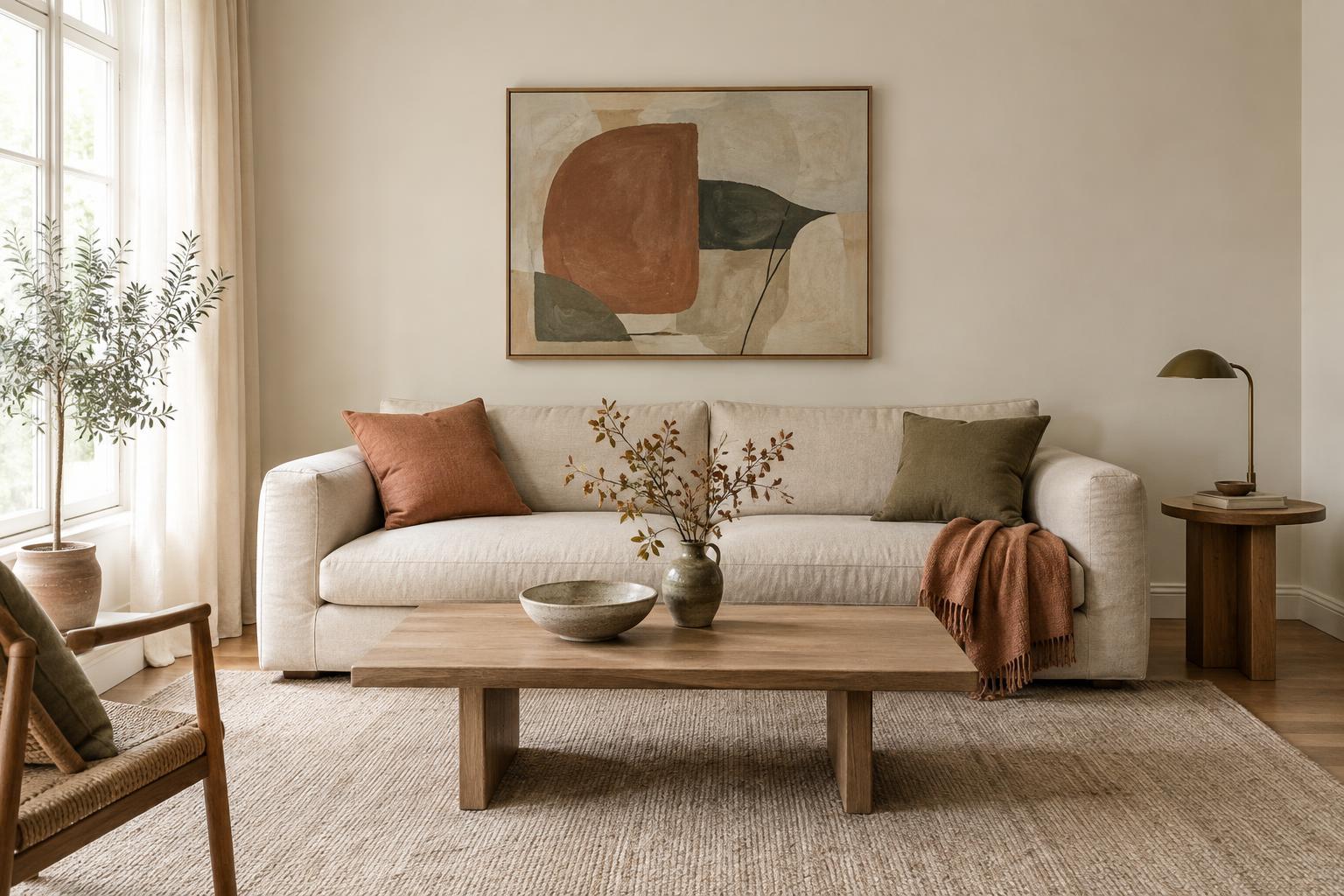
In a living room, the sofa is often the best starting point. Place it where conversation and movement feel comfortable, then use a rug, coffee table and nearby seating to define the area. A rug that reaches at least the front legs of the main seating can help the arrangement read as one group. When the furniture forms a clear composition, the eye has somewhere to settle even if the walls are simple.
The same principle works elsewhere. A headboard can anchor a bedroom, while a dining table can become the centre of an open-plan space. Give the chosen piece enough breathing room to be noticed. An oversized lamp, a cluster of small objects and a brightly patterned rug may each be appealing on their own, but together they can pull attention in too many directions. Let one element lead and use the others to support it.
Build a feature on a wall
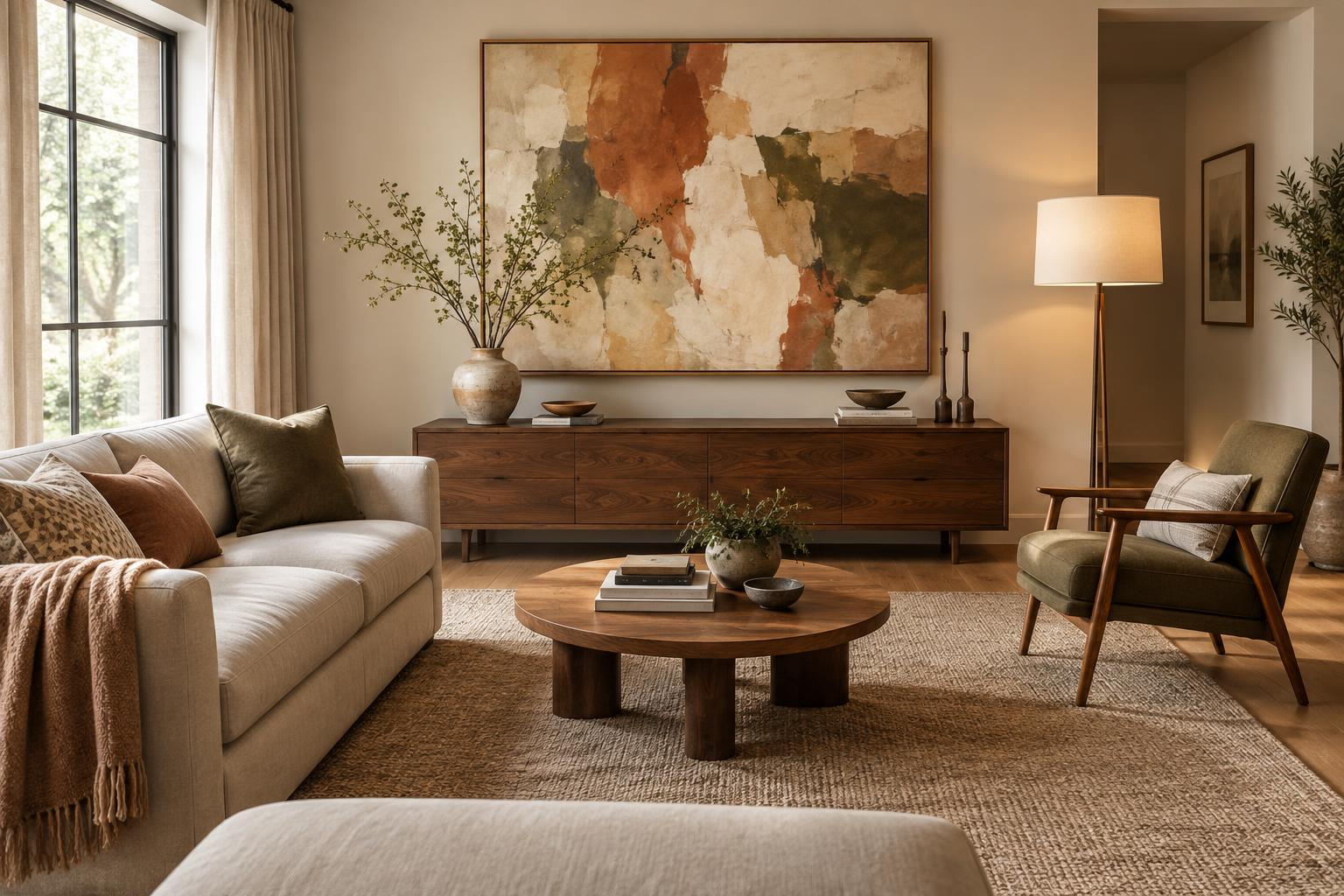
A large artwork is a straightforward way to create focus. Choose a size that relates to the furniture below it: a tiny print above a wide sofa may feel disconnected, while a piece or grouped arrangement that occupies a substantial portion of the space feels more deliberate. Hang it where it connects visually with the furniture rather than floating close to the ceiling. If you prefer a gallery wall, keep the gaps between frames fairly consistent so the collection reads as a single feature.
You can also make a wall stand out through paint, wallpaper or shelving. An accent colour works best when it suits the room's existing materials and appears again in a cushion, vase or other small detail. Shelves need not be full to be effective; alternating books and objects with some empty space gives each item room to register. If you are working with a narrow wall, a mirror may offer a lighter alternative to a dense display.
Use lighting and texture to guide attention
Lighting can reinforce a focal point after daylight fades. A table lamp beside a reading chair, a pendant above a dining table or a picture light over art draws attention to the area you want people to notice. Consider what each light illuminates, not just the appearance of the fitting. If every corner is equally bright, the room can lose some of its visual hierarchy.
Texture offers a quieter route, especially if you prefer neutral colours. A woven wall hanging, a substantial curtain fabric or a sculptural ceramic piece can stand out through shape and surface rather than bold colour. Keep surrounding finishes calmer so the contrast remains visible. This approach is useful when a room already contains several patterns or when you want a focal point that feels restful rather than dramatic.
Edit the room until the focal point feels clear
Once you have chosen a feature, check the room again from the doorway and from each main seat. Does your eye find the intended spot, or does another object demand attention first? You may not need to buy anything to improve the balance. Moving a tall plant, removing a few shelf objects or shifting a lamp can make the arrangement easier to read.
A focal point does not have to be centred on a wall or perfectly symmetrical. It does need enough presence to hold its own and enough quieter space around it to be appreciated. Start with one feature, live with it for a few days, then adjust the supporting details. The result should feel like a room arranged for the people who use it, not a display built around a missing fireplace.