Start with the activities, not a dividing line
Before moving furniture, list what the room needs to support each day: sleeping, dressing, playing, reading and perhaps homework. Notice which activities need floor space, a surface or good light. A clear patch of floor may matter more for building and play than a second desk that rarely gets used.
Sketch the room, including doors, windows, radiators and furniture that must stay. Keep the route from the door to each bed easy to use, especially at night. Then group activities by their needs. Beds can sit in a calmer area, while active play can take place away from them. Zones do not have to be equal in size; they need to work for the children who use them.
Ask each child what they like to do in the room and what they find difficult about sharing it. Their answers can help you decide whether the priority is more open floor, a quiet corner or a dependable place for personal belongings.
Give sleep a calmer setting
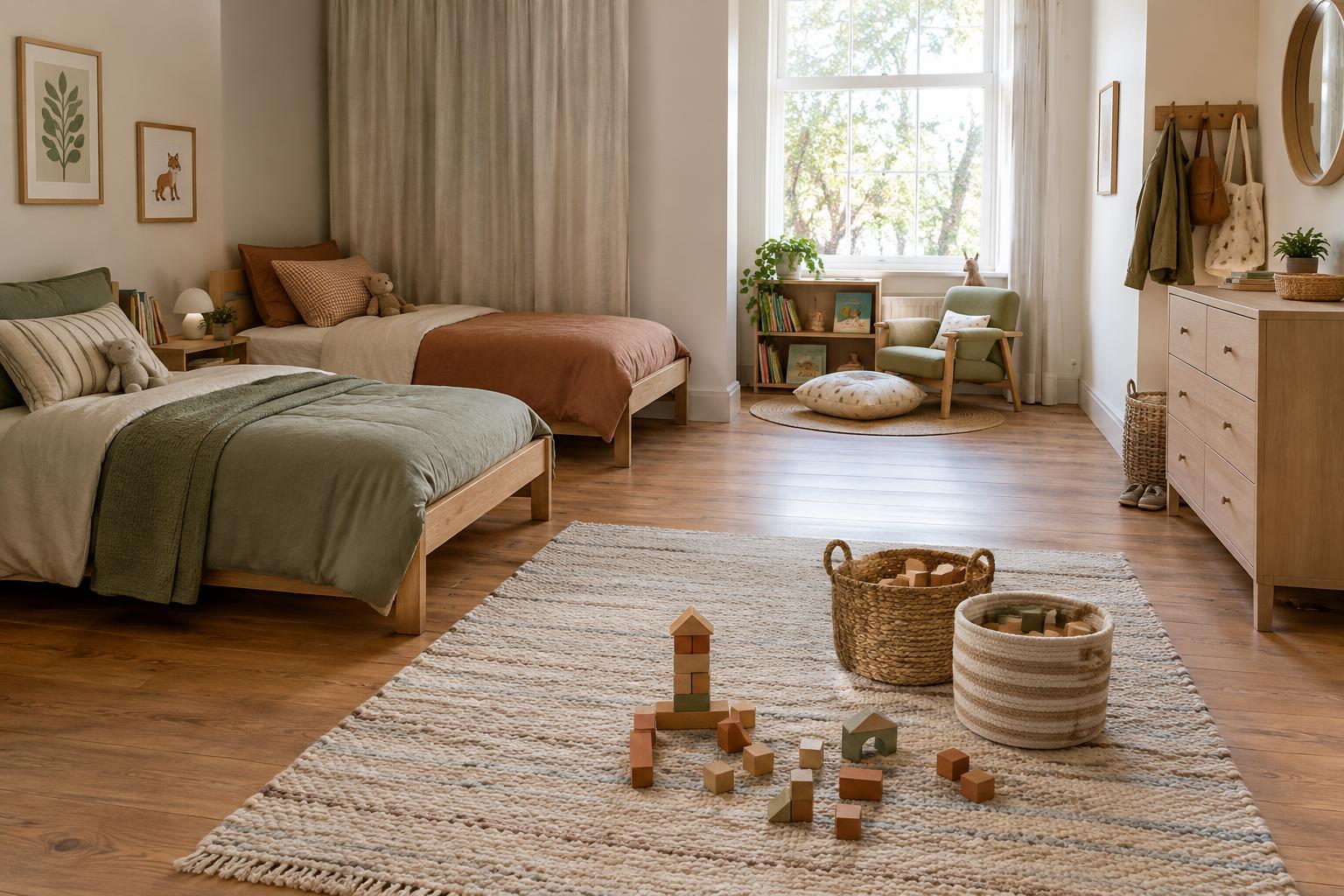
A sleeping zone feels more settled when beds have a little visual consistency, even if the children choose different colours. Similar bed placement, matching wall hooks or repeated bedside lighting can bring the room together. Individual bedding, cushions or a small shelf can still give each child a sense of ownership.
If the layout allows, place beds where they are less likely to become the main play surface. A low bookcase or storage unit can create a gentle boundary, but it should not block daylight or make the room awkward to navigate. Secure tall furniture and use age-appropriate furnishings; avoid placing climbable pieces where they could create a hazard near a window.
For children with different bedtimes, a separate reading lamp for each bed may be more useful than one bright overhead light. Choose lighting that can be operated easily and keep cords out of the way. A small basket for bedtime books or comfort items also helps the sleep area stay distinct from the general toy collection.
Make play easy to start and easy to put away
A play zone needs enough open floor to use toys, not just somewhere to store them. A washable rug can signal where building, puzzles or pretend play happens while making the area comfortable to sit on. Leave space around it for movement rather than filling every wall with storage.
Keep frequently used toys within easy reach in broad categories children can recognise, such as blocks, figures and art supplies. Open bins or low shelves make it simpler to find things and return them. Store occasional or supervised materials separately so the everyday choices do not overwhelm the room.
In a small bedroom, one area can serve more than one purpose. A low table might hold crafts in the afternoon and be cleared for a board game later. The key is a nearby home for supplies: if clearing the surface requires carrying everything across the room, the zone is less likely to stay flexible.
Create a quiet spot without isolating anyone
Shared rooms benefit from a place to pause, even when there is no space for two separate reading corners. A chair, floor cushion or small section beside a bookcase can mark a quiet zone. Place books within reach and use a lamp or daylight to make reading comfortable. Soft textiles can make the spot inviting without adding bulky furniture.
If both children want private time, consider a simple turn-taking arrangement rather than trying to split a small room permanently. Another option is to give each child a portable reading basket and let the quiet spot move as needed. Avoid promising complete privacy in a room that cannot provide it; aim instead for a place where quieter activities are respected.
Use personal details to balance shared space
Each child should have a reliable place for things they do not want to mix up. This might be one drawer, a shelf, a bedside basket or a labelled storage box. Keep these personal areas reasonably comparable, even if their contents look different. Shared storage can then hold items everyone uses, reducing disputes over what belongs where.
Colour can distinguish zones without making the room look sharply divided. Start with a common base, such as the same wall colour or rug, then let each child choose a few accents for bedding, artwork or storage. Repeating one material or shape across both sides helps varied preferences feel intentional.
Review the layout as routines change. A large play rug may eventually give way to two work surfaces, while storage that once held toys may hold books or hobbies. Keeping major furniture adaptable and using textiles and small accessories for personal expression makes those changes easier.