Start by looking at the space around the wall
A narrow strip of wall beside a doorway, between windows or at the end of a hall can be awkward to decorate. A large picture may crowd the edges, while a small one can look lost. Before choosing an object, step back and look at the whole area. Is the wall visible from across the room, or mostly as you pass it? Does it sit beside furniture, a window or a light switch? Those surroundings will help determine what feels balanced.
Decide whether the wall needs a focal point or simply a quiet finishing touch. An empty strip between two busy areas may look better with one restrained detail than with several objects. You can test the effect without buying anything: tape paper shapes to the wall in a few sizes, then view them from the places where you normally see the space. Leave enough open wall around the shapes that the arrangement can breathe.
Choose a shape that works with the wall
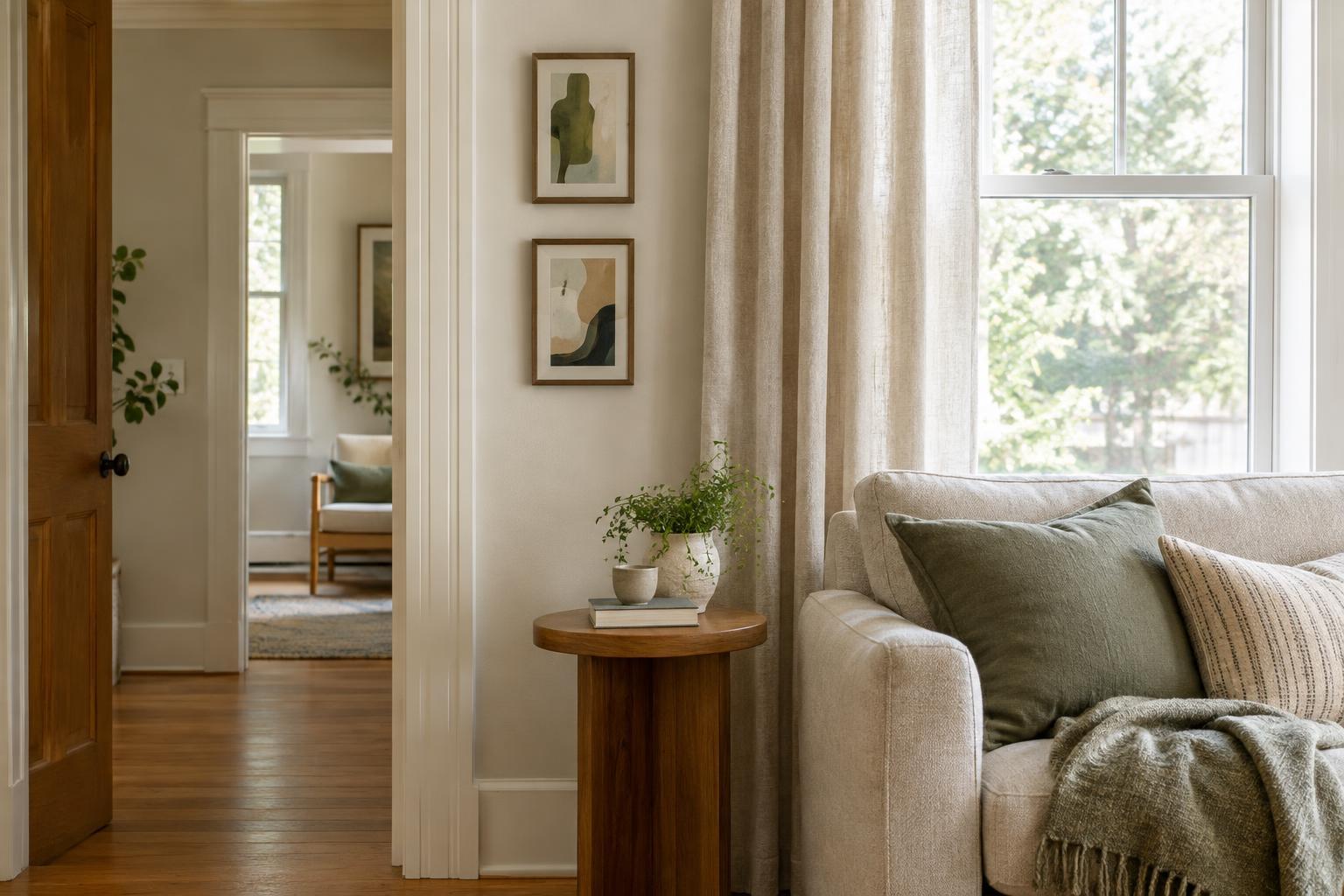
A tall, slim object often suits a narrow wall more naturally than a wide one. Consider a small vertical print, a pair of compact pictures stacked one above the other, or a mirror with a narrow frame. The frame matters as much as the image: a broad, ornate frame takes up visual space, while a fine frame keeps the arrangement light. A round mirror can also soften a wall surrounded by straight doorframes and furniture, provided it does not feel squeezed between them.
Let the wall’s position guide the choice. In a hallway, an object with a simple outline is easy to take in while walking past. Beside a reading chair, a small piece of art can feel more personal and invite a closer look. If you hang two or three pieces, keep the gaps between them consistent and treat them as one arrangement rather than scattering them along the wall.
Consider details other than framed art
A narrow wall does not have to hold a picture. A small wall vase, decorative plate or textile hanging can add texture where another framed print would feel repetitive. A shallow ledge can display one or two objects and make them easy to change, but check that it will not project into a route people use. In a tight passage, a flat or nearly flat detail is usually the more comfortable choice.
Hooks can be decorative as well as useful if the location genuinely needs a place for a lightweight item. The key is to consider how the wall will look in everyday use, not only when it is empty. A row of hooks covered with bags and coats may overwhelm a narrow space. Likewise, a shelf that requires several tiny ornaments to look complete can create more visual clutter than the wall needs.
Connect the detail to the room
A small feature feels deliberate when it shares something with its surroundings. You might repeat the warm tone of a nearby wooden table in a frame, pick up a colour from a cushion in a print, or echo the shape of a lamp with a rounded mirror. The match does not need to be exact. One clear connection is often enough to make the wall feel part of the room rather than a separate decorating project.
Pay attention to contrast, too. A delicate object may disappear against patterned wallpaper, while a very dark frame can look heavy on a pale strip of wall. If the room already contains many strong colours and textures, choose a quieter piece. If the room is fairly plain, the narrow wall can be a good place for a modest accent. View your options in the room’s usual lighting before deciding, since shadows and glare can change how they appear.
Check placement before making it permanent
There is no single hanging height that works for every narrow wall. A piece beside furniture should relate to that furniture; one in an open passage can be positioned for comfortable viewing. Use removable paper templates to compare placements from a distance, then walk through the space. Check that the arrangement does not interfere with a door, curtain or switch, and that anyone passing by has room to move without brushing against it.
Finally, resist the urge to fill every inch. A narrow wall can look complete with one well-placed object and visible space around it. If the first choice seems too small, try a slightly larger piece or a more substantial frame before adding more items. The aim is not to disguise the wall’s proportions, but to give that small part of the room a clear purpose.