Start with what the window needs to do
Before adding anything, watch how you use the window on an ordinary day. Do you open it for ventilation, pull a blind for privacy or reach across the sill to water a plant? A seasonal display will be easier to live with if those actions remain simple. Leave room for handles, catches and curtain movement, and keep objects out of the path of an opening window.
Notice where daylight enters the room. If the window is small or faces a shaded space, keep its central area mostly clear. A display along one side or at the bottom can provide a seasonal note without making the room feel darker. A larger, brighter window may accommodate more, but it still benefits from an open area that lets the view and light do some of the decorating.
Choose one focal point instead of filling the sill
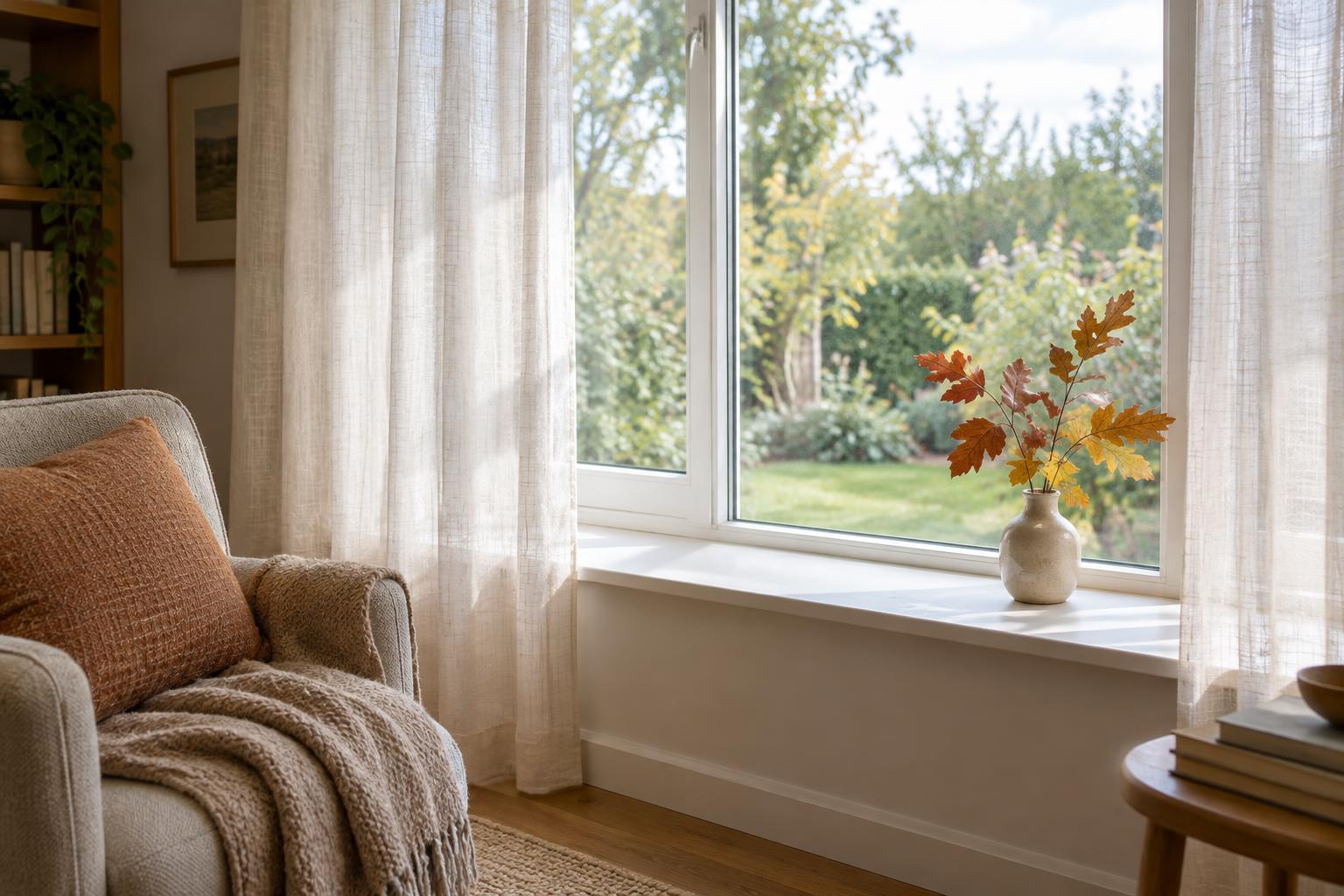
A window display does not need a row of themed objects. Start with one focal point: a vase of branches, a small group of pots or a single decorative piece with a clear shape. Place it slightly off centre if the room already has another strong feature nearby. Then step back to where you usually sit or enter the room. If the arrangement reads clearly from there, it may not need anything else.
For a wider sill, group a few items on a tray or shallow dish. This gives the display a boundary and makes it easy to move when you clean or open the window. Vary the heights, but keep taller pieces away from handles and from the part of the view you most enjoy. If the sill is narrow, use a nearby side table rather than balancing objects on an unsuitable ledge.
Let colour and texture suggest the season
Seasonal decorating can be subtle. In spring, a clear vessel and fresh-looking greens can make a window feel lighter. Summer might call for pale ceramics or a loosely woven basket. In autumn, warm wood tones and deeper colours add a sense of comfort. Winter can be expressed through evergreen shapes, matte finishes or a small amount of reflective detail. These are options, not rules; choose what works with the colours already in the room.
Repeating one existing colour helps the display feel connected to the interior. A vessel that picks up the colour of a cushion, for example, may look more settled than several new decorations in unrelated shades. Try changing just one or two elements each season while keeping the tray, pot or vase you already like. This creates variety without requiring a separate collection for every time of year.
Keep glass, fabric and surfaces easy to care for
Windows can bring strong sun, temperature changes and occasional condensation. Check whether plants suit the light and move moisture-sensitive materials away from damp glass. Put a saucer beneath watered pots, and protect painted or wooden sills from standing water. Natural branches and flowers may shed, so choose a container that catches loose pieces and makes cleanup straightforward.
If you want to hang something, consider a lightweight decoration positioned where it will not interfere with blinds or curtains. Follow the fixing method appropriate to your window and surface rather than assuming an adhesive will remove cleanly. Avoid placing candles, hot lights or fragile items where fabric, children or pets could reach them. A simple, unlit arrangement is often enough, especially in a window that already catches evening light.
Check the view from both sides
A window display looks different from the street, the garden and the room. Take a moment to check it from outside where practical. You may find that a decoration blocks more light than expected or draws attention to an area where you prefer privacy. At night, interior lighting can change how visible a room is through the glass, so keep your usual blinds or curtains easy to use.
The best final test is whether the display still works during daily routines. Can you open the window, close the curtain and wipe the sill without dismantling everything? If not, remove an item or shift the arrangement to one side. A small seasonal accent that leaves the window useful will usually be more enjoyable than an elaborate display you have to work around.