Start with clean, sturdy material
The easiest way to limit mess is to be selective before anything reaches a vase. Choose leaves that are intact rather than soft, spotted or already crumbling. Look for branches with sound stems and leaves that are still firmly attached. Skip anything with visible mould, a musty smell or signs of insects. Fallen material can work well, but pieces lying on wet ground are more likely to need a long drying period.
Give your finds a gentle shake outdoors, then inspect the stems and undersides of leaves. Remove damaged foliage and loose debris. If you wipe dirt from a branch, allow it to dry completely before bringing it into a finished arrangement. A branch does not need to be covered in leaves to feel autumnal: a few well-shaped stems often create a cleaner display than an overflowing bundle.
Decide whether the display will be fresh or dry
Fresh and dried displays need different care. Fresh leafy branches can stand in water for a short-lived arrangement, but they may wilt or drop leaves as they age. Use a stable, watertight vase, keep foliage above the waterline and change the water when it becomes cloudy. Remove fallen leaves promptly and retire the arrangement when stems soften or smell unpleasant.
For a display that needs no water, dry the material first. Spread leaves in a single layer on paper in a well-ventilated indoor spot, away from damp walls. Turn them occasionally and wait until they feel dry throughout. To keep leaves relatively flat, place them between sheets of absorbent paper under a light weight, replacing the paper if it becomes damp. Stand branches loosely in an empty container while they dry, rather than packing them tightly together.
Drying reduces moisture-related problems, but it also makes foliage more fragile. If a leaf snaps at a touch or a branch sheds whenever it moves, reserve it for a low-traffic position or leave it out. There is no need to preserve every piece you collected.
Build an arrangement that stays put
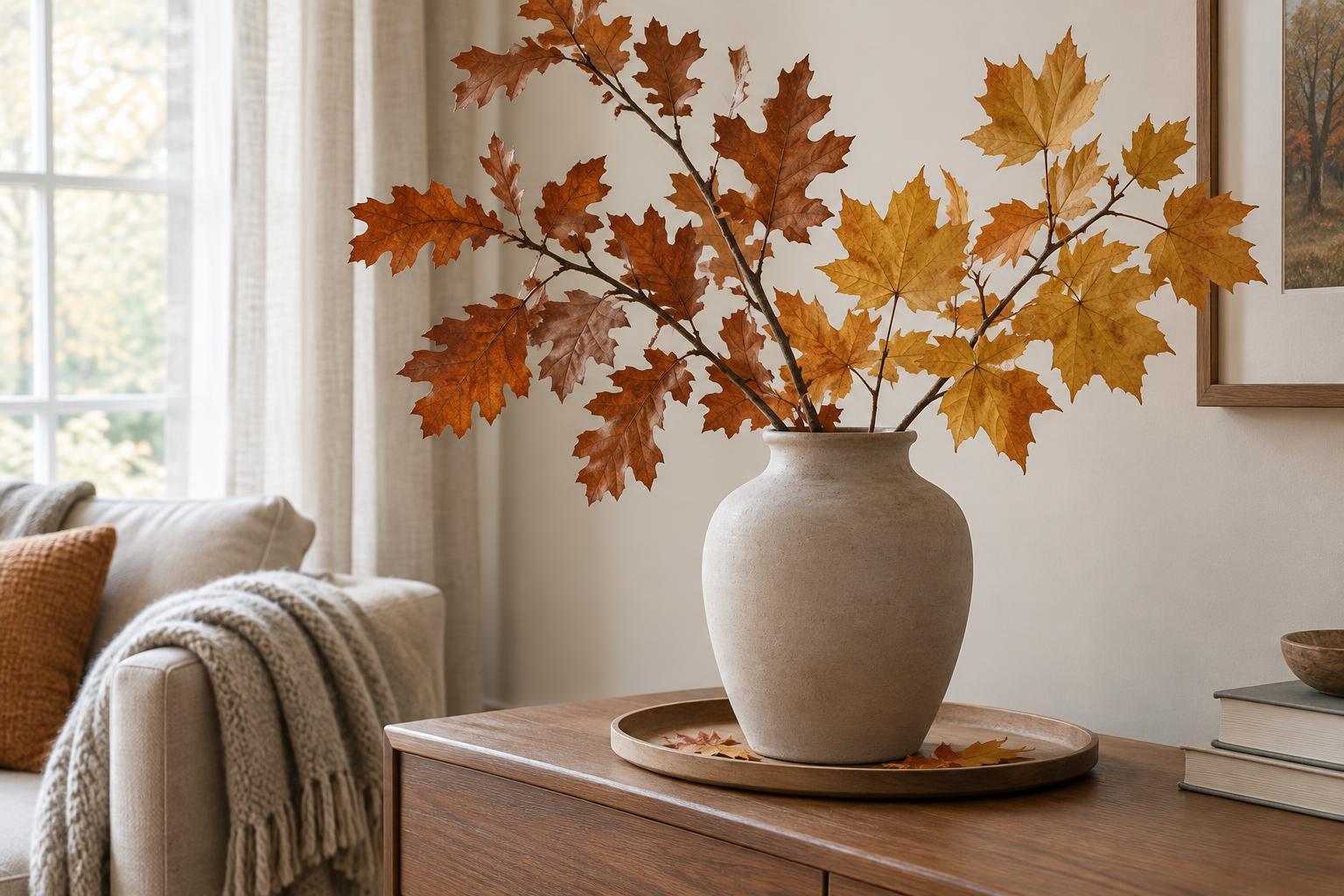
Choose a heavy vase or jug that will not tip when branches extend beyond its rim. If the arrangement is dry, the container must be dry too. Position taller branches first, then add a few smaller stems to fill gaps. Leave space between them so the shapes remain visible and leaves do not rub against one another. A restrained arrangement is easier to dust and less likely to shed when someone walks past.
For loose leaves, use a shallow tray, a wide bowl or a place setting rather than scattering them across a table. The container catches small fragments and makes it simple to lift the display before cleaning. Pressed leaves can also sit behind glass in a frame, where their colour and outlines remain visible without being handled. Avoid placing dried foliage beside candles, heaters or other heat sources.
Choose a location that works for the material
A dry shelf, sideboard or mantel away from direct heat is usually more forgiving than a steamy kitchen or bathroom. Keep the arrangement clear of curtains and doorways, where passing fabric or people could brush against it. A nearby wall can make a sparse branch silhouette stand out, so you do not need to crowd the vase to create an effect.
Check the display every few days. Pick up fallen leaves, remove any stem that has begun to soften and look for condensation inside containers. If you notice a musty smell or visible mould, discard the affected natural material and clean and dry the container before reusing it. Moving a display to a drier spot may help with persistent moisture, but it will not restore material that has already deteriorated.
Store only what is worth keeping
At the end of the season, sort the display rather than putting everything into a box. Discard brittle leaves that shed easily and any piece that feels damp or smells musty. Store sound, fully dry leaves flat between sheets of paper in a breathable folder or box; wrap delicate branches loosely so they are not crushed. Keep them in a dry cupboard and inspect them before using them again.
Natural foliage will change colour and condition over time. Treating it as a temporary detail makes seasonal decorating easier: keep the best pieces, compost suitable unpainted plant material where appropriate, and enjoy the chance to make a fresh arrangement next autumn.