Start with the space you want to refresh
Spring flowers can change the feel of a room even when everything else stays in place. A low bowl of bulbs suits a coffee table, where people can see the flowers from several angles. A few tall branches make more sense on a sideboard or in an empty corner, where their outline has room to spread. Before buying anything, look at the surface, the available light and the space people need to move around it.
Choose a position that gives the display a clear backdrop. Pale flowers stand out against a darker wall or piece of furniture, while brightly coloured blooms can lift a quiet, neutral corner. On a busy shelf, remove an object or two rather than squeezing flowers into the gaps. The open space helps delicate stems look intentional and gives you room to water, clean or replace them.
Give potted bulbs a container that works
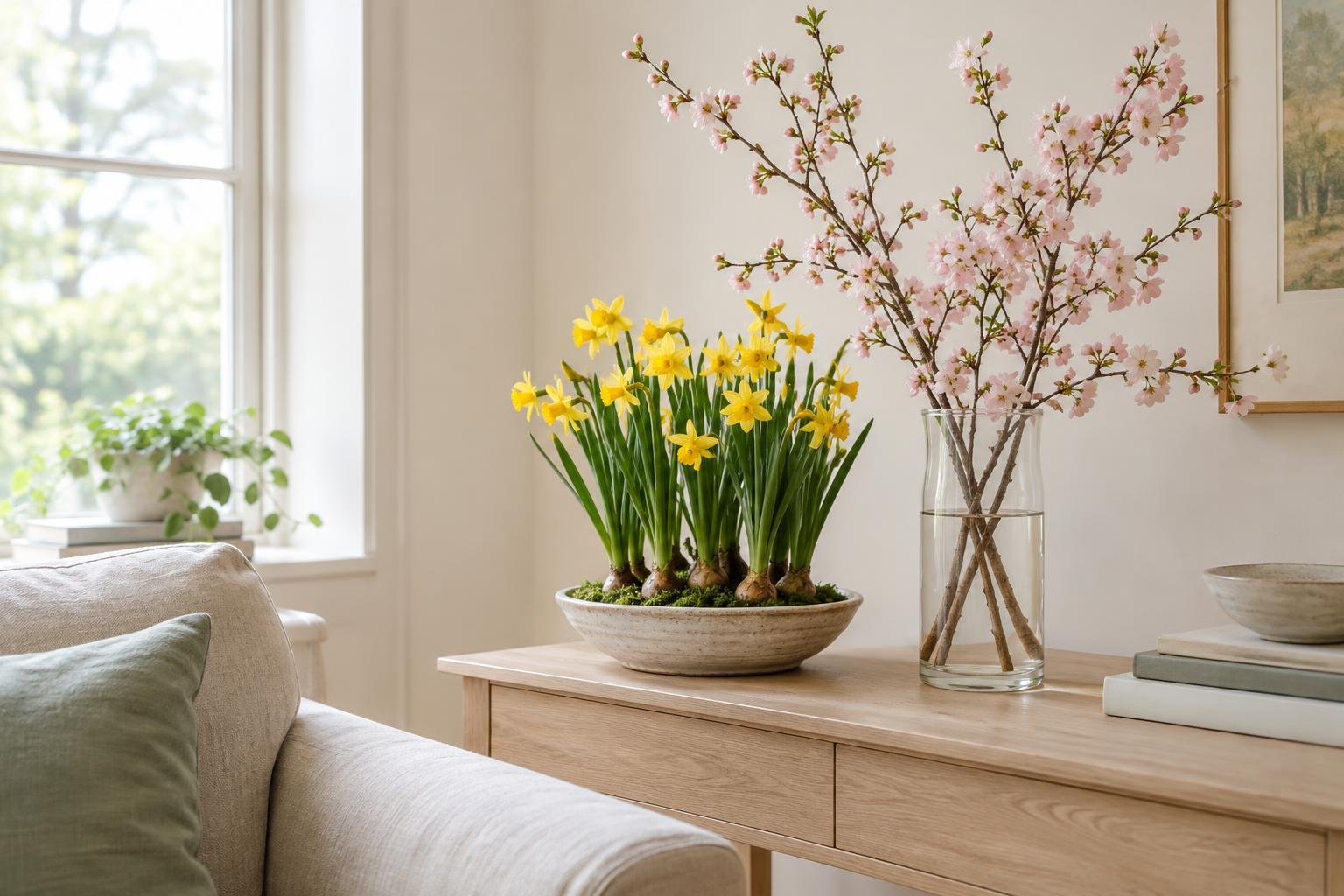
Potted narcissus, hyacinths and tulips are often sold in plain growing pots. You can slip one into a decorative container or group several pots inside a wide bowl. If the outer container has no drainage hole, keep the plants in their original pots and lift them out to water. Empty any collected water before putting them back; bulbs sitting in a puddle are harder to keep in good condition.
Let the plants themselves guide the container choice. A shallow, broad vessel balances short bulbs, while a heavier pot helps support tall leaves and flowers. Moss, small stones or a little loose soil can conceal visible plastic pot rims, but leave space around the stems and check that you can still reach the pots. For a less formal arrangement, combine bulbs at slightly different stages of opening so the display changes gradually.
Place flowering bulbs in bright, indirect light where possible and away from radiators or other strong heat sources. Turn a pot occasionally if its stems lean towards the window. Some bulbs may flower again after indoor display, but results vary with the plant and its growing conditions; there is no need to treat reblooming as the measure of a successful arrangement.
Use flowering branches for height and movement
Flowering branches offer a different kind of spring decoration. Forsythia creates a loose spray of yellow, while flowering cherry or similar blossom brings softer clusters of colour. A handful of stems is often enough: their curves and side shoots fill space that would require many ordinary cut flowers. Buy stems intended for arranging, or cut from a plant you have permission to prune.
Set branches in a sturdy vase with a wide enough base to resist tipping. Measure them against the vase before cutting, leaving some variation in height so the arrangement does not form a flat line. Remove leaves or small twigs that would sit below the waterline, then spread the branches gently rather than forcing them into a symmetrical shape. If one stem crosses awkwardly or blocks another, try rotating it before trimming it.
Refresh the water and remove any fallen petals or submerged leaves as the display ages. A branch that is already flowering gives you a more predictable result than a tightly closed one; buds cut too early may not open indoors. Keep large arrangements out of narrow walkways and away from places where a passing sleeve could catch a twig.
Coordinate flowers with the room, not just the season
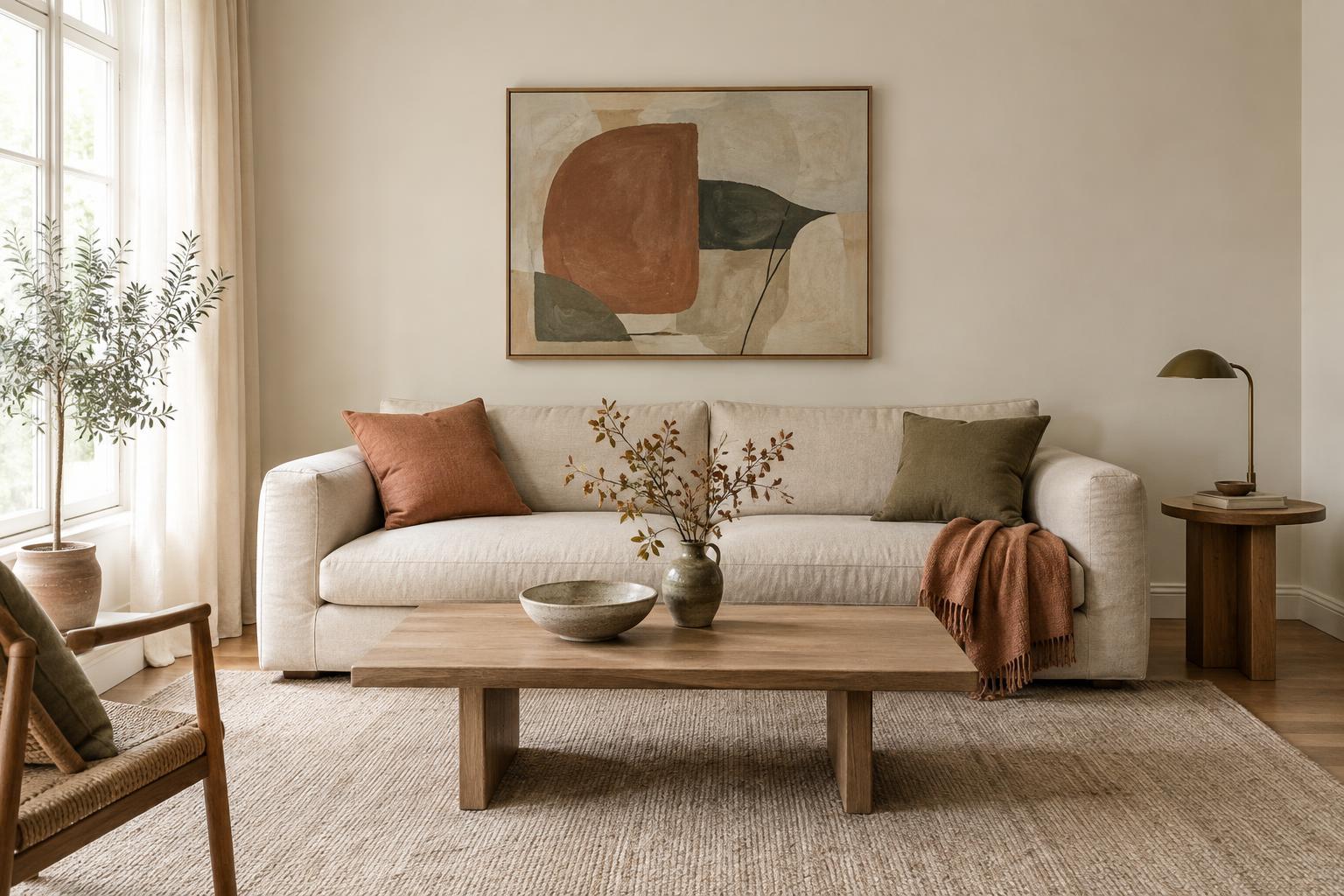
You do not need a whole new palette to make spring flowers feel at home. Start with a colour already present in the room, such as a cushion, curtain or piece of art, and repeat or complement it in the flowers. Yellow blooms look lively beside warm wood and cream textiles; pink blossom can soften dark furniture or echo a patterned fabric. If several flower colours compete, a simple vase and an uncluttered surrounding surface will give them room to breathe.
Container texture also matters. Clear glass keeps stems visible and feels light, while glazed ceramic gives a small group of bulbs more visual weight. An earthenware pot can make a polished room feel more relaxed. For a collected look, try one tall branch arrangement and one much smaller bulb pot elsewhere in the room. Repeating a colour or material between them creates a connection without making the two displays match exactly.
Keep the display comfortable to live with
Flowers are most enjoyable when they suit the habits of the household. Strongly scented blooms may be better in a ventilated room than beside a dining seat or bed. Put water-filled vases on surfaces that can tolerate an occasional splash, or use a tray to protect the furniture. Check the display every few days for dry soil, cloudy water or fading flowers, and remove tired stems promptly.
If children or pets might reach the arrangement, check the plants you choose before bringing them home. Many common spring bulbs can be harmful if eaten, and fallen petals or loose bulbs are easy to overlook on the floor. A safely placed, modest display can still have plenty of impact. The aim is not to fill every surface with flowers, but to give one or two well-chosen signs of spring a place to shine.