Map the route before choosing furniture
A hallway’s first job is to let people pass comfortably. Before buying anything, measure its length and width at several points, including corners, radiators and any spots where doors open into the space. Notice where people pause to put on shoes or reach for keys. The narrowest usable point matters more than the widest part of the hall, because that is where a piece of furniture is most likely to feel obstructive.
Mark the space a proposed item would occupy with cardboard or removable tape, then walk the route while carrying a bag or laundry basket. Open every nearby door and drawer. If you have a pushchair, mobility aid or other bulky item that regularly passes through, test with that too. This simple trial reveals whether a cabinet looks compact on paper but intrudes on daily movement.
Give storage a small footprint
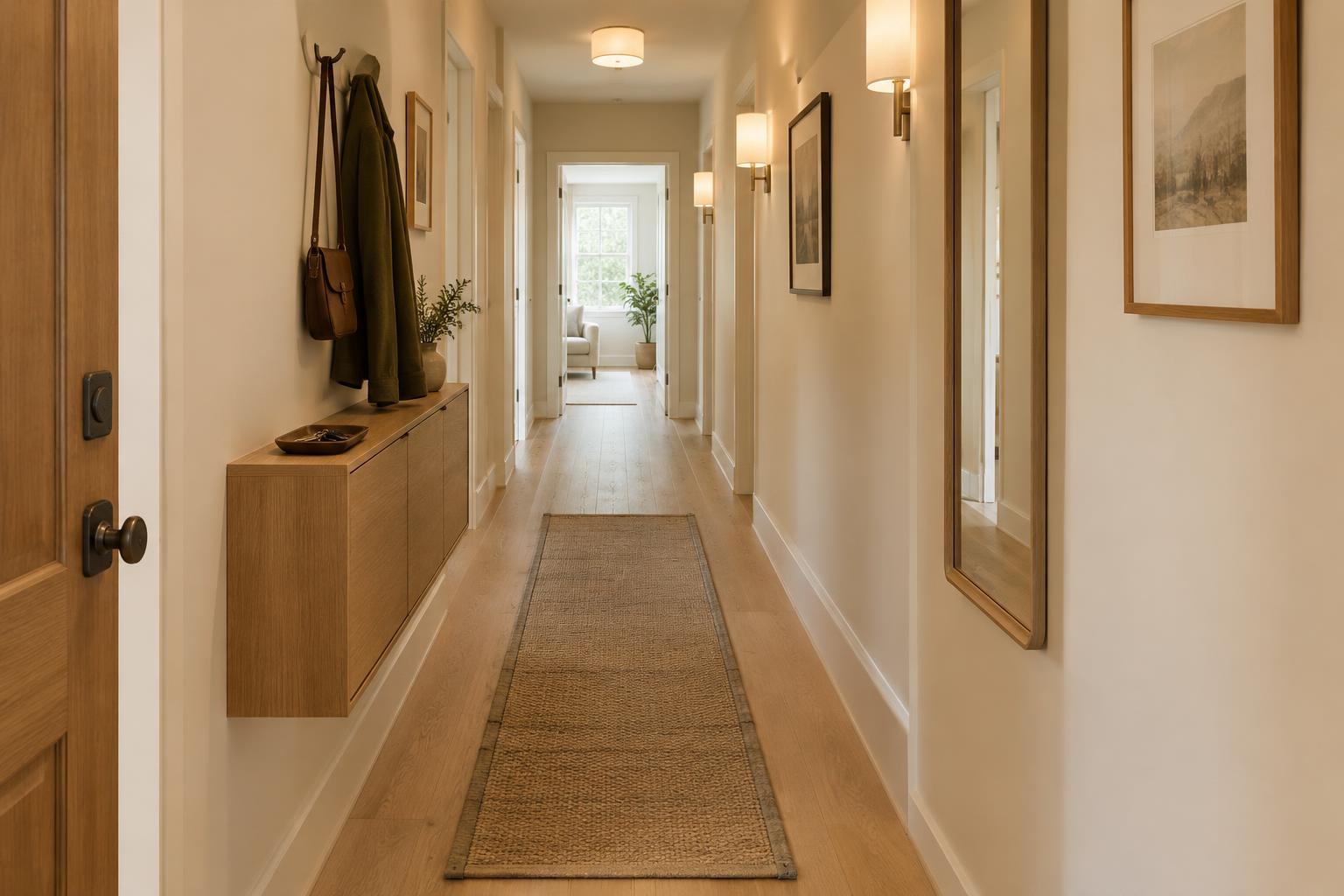
Choose storage according to what actually gathers in the hallway. A shallow wall-mounted shelf may be enough for keys and post; a slim closed cabinet can hide shoes and small accessories. Wall-mounted pieces keep more of the floor visible, but they still project into the route, so check their depth and position. Avoid sharp corners at shoulder or hip height where people are likely to brush past.
Hooks make use of wall space, provided coats and bags do not spill into the walking line. Place them in a recess or at the wider end of the hall if possible, and leave room for the items that will hang there—not just the hooks themselves. A small tray or basket can give everyday essentials a defined home. If it fills immediately, edit what you keep in the hallway rather than adding another container.
Keep seating and surfaces purposeful
A bench is useful when someone needs to sit to put on shoes, but it belongs only where the hall can accommodate both the bench and a clear path past it. An open space beneath the seat can hold a limited number of shoes; a lift-up lid keeps smaller items out of sight. If a bench makes the route awkward, consider placing seating in an adjoining room instead.
The same restraint applies to console tables. Their narrow tops are appealing, yet legs, drawers and decorative objects all affect how the space works. If a surface is essential, choose one with a modest projection and put it where people naturally stop, rather than midway through a tight passage. Keep its top mostly clear so it does not become a collection point that extends beyond the furniture.
Use light and visual detail without adding clutter
Good lighting helps a narrow hallway feel easier to navigate, especially when it has little daylight. Aim for even illumination along the route rather than one bright spot and several dark corners. Wall lights can preserve floor space, but their fittings should not protrude where they might be knocked. If you use a lamp on a shelf, secure its cord away from feet and check that the shade does not crowd the passage.
A mirror can reflect light and offer a useful final check before leaving home. Hang it where it will not interfere with doors or hooks, and choose a frame that suits the hall’s scale. For artwork, one or two well-placed pieces often have more impact than a busy row of small objects. Keeping colours and materials consistent with nearby rooms can make the hallway feel connected without requiring more furniture.
Finish with details that stay put
A runner can bring softness and colour to a long hallway, but it should lie flat and leave doors free to swing. Choose a size that suits the floor, use an appropriate non-slip underlay if needed, and check that edges do not become a tripping point. In a busy entrance, a durable, easy-to-clean textile is usually more practical than one that needs delicate care.
Once the hallway is furnished, walk through it during an ordinary day. Notice whether bags catch on handles, shoes migrate into the route or a door bumps the new storage. Adjusting a hook, moving a basket or removing one unnecessary piece may improve the space more than adding another decorative item. The best narrow hallway feels welcoming because it supports the way you move through it.