Start with the surface, not the decoration
A festive display does not need nails or permanent fixtures. Before deciding where a garland or wreath will go, look at the surfaces available: painted walls, wallpaper, glass, tile, doors and existing curtain rails all need different treatment. Check your rental agreement for any restrictions, especially before decorating shared hallways, balconies or the outside of a door.
The safest-looking fixing is not necessarily safe for every finish. Removable adhesive hooks, for example, may work well on a clean, sound surface but can pull away loose paint or damage wallpaper. If you are unsure how a surface will respond, choose a different location rather than treating a small test as a guarantee. Keep decorations away from damp patches, peeling finishes and delicate trim.
Match lightweight decorations to suitable fixings
Weight matters as much as appearance. Paper ornaments, felt shapes and small unlit garlands give you more hanging options than a heavy wreath or a thick, wired arrangement. Check the stated weight limit and surface guidance for any removable hook you use, and leave a margin rather than loading it to its limit. Follow its application and removal directions, including any waiting time before hanging an item.
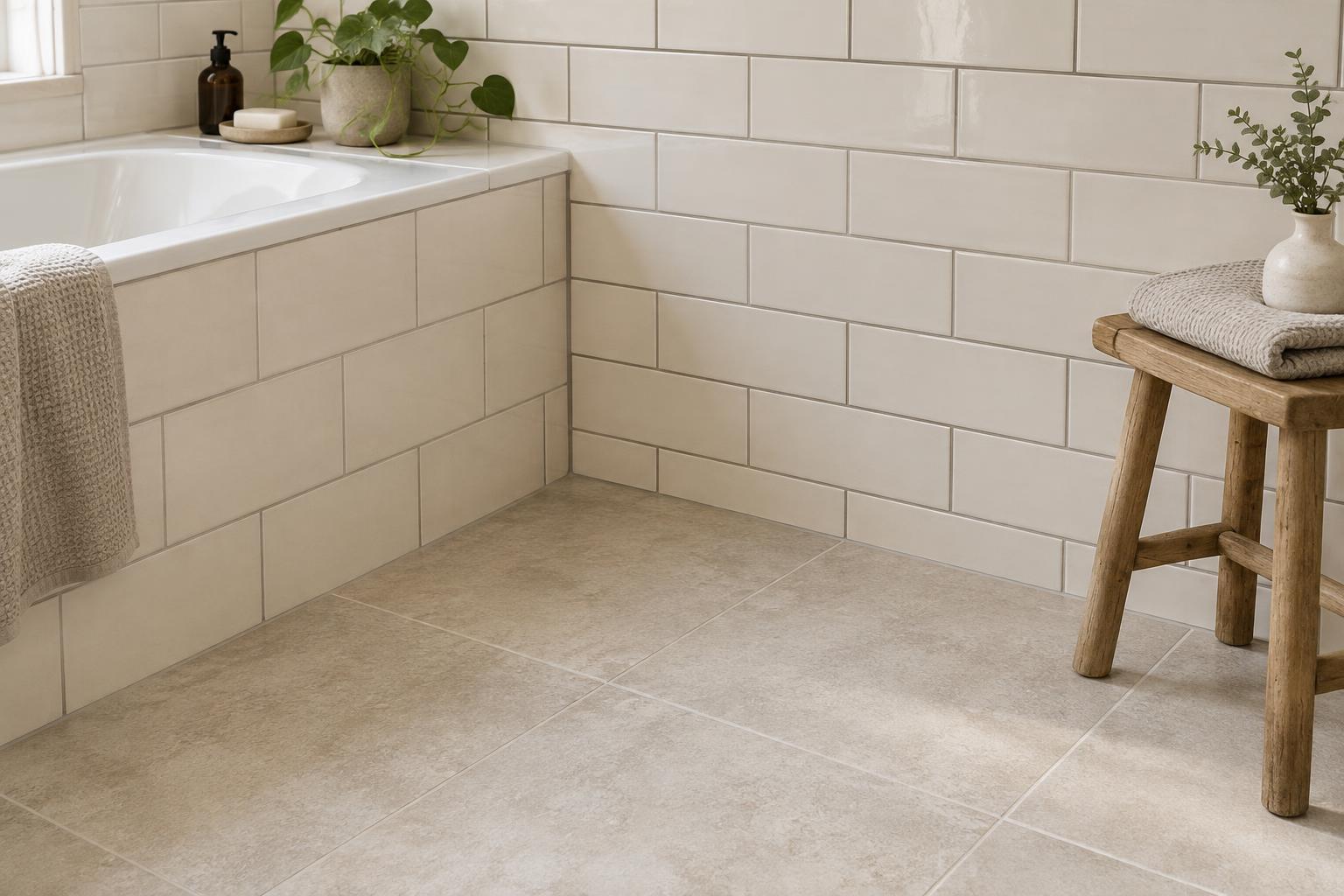
Glass can be a useful place for small, lightweight decorations attached with suitable suction hooks or removable window products. Clean and dry the glass first, and check the decoration periodically: suction can release unexpectedly. Avoid putting anything breakable where it could fall onto a hard floor. On smooth tile, use only products intended for that surface, and avoid relying on grout lines for adhesion.
An over-the-door hanger can hold a light wreath without touching the wall. Choose one that fits the door, add a soft protective pad wherever it makes contact, and check that the door still opens, closes and latches normally. If it rubs the frame or scrapes the paint, move the decoration elsewhere.
Use existing features to build a display
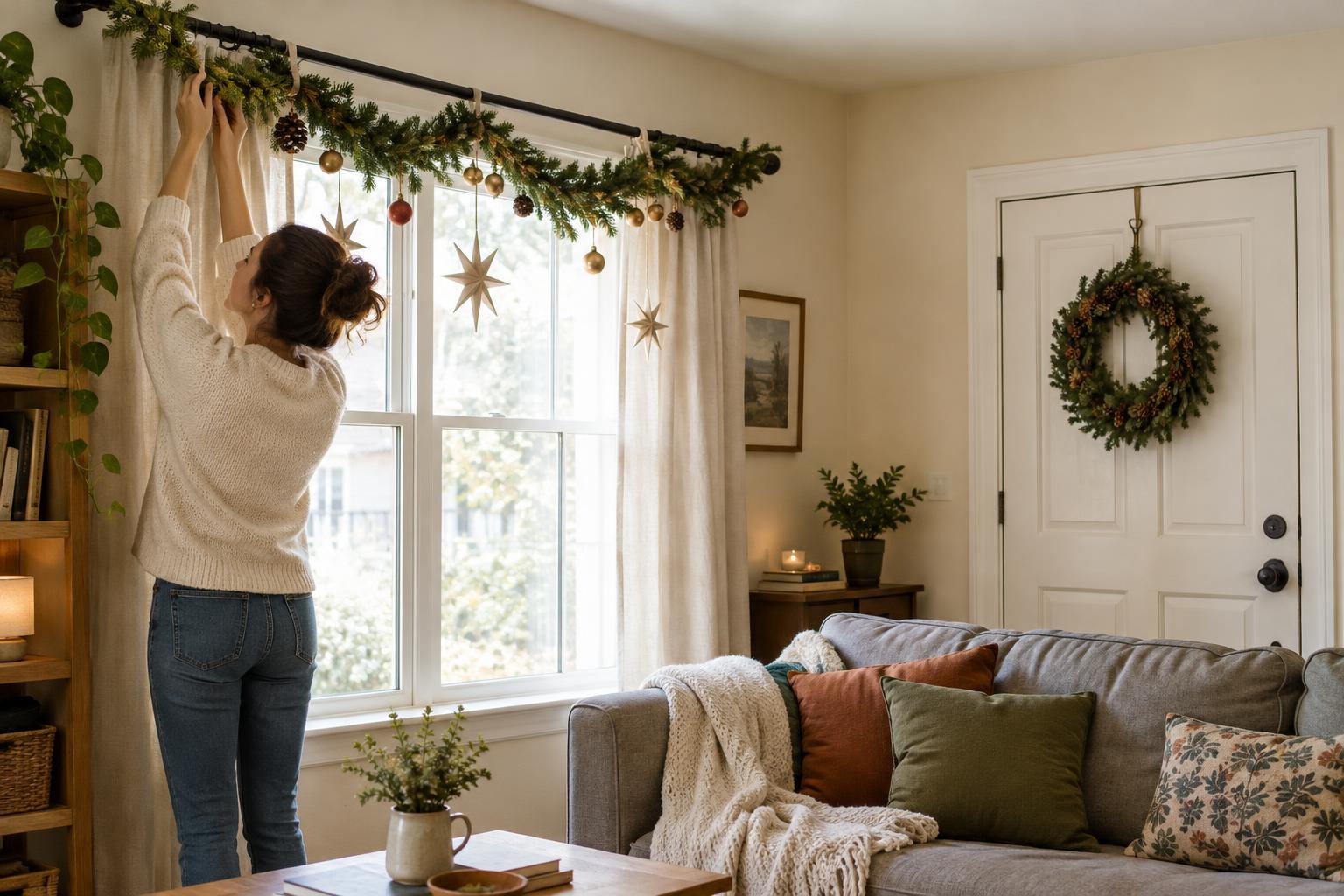
Some of the easiest rental-friendly displays need no new fixing at all. Drape a light garland over a sturdy, existing curtain rod, set ornaments in a bowl on a shelf, or group paper trees and battery-operated candles on a mantel. Keep anything placed above head height stable and well clear of edges.
A tension rod can create a temporary hanging point inside a suitable window recess or alcove, provided it fits securely and does not mark the surrounding finish. Use it for very light items only, and do not place fragile ornaments beneath it. For a door or window display, ribbon can sometimes be looped around an existing handle or fitting, as long as it does not interfere with how that fitting works.
You can also shift the emphasis from hanging to layering. A festive cushion cover, a throw and a few tabletop decorations will make a room feel seasonal while reducing the number of surfaces you need to touch. Repeating one or two colours across these pieces helps the arrangement look intentional.
Plan for movement, heat and everyday use
Before hanging anything, picture how people move through the room. Garlands should not trail across walkways, catch on doors or block access to windows. Keep decorations clear of heaters, fireplaces and other heat sources, and do not drape fabric or paper over lamps. Leave vents and safety equipment unobstructed.
If you use string lights, follow the maker’s instructions for where and how they can be hung. Keep cords from being pinched by doors or windows, and avoid running them where someone could trip. Battery-operated lights may simplify placement, but their battery packs still need a stable, accessible spot. Do not leave decorations hanging from electrical cables.
Take decorations down as carefully as you put them up
Save the packaging or instructions for temporary fixings so you can remove them the intended way. Do not yank a hook off the wall with the decoration still attached. Take down the decoration first, support the hook if directed, and pull any release tab slowly in the specified direction. Rushing is an easy way to turn a temporary display into a paint repair.
Once everything is down, check for residue or faint marks and clean only with a method suitable for that finish. A final look at the walls, doors and glass helps you spot anything that needs attention before you put the decorations away. With lightweight pieces, sensible placement and patient removal, you can enjoy a festive room without making its surfaces part of the display.