Start with the walking route
Before choosing a pattern or colour, look at how people move through the room. Mark the usual route between doorways, seating and other frequently used areas. A layered rug arrangement works best when its exposed edges sit away from that route. Avoid placing a small top rug where someone will repeatedly step across its corner on the way to a chair or doorway.
Also check how doors open and whether chairs need to slide back. Even a rug that lies flat when the room is empty may bunch under a moving chair or catch beneath a door. If the available space leaves no clear position for a second rug, one well-sized rug will usually look more considered than a forced layer.
Choose a stable base and a manageable top rug
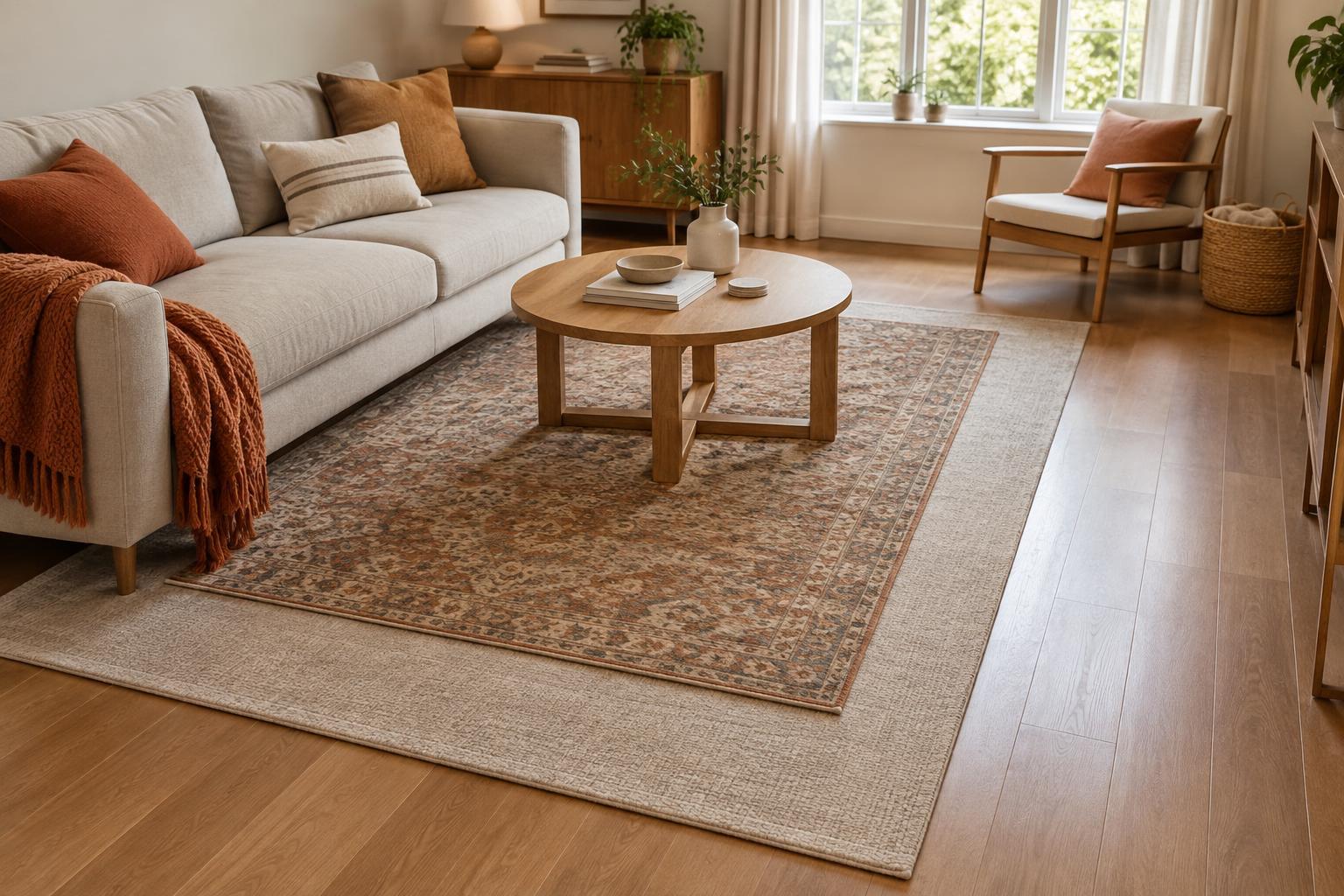
The bottom rug acts as the foundation, so look for one that lies flat and extends far enough beyond the top rug to make the layering look intentional. A low-pile or flatwoven base is often easier to layer than a deep, soft pile: it gives the upper rug a more even surface. A smaller top rug can introduce pattern or texture without covering the base completely.
Pay attention to the combined thickness, especially where the upper rug ends. Thick fringe, bulky binding and curled corners create more noticeable changes in height. If you want a plush top layer, try it in a position where people approach it from the open centre of the room rather than crossing its edge in a narrow passage. Test the pairing on the floor before committing to a layout; two rugs that look compatible separately may shift or wrinkle together.
Make the overlap look deliberate
For a tidy arrangement, give the top rug a clear relationship to the furniture. In a seating area, you might centre it beneath the coffee table while the larger base rug connects the sofa and chairs. Alternatively, angle a smaller rug slightly to soften a rectangular layout. Either approach can work, but leave enough visible base rug around the top layer that it does not resemble an accidentally misplaced mat.
Look at every exposed edge from the places where you normally enter and sit. A narrow strip of base rug on one side and a wide strip on the other can appear unbalanced unless the furniture explains the offset. You do not need perfect symmetry, but the layers should read as one composition. Keep small rug corners away from table legs that may lift them, and avoid tucking only part of a top rug beneath heavy furniture if that makes it slope.
Keep both layers from moving
A neat layout will not stay neat if the rugs slide. Use rug pads suited to the floor surface and the materials above them, checking the product guidance before placing a pad on a delicate finish. The base rug may need grip against the floor, while the top rug may need a separate solution that works between rugs. A pad should sit inside the rug edges so it does not show or create another ridge.
Rug tape or corner grips may help in some arrangements, but check whether they are compatible with both rug backings and the floor beneath. Adhesives can leave residue or affect certain finishes. Whatever you use, walk over the arrangement and gently move nearby chairs to see whether corners lift, edges ripple or either rug creeps out of place. If it keeps shifting, change the placement or simplify the layers rather than relying on repeated adjustments.
Check the edges as part of everyday upkeep
Once the rugs are in place, view them in ordinary lighting as well as bright daylight. A low-contrast edge can be harder to notice, while a strongly contrasting one may draw attention to an uneven overlap. Choose the effect you like, but make sure the edge remains easy to see and does not curl. In households where anyone uses a mobility aid or needs an especially clear walking surface, leaving the main route free of rug edges is a sensible priority.
Vacuuming, chair movement and regular foot traffic can gradually change the arrangement. Check corners and pad placement when you clean, and flatten any new ripples promptly. Layering should make a room feel more comfortable, not demand constant correction. If the rugs will not remain flat and secure, removing the upper rug is a practical design choice—not a styling failure.