Start with the room, not the samples
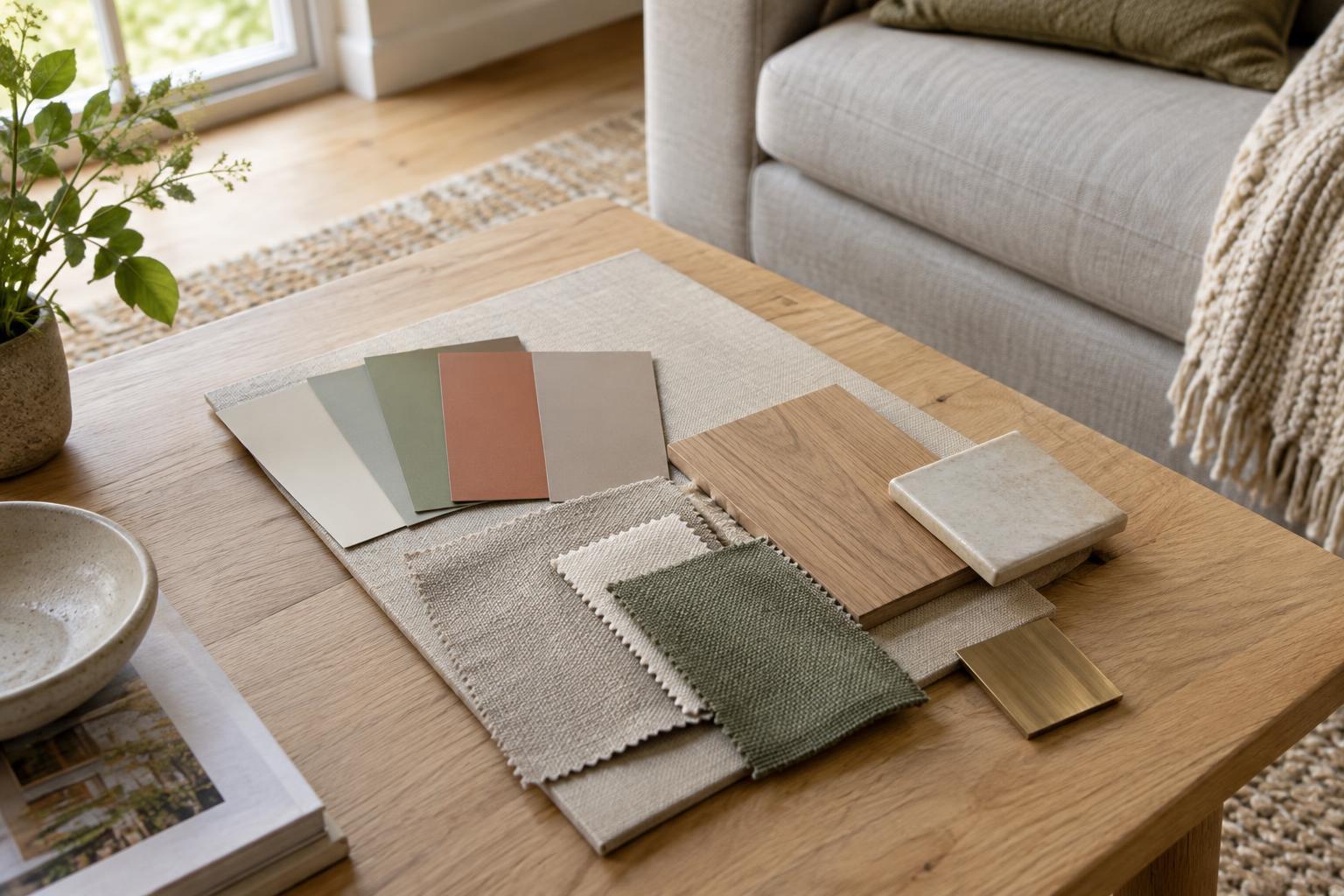
A sample board is a small collection of the colours and materials you intend to use in a room. It lets you see how they relate before you buy paint, order curtains or choose new furniture. The board does not need to look like a finished presentation. Its job is to help you make decisions.
Begin by noting what will stay in the room. A floor, sofa, kitchen cabinet or large rug may have more influence on the scheme than any new accessory. Take a clear photograph of each fixed element, or place a small sample on the board if you have one. Then write down the feeling you want from the space, such as calm and light, warm and layered, or crisp and colourful. These notes give you a useful test for every sample you add.
Gather a small, useful set of materials
Collect samples of the surfaces that will occupy the most space first: wall paint, flooring, upholstery and window treatments. Add smaller elements such as cushion fabric, wood finishes, metal hardware or a wallpaper detail afterward. Actual material samples are particularly helpful because a photograph may not show texture, sheen or the way a colour changes in light.
Ask for samples large enough to judge where possible, but do not wait for a perfect set before starting. Paint cards, fabric offcuts and photographs of existing furniture can all be useful. Label the back of each piece with its name and intended use so you can remember what you are comparing. Keep alternatives separate rather than crowding every possible option onto one board. Two or three variations of a scheme are easier to assess than one board filled with competing ideas.
Arrange samples by how much you will see
Use a piece of card, a tray or a clear tabletop as your base. Put the largest surfaces down first, then layer smaller samples over them. If walls will form most of the visible background, give the wall colour plenty of space on the board. A cushion fabric should not take up as much room as the planned curtain fabric simply because its sample happens to be larger.
Place materials next to the surfaces they will meet in the room. Set a curtain swatch against the wall colour, for example, and a rug sample beside the flooring. These pairings can reveal undertones that are easy to miss when samples are viewed alone. A pale neutral might appear pink beside one wood finish and more grey beside another. Notice texture as well as colour: a room can feel varied through a mix of smooth, woven, matte and gently reflective surfaces, even when its colours are restrained.
Leave some breathing room. If every item is patterned or highly textured, try replacing one with a quieter material. Conversely, if the board feels flat, a tactile fabric or a modest contrast may give it more definition.
Test the board in the room
Carry the board into the room rather than judging it only at a desk or in a shop. Look at it near the window, beside the main furniture and under the lights you usually use. Colours can appear different as the light changes, so revisit it at several times when you would normally use the space. Check whether a paint sample still works beside the floor and whether a fabric looks comfortable against the sofa.
A board helps you compare materials, but it cannot show the full effect of a colour covering a wall. Once you have narrowed the choices, test paint on a movable board or in a suitable area of the room, following the product instructions. View it against the trim and any fixed finishes before deciding. For fabrics, drape a larger sample where the curtains or upholstery will go if you can. This makes scale, opacity and texture easier to judge.
Edit, record and use your final choices
When something looks out of place, change one element at a time. Swapping the wall colour, fabric and metal finish all at once makes it hard to tell what improved the scheme. Ask whether each material suits the room’s purpose, works with what is staying and contributes to the feeling you chose at the start. You do not need every colour to match exactly; a combination is often more comfortable when its parts relate without being identical.
Once the board feels settled, photograph it in good light and keep the labels or product details with it. Bring the board along when choosing smaller items such as cushions, lampshades and decorative objects. It can keep later purchases connected to the original plan while leaving room for a personal find. Treat it as a guide, not a rule: the finished room should work in the space itself, not just look good on the board.