Start with the space people actually use
A high ceiling can give a room a welcome sense of openness, yet it can also make furniture feel small and conversations feel spread out. The answer is not necessarily to fill the entire room. Begin by deciding where people will sit, talk, read or relax, then arrange furniture around those activities. The space overhead can remain open while the area at floor level feels settled and useful.
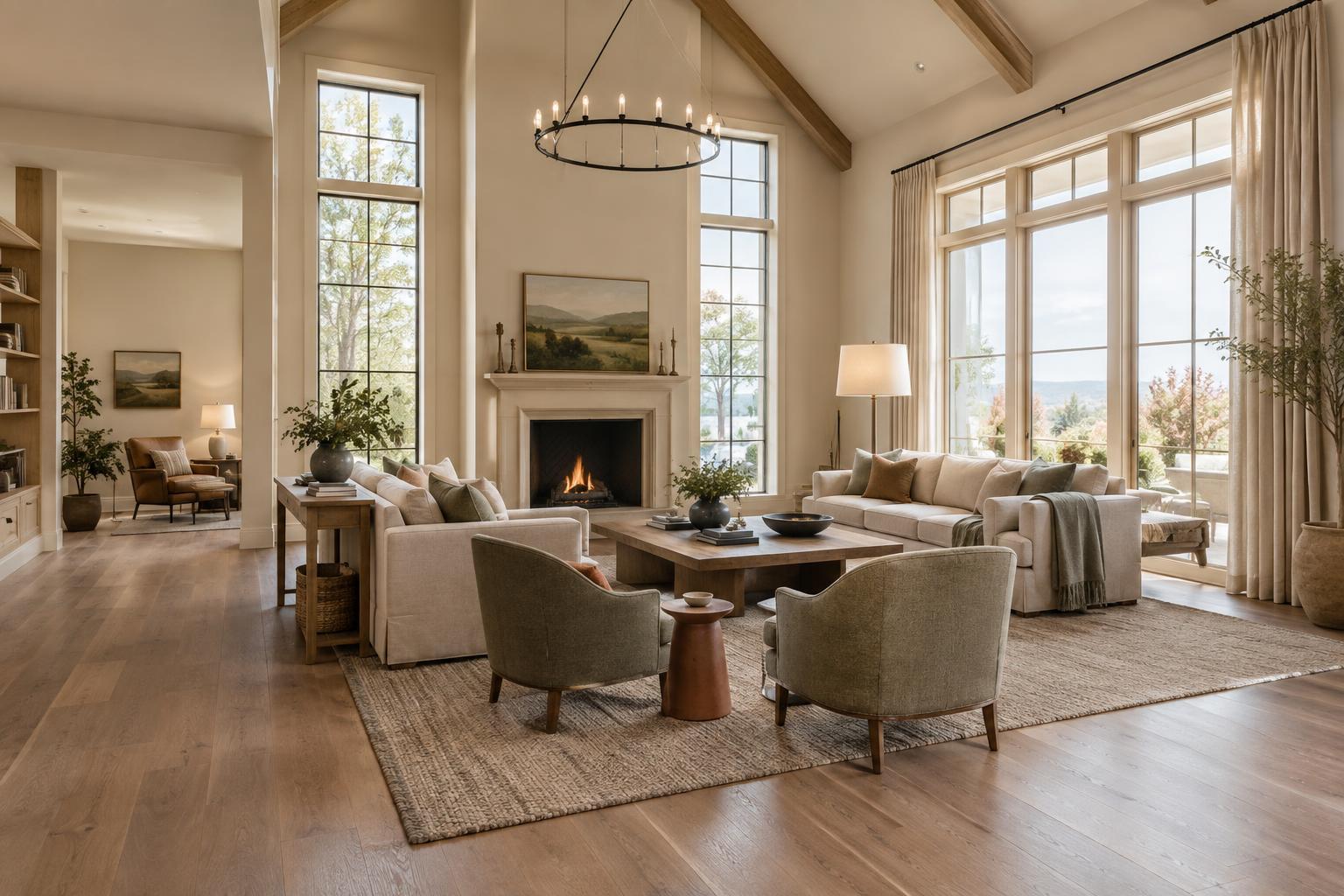
Before moving heavy pieces, identify the room’s natural focal point. It might be a fireplace, a view, a television or simply the most comfortable place to gather. Choose one main focus for the seating arrangement rather than asking every chair to face a different feature. This gives the furniture a clear relationship to one another and helps the room feel intentional.
Pull seating into a closer group
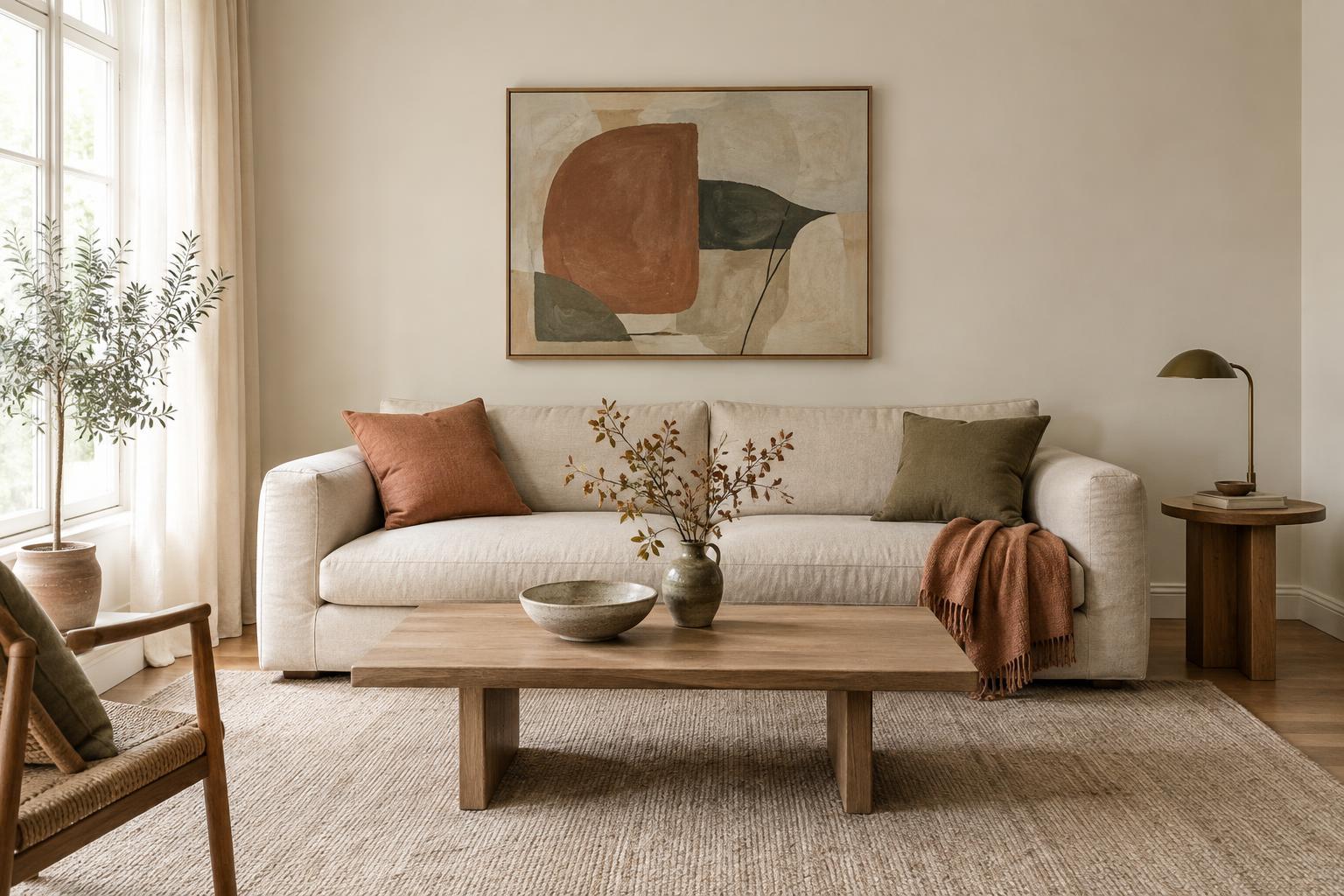
When sofas and chairs are pushed against distant walls, a high-ceilinged room can feel even larger. Try moving the main sofa inward and bringing chairs close enough that people can speak without raising their voices. A coffee table or upholstered ottoman can provide a shared centre. Side tables within easy reach make the arrangement feel comfortable in daily use, not just balanced from the doorway.
You do not have to centre the group in the room. In a long or irregular space, an off-centre arrangement may work better if it follows the light, the view or the way people enter. Test the layout by sitting in each seat. Check whether you can see and hear others comfortably, reach a surface for a drink and stand up without squeezing past another piece of furniture.
Use furniture to define zones without closing the room
A tall room often has enough visual space for more than one activity, but several scattered furniture pieces can make it feel unfinished. Give the main seating group a clear boundary. A rug can connect the sofa, chairs and table; placing at least the front legs of the main seating pieces on it can help them read as one group. Choose a rug that suits the furniture arrangement rather than one intended to fill every visible patch of floor.
If the room allows, place a reading chair and small table near a window or set a console behind a floating sofa. These pieces give the remaining floor area a purpose without competing with the main gathering spot. A bookcase or low storage piece can help mark the edge of a zone, provided it does not block a doorway or make a route through the room awkward.
Keep walking paths simple. Imagine carrying a laundry basket or tray across the room: can you take a direct route without weaving around chair legs? Comfortable rooms need both inviting places to pause and easy ways to pass through.
Balance the height with furniture at different levels
Furniture placement can make a tall room feel more human in scale when the eye has several places to rest. Combine the low, horizontal lines of a sofa with pieces that rise above it, such as a floor lamp, a taller cabinet or a plant suited to the available light. Group these taller elements near the seating area rather than spacing them evenly along every wall. They can visually connect the occupied part of the room to the height above it.
Avoid relying on one unusually tall item to do all the work. A mix of heights tends to feel more natural: a chair beside a lamp, a side table beneath a wall feature, or a console behind a sofa. If you have artwork, consider how it relates to the furniture below it. A piece hung where seated people can enjoy it may do more for comfort than one placed high simply because the wall is tall.
Adjust the layout before adding more decor
Live with a trial arrangement for a few days if you can. Notice where people naturally choose to sit, where they put their belongings and whether an empty stretch of floor is useful or merely separates the furniture. Small changes, such as angling a chair toward the sofa or shifting a table closer, may improve the room more than buying another decorative object.
Once the placement works, use cushions, throws and lamps to reinforce the zones you have created. These details add softness, but they work best when the furniture already supports the way you use the room. A high ceiling does not need to be disguised. The aim is to give everyday activity a comfortable setting beneath it.