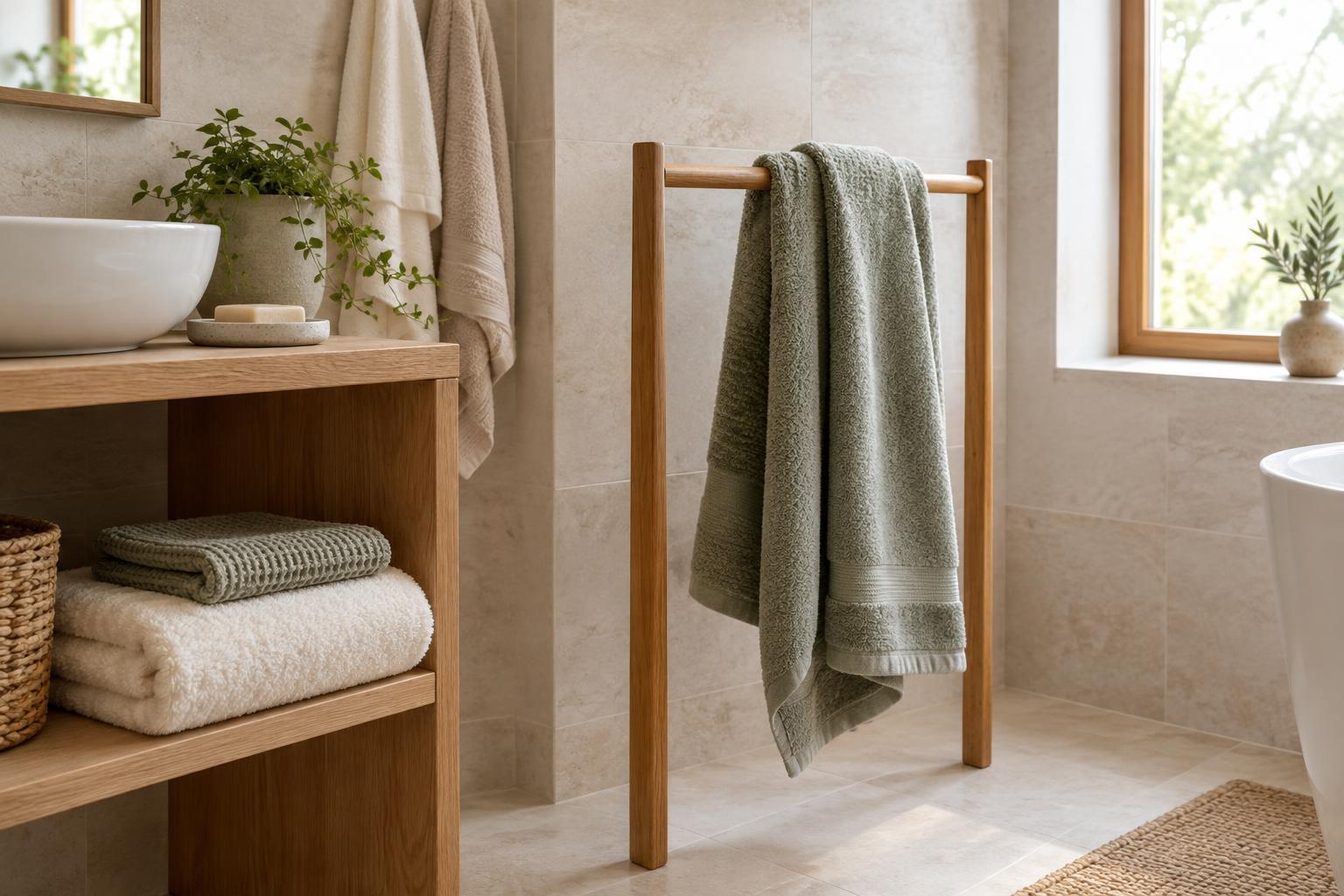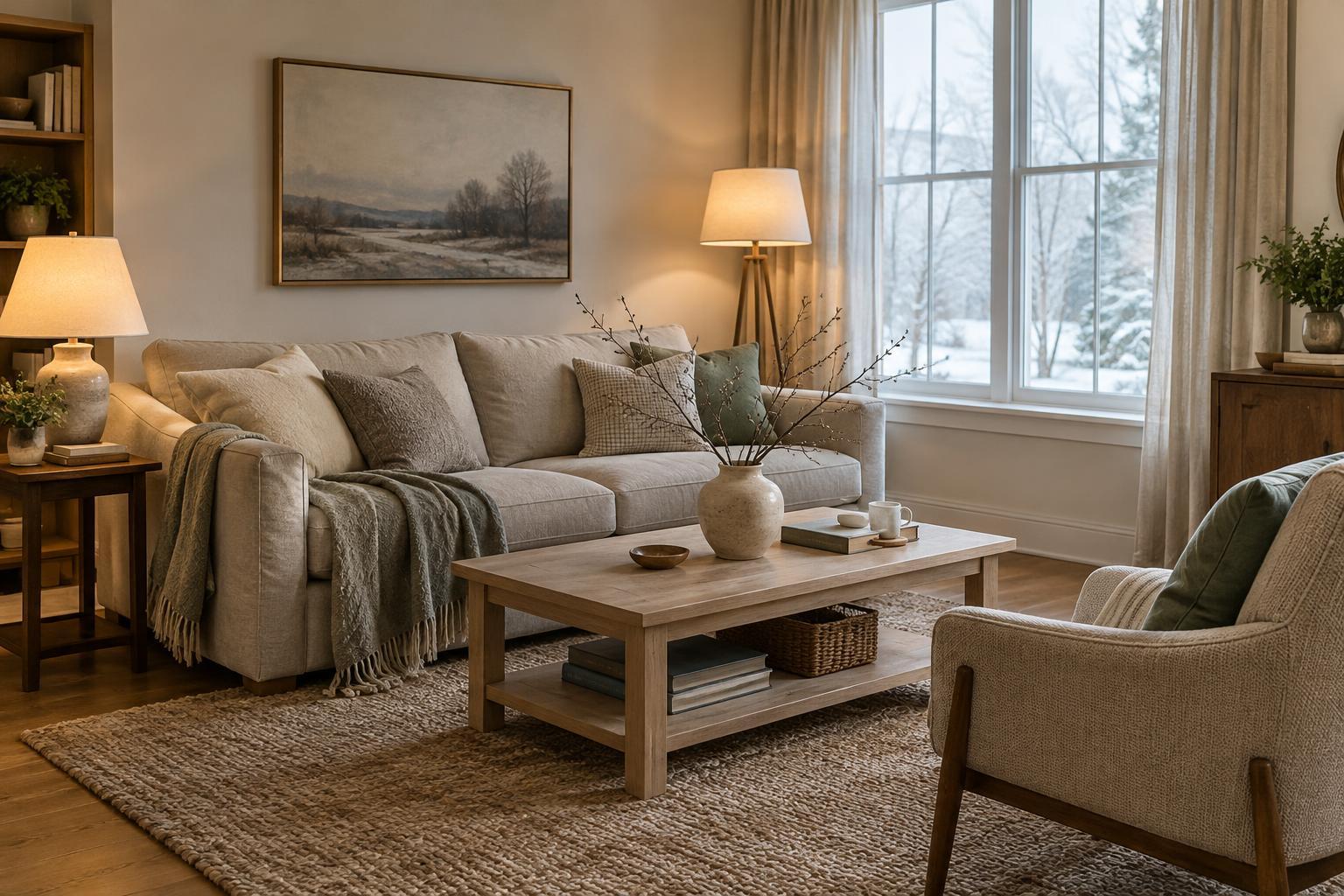
Start with the space the decorations leave behind
Taking down a tree, garland or collection of ornaments can make a familiar room seem unexpectedly empty. Before replacing everything, look at the room in daylight and again after dark. Notice which corners feel bare, which surfaces are more pleasant with breathing room, and whether the furniture still suits the way you use the space. You may find that only one or two areas need attention.
Restore the room’s everyday anchors first: a lamp, a favourite piece of art, books or a useful tray. If the tree occupied a prominent corner, consider moving an existing floor lamp or chair there rather than buying something new. Leave some open space on shelves and tables. The aim is not to fill every gap, but to make the room feel settled without the visual weight of holiday decor.
Use lighting to create a warmer evening atmosphere
Winter evenings can make a room feel less welcoming when its only light comes from a bright ceiling fixture. Try using several smaller sources at different heights: a table lamp near the sofa, a floor lamp beside a chair and a modest light on a shelf. This spreads light across the room and gives you options for reading, conversation or a quiet evening.
Check the shade and position of each lamp before adding more. A shade that softens glare can be as helpful as another light fitting, while a lamp placed near a wall can gently brighten a dark corner. If you use candles, set them on stable, heat-safe surfaces and keep them away from textiles. Battery-operated candles can offer a similar glow where an open flame would be impractical.
Layer textiles for comfort, not clutter
Soft furnishings are an easy way to make a room feel warmer without redesigning it. Begin with what people touch: a throw within reach of the sofa, a comfortable cushion on an armchair or a rug that makes a seating area feel more defined. Mixing textures can add depth even when the colours stay simple. For example, a smooth cushion cover can sit beside a softly woven throw.
Choose layers according to how the room is used. A washable throw may be more useful than a delicate one on a busy family sofa, and cushions should leave enough space to sit comfortably. If your existing textiles are in good condition, try moving them between rooms before shopping. A different arrangement may give familiar pieces a fresh purpose.
Choose a calm winter palette
After weeks of festive colour and sparkle, a restrained palette can feel restful rather than plain. Work from the colours already in the room, then repeat one or two of them in smaller details. Warm neutrals, muted greens, earthy browns or deep blues can all suit winter; the best choice is the one that sits comfortably with your walls, flooring and larger furniture.
Materials can provide contrast when colours are quiet. Wood, ceramic, woven fibres, glass and matte finishes each reflect light differently. Place a few pieces together, then step back to see whether they form a balanced group. A single vase, bowl or stack of books may have more presence than a crowded display, especially on a small side table.
Add signs of the season that can stay a while
Winter decorating does not need to look like an extension of the holidays. A simple arrangement of branches, a bowl of fruit or a favourite print can acknowledge the season without introducing another theme to pack away. If you kept greenery from a holiday display, check its condition before reusing it; tired or shedding pieces may make the room feel less fresh.
Finish by thinking about comfort as well as appearance. Clear a convenient place to set down a drink, keep the route to seating unobstructed and put a throw or reading light where someone will actually use it. Small choices like these help a room feel inviting on an ordinary winter day, long after the decorations have gone.