Start with space and light
The most effective summer update often begins with what you remove. Put away a few heavy throws, reduce clusters of small accessories and clear surfaces that have become crowded. You do not need an empty room: leave enough favourite pieces in place for it to feel lived in. The aim is to let furniture shapes, daylight and useful surfaces become easier to see.
Look at the room from its doorway and from the seat you use most. If a tall plant, lamp or piece of furniture blocks a window, try moving it before buying anything new. Keep walkways clear and give each seating area a comfortable place for a drink or book. A room that is easy to move through can feel relaxed even when its colours are rich rather than pale.
Choose colours that suit the room you already have
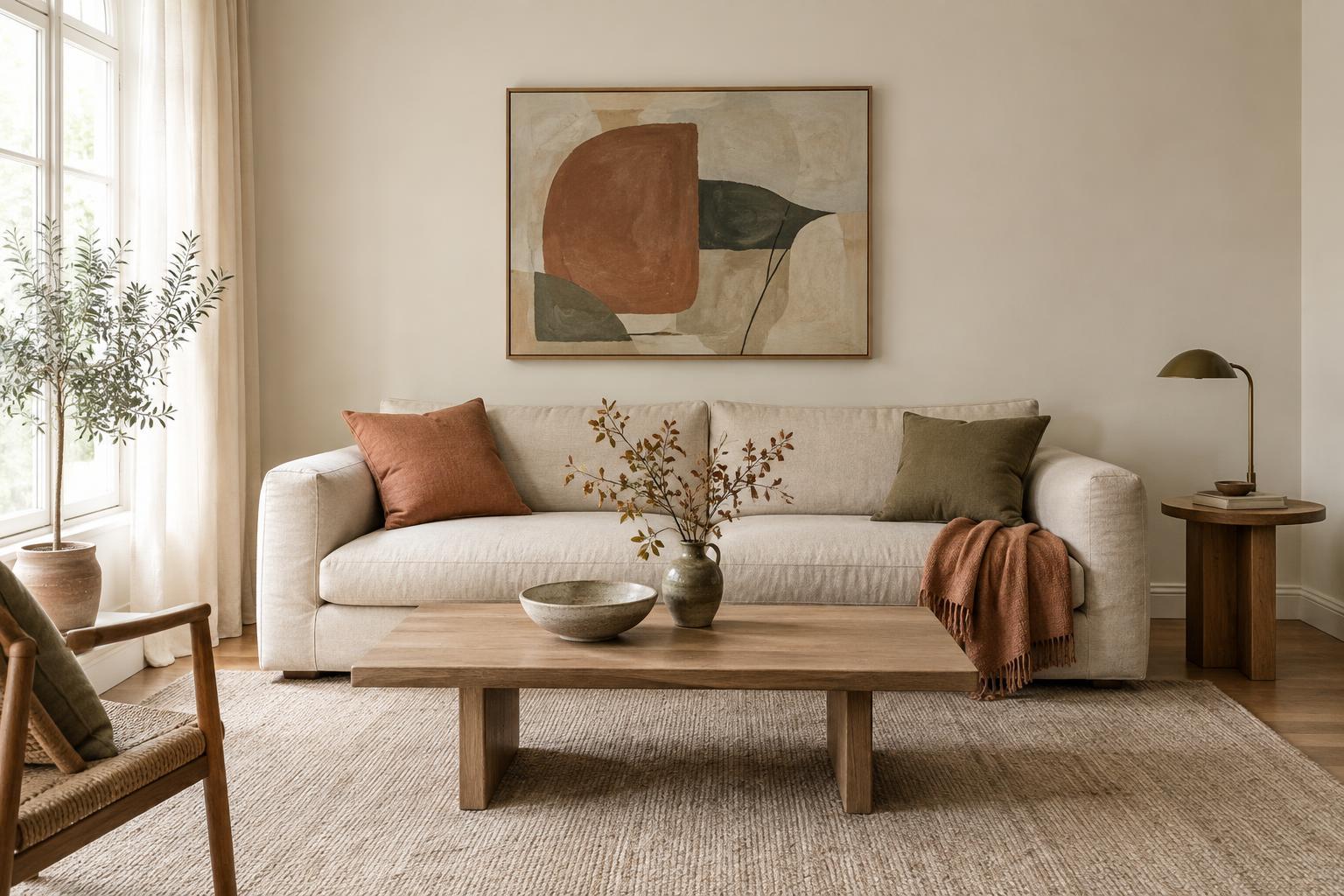
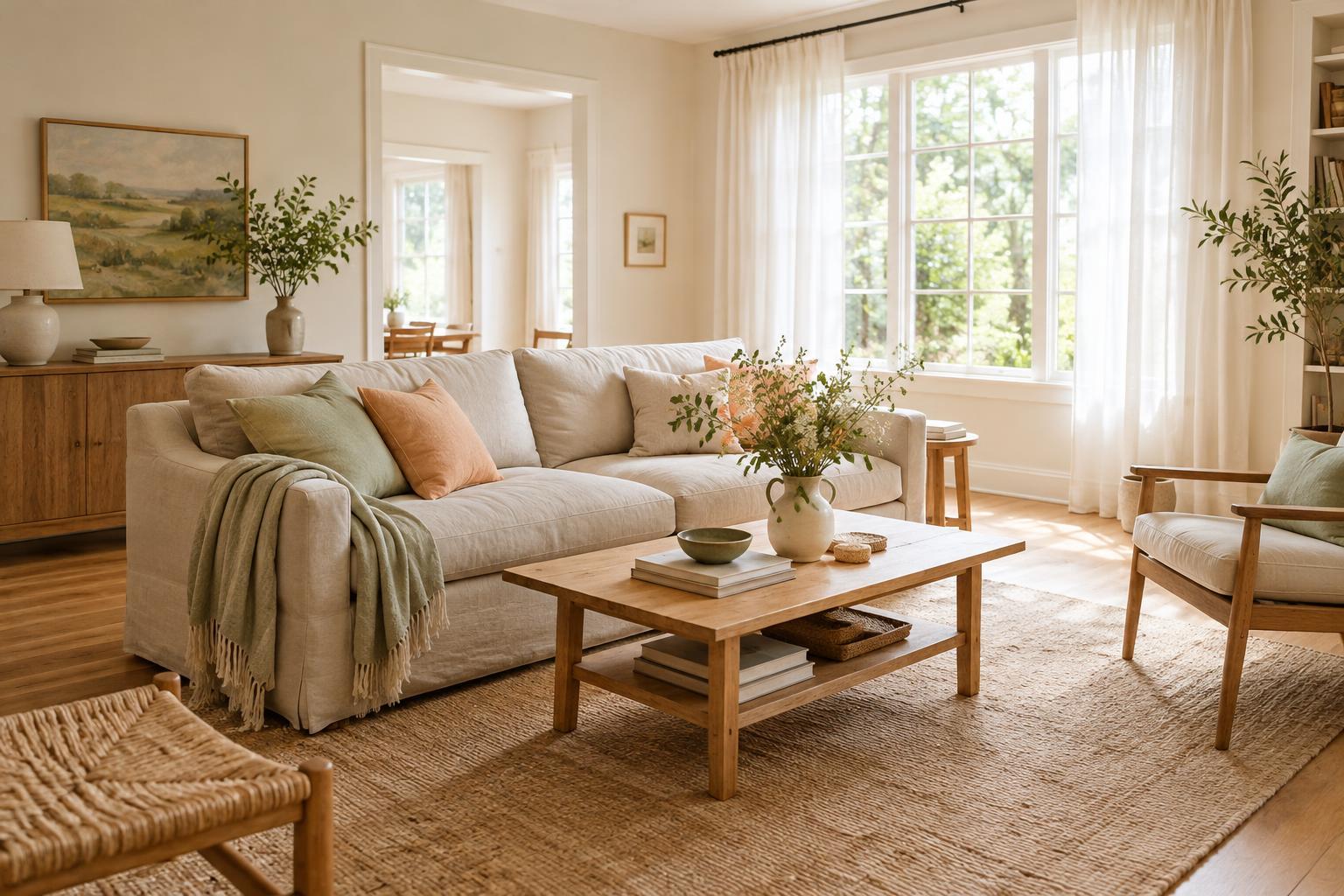
Summer colour need not mean blue and white. Warm ivory, soft yellow, leaf green, terracotta, lilac or a clear coral accent can all bring a seasonal lift. Start with the colours already present in your flooring, upholstery and larger furniture. Then choose one or two lighter or brighter tones that work beside them. Repeating an accent in two or three places makes the change look intentional.
If your room has dark walls or a deep-coloured sofa, there is no need to replace them with pale versions. Try light cushion covers, a fresh tablecloth or artwork with a warmer palette to create contrast. Test colours in the room at different times of day if you can: a shade that looks soft in morning light may appear much stronger under an evening lamp.
Change the feel of the textiles
Textiles offer a practical way to shift the mood without changing the furniture. Swap a thick blanket for a lighter throw that is pleasant to use on cooler evenings. Mix cushions with different textures rather than matching every cover: a smooth cotton beside a lightly textured linen blend can add interest without making the arrangement feel busy. Keep enough cushions for comfort, not so many that they must be moved every time someone sits down.
Curtains also affect how a room feels in summer. If you have more than one layer, consider whether a lighter layer provides the privacy you need while allowing daylight in. Where bright sun causes glare or heats the room, retain a way to shade the window when necessary. A summery interior should work during the day, not just look bright in a photograph.
Use natural shapes instead of themed decorations
To suggest the season without coastal motifs, draw on the shapes of gardens and outdoor meals. A branch in a vase, a bowl of fruit or a small group of potted herbs can bring colour and irregular form into a room. Choose what suits the space and your willingness to care for it; dried stems or a simple ceramic vessel can work well where fresh greenery is impractical.
Materials can carry the same idea quietly. Wood, woven fibres, matte ceramics and clear glass add variety through their surfaces rather than through printed motifs. They need not all appear at once. One woven tray on a coffee table or a glass vase beside a favourite book may be enough to make an existing arrangement feel lighter.
Make small changes, then edit
Choose a manageable starting point, such as the sofa, dining table or window. Remove anything that feels especially wintry, make one textile change and add one seasonal colour or object. Then step back before adding more. This keeps the update connected to the room’s everyday use and helps you see which changes make a difference.
Finally, check comfort alongside appearance. Can you still reach the things you use? Is the seating inviting? Are delicate items away from busy edges? A successful summer refresh is not a temporary display that gets in the way. It is a room that feels a little more open and lively while remaining unmistakably yours.