Start with the room you have
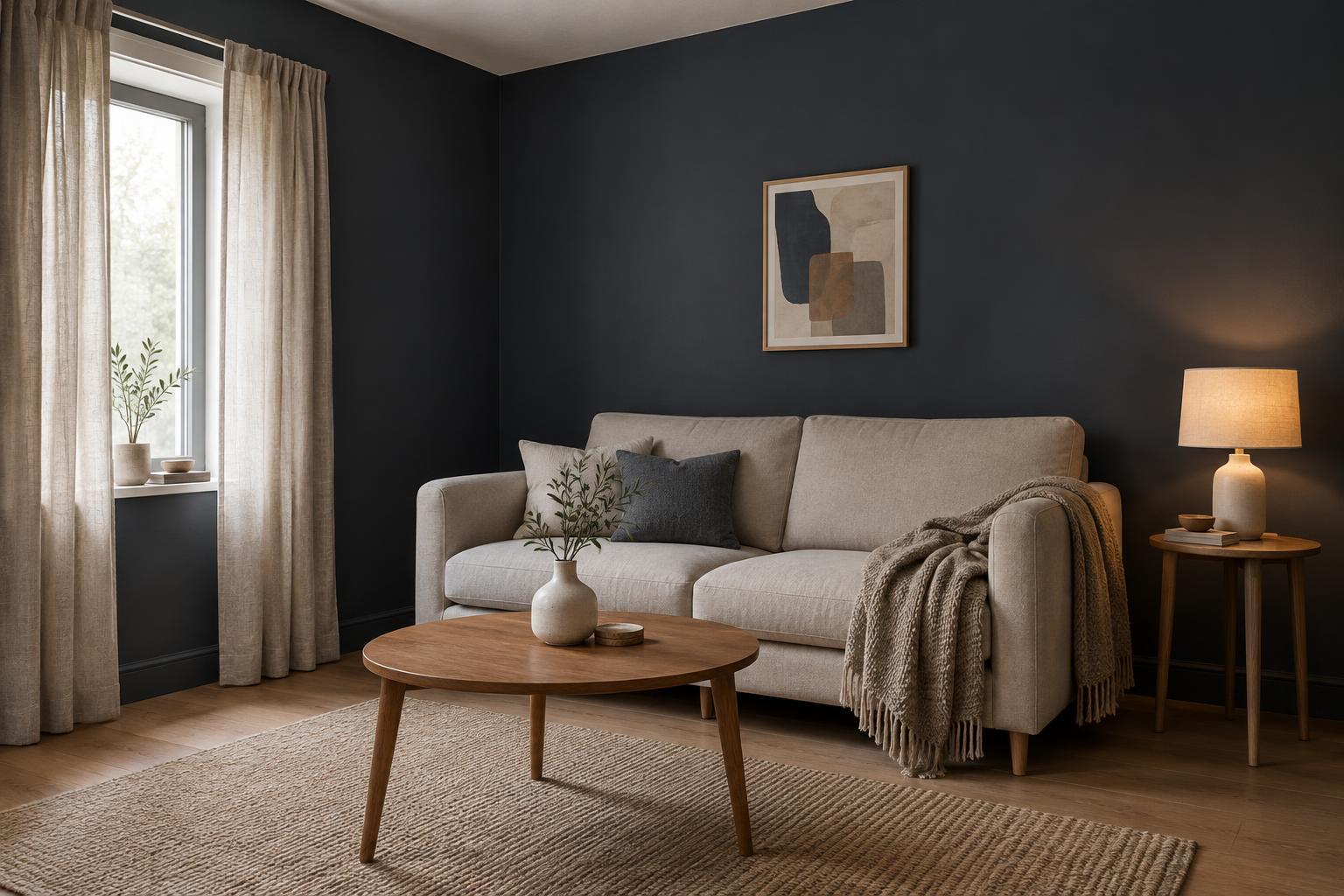
A small room does not have to be painted pale to feel comfortable. Dark colour can give the walls a sense of depth and create a calm backdrop for furniture and decorative details. The key is to consider the whole room, not just the paint sample. Notice where daylight enters, which corners remain dim, and what you want the space to feel like at the times you use it most.
Begin by deciding what the room needs to do. A compact bedroom might benefit from a restful, enveloping colour, while a small living room may need enough contrast for reading and conversation. Also note what will stay: flooring, large furniture, curtains and fixed finishes. A dark wall colour will look more intentional when it relates to at least one of those existing elements.
Choose a dark shade by its undertone
Dark does not mean black. Deep blue, forest green, charcoal and warm brown each create a different mood. Undertones matter as much as the main colour: a charcoal with a blue cast may feel quite different beside warm timber than a softer, brown-based grey. If you are keeping a sofa, rug or flooring, compare paint candidates directly with them rather than choosing a shade in isolation.
Test a few generous samples on separate boards or on more than one wall. Look at them in daylight and with the lamps you normally use after dark. A colour that appears rich in one position may look flat or much cooler in another. This step is especially useful in a small room, where one wall can be close to the windows while another receives very little direct light.
Plan the boundaries of the colour
You can paint every wall dark or use the colour on one defined area. All-over colour creates continuity, which can make an awkward corner or short wall less conspicuous. A single dark wall can work when it has a clear purpose, such as framing a bed or a sofa, but it may draw attention to the room’s dimensions if the other walls contrast sharply. Neither approach is automatically better; judge it against the room’s shape.
Think about ceilings, doors and trim before you start. A light ceiling gives a familiar point of contrast, while a ceiling painted in the wall colour can create a more enveloping effect. Matching skirting boards and doors to the walls reduces the number of visual breaks. If you prefer bright trim, repeat that light tone in textiles or furniture so it feels like part of the scheme rather than an outline around the room.
Build in usable light and balanced contrast
Dark paint changes how a room feels under artificial light, so plan lighting alongside the colour. One ceiling fixture may leave parts of a small room looking gloomy. Add light where it supports an activity: a reading lamp beside a chair, a bedside light, or a lamp on a shelf. More than one light source also lets you change the atmosphere without making the entire room equally bright.
Balance dark walls with a few lighter surfaces, but avoid treating every object as a contrast piece. A pale rug, light bedding or an upholstered chair can provide relief, while darker frames or cushions connect back to the walls. Keep the palette fairly contained and vary the materials instead: linen, timber, ceramic and metal bring detail without requiring many extra colours.
Let the furnishings leave room to breathe
Wall colour is only one part of how spacious a room feels. Furniture that blocks a window or crowds a walkway can make a compact space harder to use, whatever colour the walls are. Choose pieces that fit the available floor area and allow easy movement. Where practical, visible legs on a chair or side table can leave more of the floor in view, while closed storage keeps everyday items from competing with the walls.
Finish with a small number of decorative details that have a clear role. A mirror can reflect light or a pleasing part of the room if placed thoughtfully; curtains can soften a dark wall while still allowing the window to feel open. Rather than adding many bright accents to compensate for the paint, try one or two lighter textiles and a few objects with texture. The result can feel cosy without feeling crowded.