Decide where the curtains will hang
Before measuring the fabric, decide whether your curtains will sit on a rod or a track, and where that hardware will go. The window frame is a useful starting point, but it is not necessarily the finished curtain width. Mounting hardware above the frame can make the window feel taller. Extending it beyond the frame gives open curtains somewhere to sit without covering as much glass.
Check the space around the window before choosing a position. Look for nearby walls, cabinets, switches, radiators or furniture that may limit how far the hardware can extend or where the fabric can fall. If you are replacing curtains but keeping the existing rod or track, measure that hardware rather than planning around the window opening alone.
Measure the width the curtains need to cover
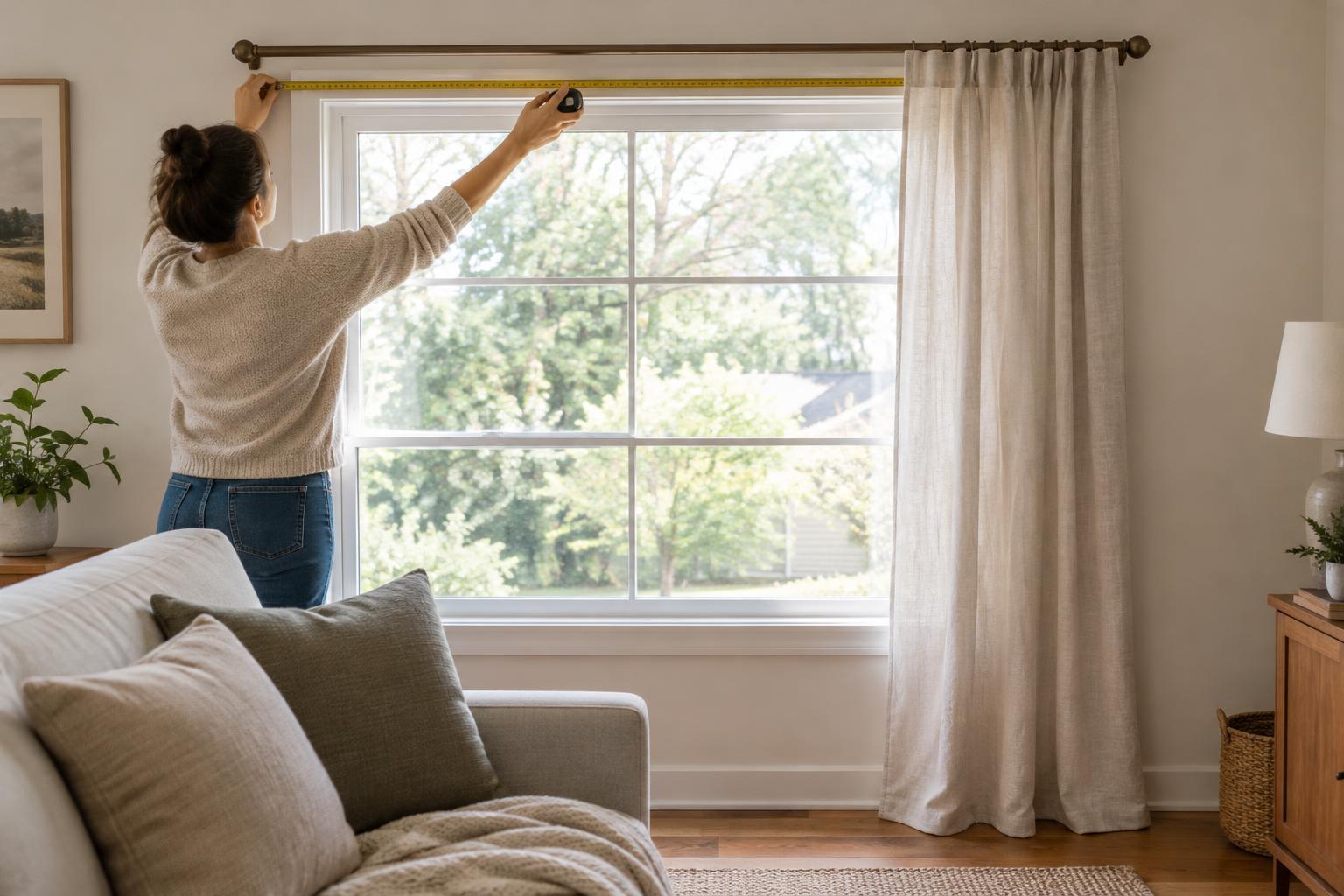
Use a metal tape measure to record the width of the window frame, then mark your proposed rod or track endpoints. Measure the distance between those endpoints. For a rod, distinguish its decorative overall length from the usable length where the curtains can actually hang; finials do not add curtain coverage. For a track, measure the length the curtain carriers travel. If the curtains need to meet at the centre, check whether the hardware includes an overlap.
Curtain fabric usually needs more width than the span it covers so it forms folds when closed. As a practical starting point, aim for a combined flat panel width of about one and a half to two times the usable span. A fuller look may need more fabric, while a simpler look may need less. Check product descriptions carefully: a stated width may refer to one panel or to a pair. Divide your target fabric width by the width of each panel to work out how many panels you need.
Choose a finished length and measure from the right point
First decide where the curtain should end. Sill-length curtains can suit a window with furniture beneath it; curtains that finish just below the sill offer another option when floor-length fabric would get in the way. Floor-length curtains create a continuous line, but they need enough clearance to move freely. If you prefer fabric to rest on the floor, allow for the extra length deliberately rather than treating it as a measuring error.
Measure down from the point where the curtain will hang, not automatically from the top of the rod. That point changes with the heading style: curtain rings, hooks, a rod pocket and eyelets position the fabric differently. Check the manufacturer's measuring guidance for the style you plan to use. For a floor-length fit, measure to the floor in several places and note any variation. A small gap above the floor is often easier to keep tidy than a hem that drags.
Check what could affect the fit
Measure each window separately, even when several windows appear identical. Record the planned hardware position, usable width, hanging-point-to-hem length and number of panels for each one. Measuring the proposed hardware position at both ends also helps you spot a sloping ceiling, uneven trim or another feature that could affect installation.
Think about how the curtains will behave when open as well as closed. Wide panels need space to gather at the sides, and thick fabric may take up more of that space than a light sheer. Check that brackets hold the fabric far enough from projecting handles or deep trim. If the window is near a radiator or heater, follow the appliance's clearance guidance and choose a curtain length that will not obstruct it.
Review your measurements before ordering
Keep window measurements separate from curtain measurements on your notes. A simple record might say: hardware span, target combined fabric width, required finished length and heading style. Then compare those figures with the dimensions shown for the curtains you want. Ready-made sizes may not match exactly, so decide whether a slightly different position, a different panel count or hemming would give you the best fit.
Finally, check whether the curtains will be used mainly for decoration, privacy or light control. That choice can affect how much fullness and side coverage you want, especially when the curtains are closed. Taking a few minutes to confirm the hardware position and heading style before buying is more reliable than measuring the glass alone.