Start with the room’s activities
Before choosing lamps, note what happens in your living room after dark. You might read on the sofa, play games at a table, watch television or spend time talking with friends. Mark the seats and surfaces used for each activity on a simple sketch. Include windows, existing light fittings, outlets and any dark corners. This gives you a plan based on daily habits rather than a collection of attractive lamps with nowhere useful to go.
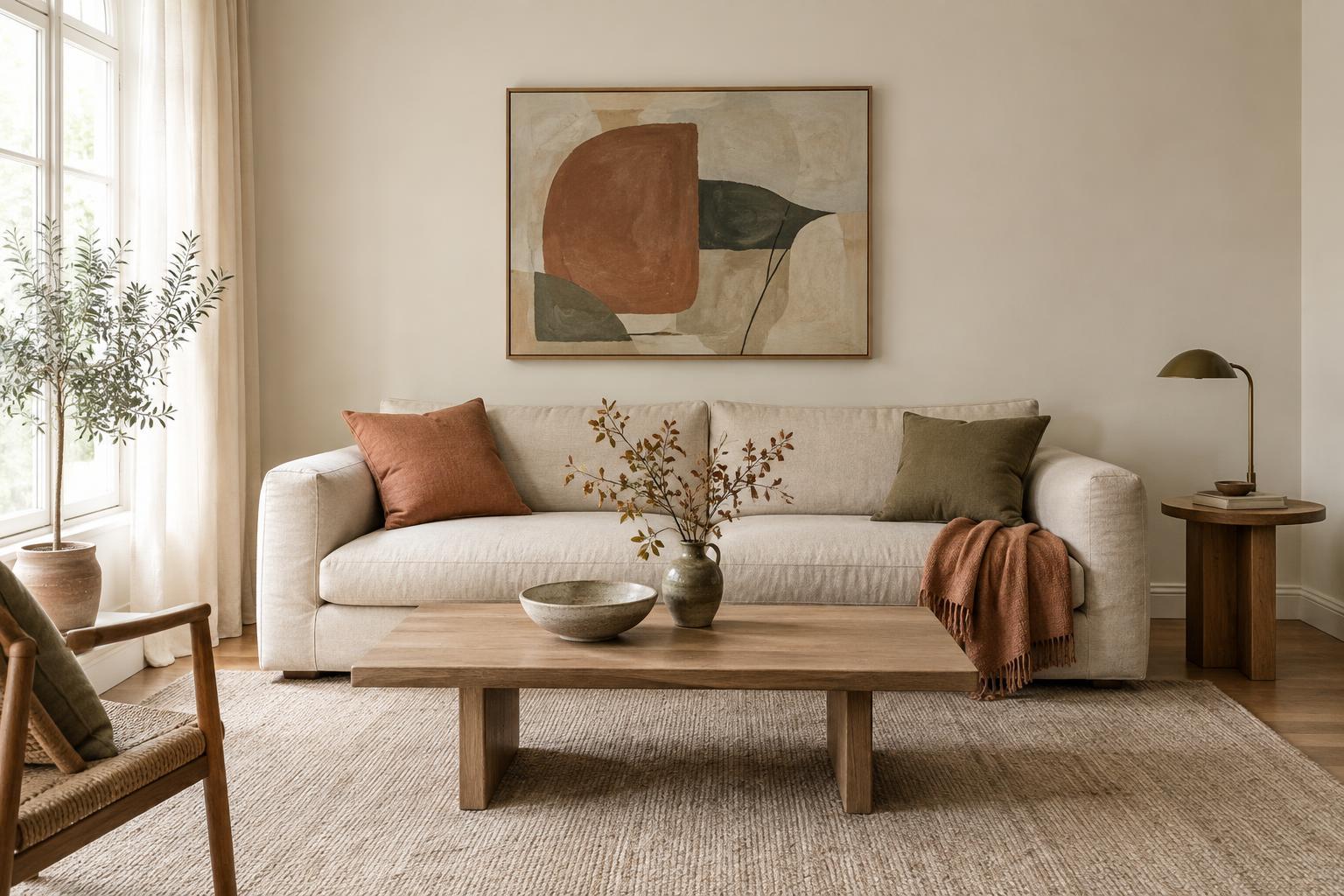
Think about the room at different times of day. A window may provide plenty of light in the afternoon but leave a seating area dim in the evening. Dark walls, deep upholstery and heavy curtains can also make a room feel less bright, while pale surfaces tend to reflect more light. Your aim is not to illuminate every corner equally. It is to create enough general light to move around comfortably, with stronger light where an activity needs it.
Build a gentle layer of ambient light
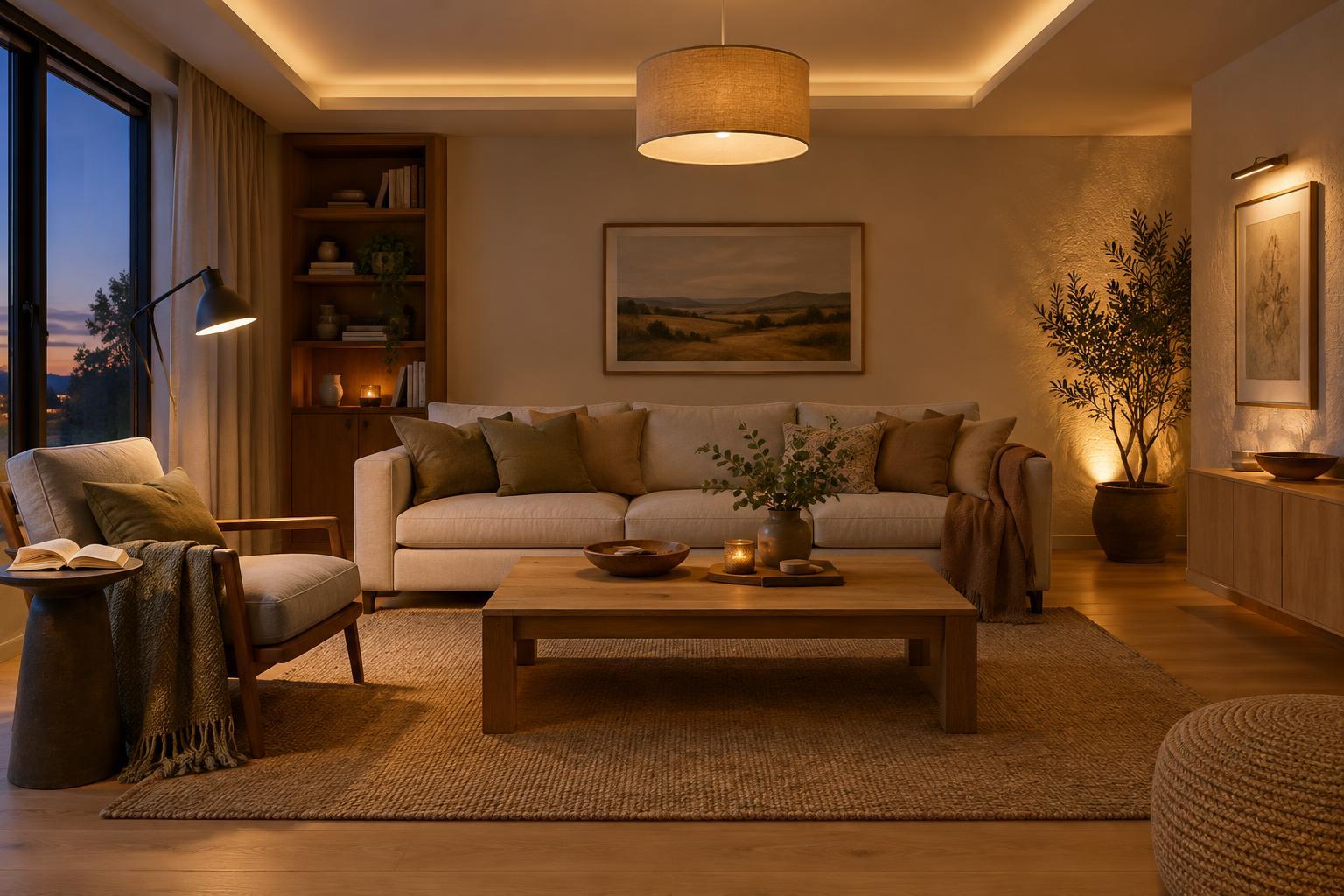
Ambient lighting is the background layer that helps you see the room as a whole. A ceiling fixture can provide it, but it does not have to work alone. A shaded floor lamp, a table lamp on a sideboard or light directed toward a wall can spread brightness more softly than a single exposed bulb overhead. If your living room has only one central fitting, lamps placed at different points can make the space feel more balanced.
Pay attention to what you see when seated, not just when standing. A bulb that shines into your eyes from the sofa can feel harsh even if the room needs more light. Shades, diffusers and careful positioning help reduce glare. A dimmer or adjustable lamp can make the background layer more flexible, provided it suits the fitting and bulb. Try switching on only the ambient lights: you should be able to cross the room easily, without expecting them to handle close reading.
Put task light where you need to see clearly
Task lighting supports a specific activity. Place a reading lamp beside a favourite chair or at the end of a sofa, rather than relying on a ceiling light behind you. For games, puzzles or writing at a coffee table, consider a lamp that directs light onto the tabletop without shining into anyone’s face. A movable floor lamp can be useful when furniture arrangements change, while a small table lamp works well where a side table already has space.
Check how the light falls when someone is actually using the seat. Your head or shoulder should not cast a shadow over a book, and the lamp should not block conversation or a view across the room. An adjustable arm or shade makes fine-tuning easier. If several people use the living room for different activities, separate task lights let one person read while others enjoy softer background lighting.
Use accent light to give the room depth
Accent lighting draws attention to a feature or adds a pool of light that makes the room feel layered. You might illuminate a bookshelf, highlight a textured wall or place a small lamp near a decorative object. Choose a few features that matter to you rather than trying to spotlight everything. A softly lit shelf can add interest even when the objects on it are ordinary books and ceramics.
Accent lights work best when they complement the other layers. If a display light is the brightest point in the room, it may pull attention away from the seating area. Look at the effect from your usual viewing positions and adjust the angle if it creates reflections on glass, artwork or the television. Leaving some areas quieter gives the brighter details room to stand out.
Test the combination before calling it finished
Once the three layers are in place, switch them on in combinations. You might use ambient and task lights for reading, ambient and accent lights when guests visit, or a low background lamp while watching television. Bulbs with similar warm-looking light often create a more cohesive atmosphere than a mixture of noticeably warm and cool tones. Where possible, try a bulb in one lamp before buying several.
Finally, live with the arrangement for a few evenings. Move a lamp if its shade catches your eye, a corner feels gloomy or a cord crosses a walkway. Keep switches easy to reach from the seats you use most. Small adjustments to height, direction and brightness often make a bigger difference than adding another fixture. A successful plan gives you choices: clear light when you need it and a softer setting when you want to relax.