Start with the routes you use every day
Before moving furniture, notice how you travel through the bedroom. The most useful routes usually run from the door to the bed, from the bed to a wardrobe or dresser, and toward a window if you open it regularly. Place a few objects on the floor to represent furniture corners, then walk those routes. This simple test reveals awkward turns that may not be obvious on a floor plan.
Check more than the empty floor. Open the bedroom door fully, pull out drawers and imagine wardrobe doors in use. A route that looks generous when everything is closed may disappear when you get dressed. If two people share the room, consider whether one can move around while the other is using storage or sitting on the bed. Protect the busiest paths first; a clear route is often more valuable than an extra piece of furniture.
Choose a bed position that supports access
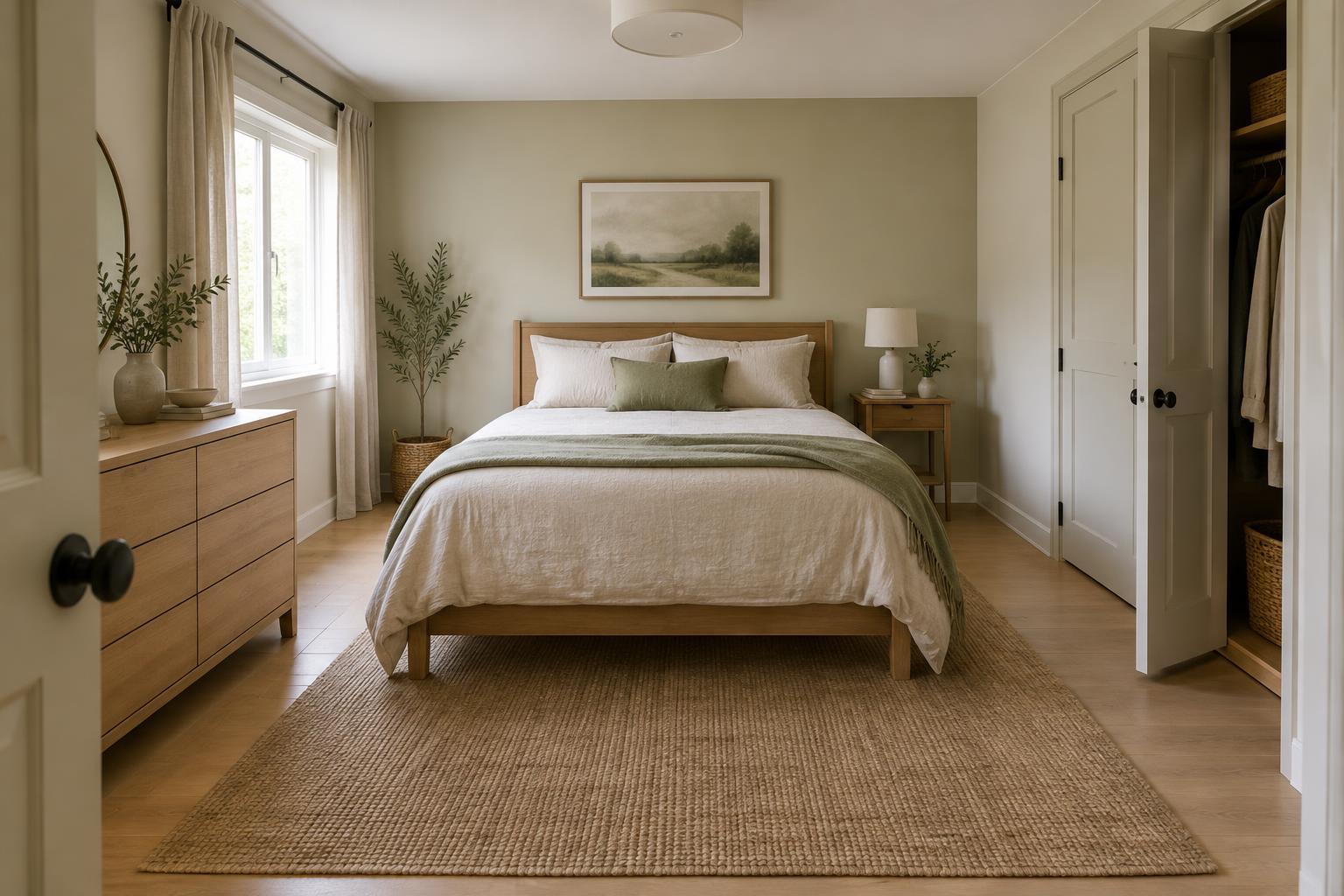
The bed is usually the largest object in the room, so decide where it belongs before placing smaller pieces. A headboard against a solid wall often creates a calm focal point and leaves the centre of the room easier to navigate. Try to keep a usable approach to each side that someone needs to access, as well as space at the foot if that is the main route across the room. Walk around the proposed position rather than judging it only by sight.
Perfect symmetry is not essential. In a narrow room used by one person, placing one side of the bed closer to a wall may free a more useful walkway elsewhere. In a shared room, access from both sides may matter more than matching bedside tables. Check that the bed does not obstruct a door, radiator, frequently opened window or storage unit. Allow space for bedding to drape and for someone to make the bed without squeezing between hard furniture edges.
Place storage where it works when open
A wardrobe needs room in front of it, not just enough wall space to fit it. Hinged doors, drawers and pull-out baskets each extend into the room differently. Test their reach with the bed in place, and check whether you can stand comfortably while choosing clothes. Where space is tight, a unit with sliding doors may reduce the area needed for door swing, although its interior still needs to be easy to use.
Keep frequently used storage on an uncomplicated route from the bed or doorway. A dresser can sometimes sit along a wall that is too short for a wardrobe, but avoid placing its drawers directly opposite a bed with barely enough room to pull them out. Tall pieces generally work best where they do not crowd the entrance or block much daylight. If one large unit creates a bottleneck, consider whether smaller pieces in separate spots would preserve a clearer path.
Keep supporting furniture in proportion
Bedside furniture should serve the bed without narrowing the space you use to get in and out. A slim table, wall-mounted shelf or compact stool can hold a lamp and essentials when a full cabinet feels bulky. Make sure lamp cords and charging cables stay away from walking routes. If a bedside piece has drawers, check that they open without hitting the bed or another item.
Apply the same test to benches, chairs and desks. A bench at the foot of the bed is useful only if it does not turn the main route into an obstacle course. A chair needs room to pull out and sit down, not merely a corner where it fits. If a piece mostly collects clothes or blocks a cupboard, moving it elsewhere may make the bedroom more comfortable than finding a different angle for it.
Test the layout before finishing it
Once the major pieces are positioned, repeat a normal bedroom routine: enter, close the door, walk to the bed, open storage and move toward the window. Notice where you turn sideways, step around a corner or reach over another object. These small irritations are good clues about what to shift. Even moving the bed or dresser a little can make a route feel more natural.
Finally, check the room in low light, when furniture edges are less visible. Keep the floor beside the bed clear enough for a straightforward step, and use lighting where you need to navigate. Rugs should sit securely rather than bunching along a walkway. A successful layout need not fill every wall: leaving some space open gives the room room to breathe and makes its furniture easier to use.